
By AlankarAI Editorial Team · 8 min read · Reviewed for practical styling guidance
Bangle Size Guide for Indian Outfits: How to Measure, Fit, and Style Bangles Without Guesswork
A beautiful bangle stack only works when the fit is right. Learn how to measure your hand, understand Indian bangle sizes, choose comfort by occasion, and match bangles to sarees, lehengas, and festive suits.
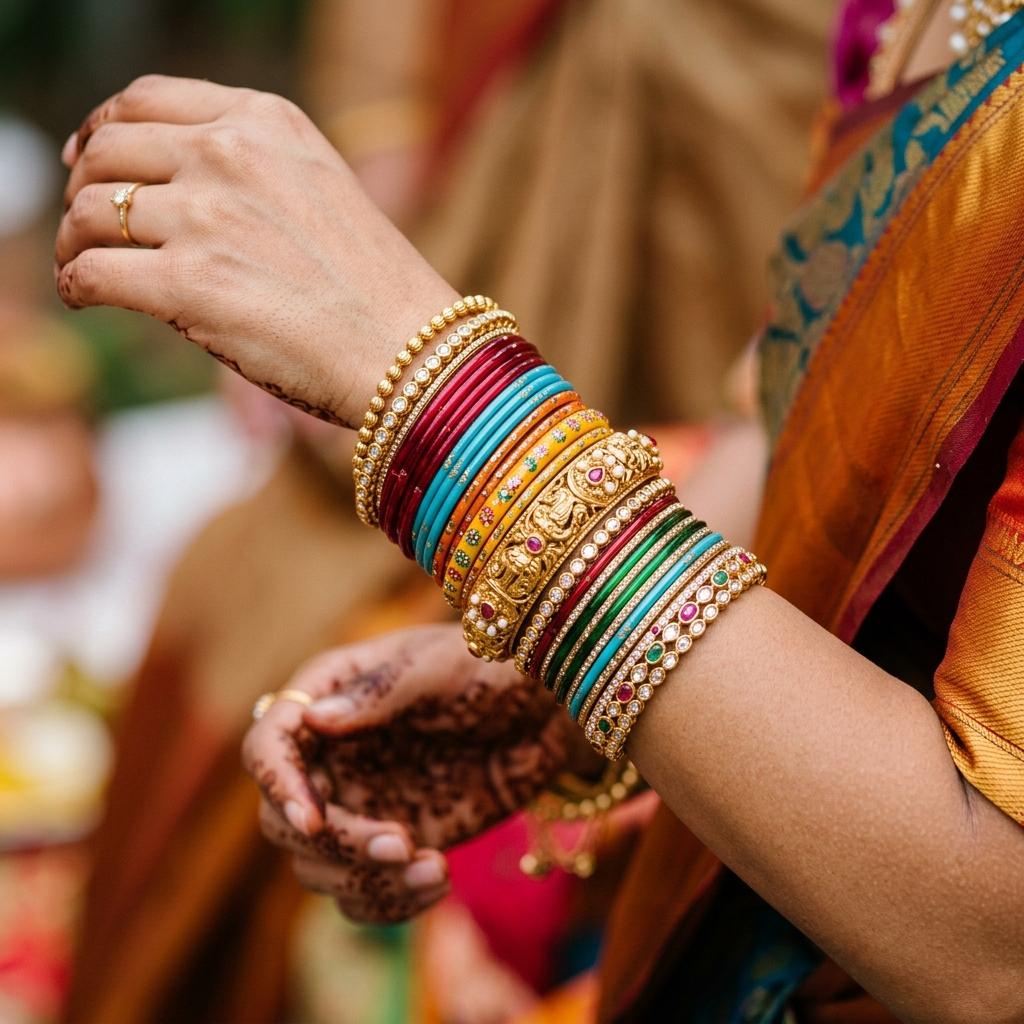
Bangles can make an ethnic outfit feel complete in seconds, but the wrong size can make even the prettiest stack uncomfortable. Too tight, and the bangle is painful to wear or difficult to remove. Too loose, and it slides, clatters, catches on embroidery, or slips off while you are moving.
That is why bangle styling should start before color, stones, or metal finish. It should start with fit. Once the size is right, every other styling decision becomes easier: how many bangles to wear, whether to add a kada, how much movement the stack can handle, and whether the look suits a wedding ceremony, office festive day, Sangeet, or family function.
This guide explains how to measure your bangle size, how to judge comfort, and how to style bangles with Indian outfits without relying on guesswork.
1. How to Measure Your Bangle Size at Home
Most people measure the wrist and then wonder why the bangle does not fit. For closed circular bangles, the important measurement is the widest part of your compressed hand, because the bangle has to pass over your knuckles before it reaches the wrist.
Quick measuring method
Use a flexible measuring tape, strip of paper, or thread.
- Bring your thumb and little finger together as if you are sliding on a bangle.
- Wrap the tape or paper around the widest part of the knuckles.
- Mark the point where it meets.
- Measure that length in inches or centimeters.
- Compare it with a bangle size chart or a bangle you already own.
If you are between two sizes, choose based on the occasion. For daily wear, a slightly easier fit is better. For a dance-heavy event, avoid anything so loose that it moves uncontrollably.
2. Understand the Difference Between Fit and Comfort
A bangle can technically fit and still feel wrong. Good fit means it passes over the hand and sits securely. Good comfort means you can wear it for the full event without irritation, pressure, or constant adjustment.
Signs the size is too small
- It hurts while passing over the knuckles.
- It leaves deep marks after a short time.
- You need oil, soap, or force to remove it.
- You avoid moving your hand naturally while wearing it.
Signs the size is too large
- It slides too far down the hand.
- It falls off when your hand points downward.
- It clashes heavily against rings or watch straps.
- It catches on dupattas, sleeves, or embroidery.
The ideal bangle should move a little, but not so much that it distracts you. A festive stack should sound lively, not chaotic.
3. Match Bangle Fit to the Occasion
The best size is not always the same for every event. A bridal ceremony, a Haldi function, a Sangeet night, and an office Diwali gathering all need different levels of security and comfort.
| Occasion | Best Fit Direction | Styling Reason |
|---|---|---|
| Haldi | Easy, lightweight fit | You need comfort, movement, and pieces that are not too precious. |
| Mehndi | Slightly secure but playful | Color and movement matter, but the stack should not interrupt hand designs. |
| Sangeet | Secure fit | Dancing requires bangles that do not slide too much or snag. |
| Wedding ceremony | Balanced, traditional fit | You can wear heavier stacks, but they should not restrict rituals. |
| Reception | Sleeker fit | Evening styling usually looks better with cleaner, more controlled movement. |
| Office festive wear | Minimal and comfortable | Keep the stack quieter and easy to wear through the day. |
If you are choosing bangles for an event where you will dance, carry trays, manage a dupatta, or help family members, prioritize security over volume. A smaller, well-fitted stack often looks more polished than a large stack that keeps shifting.
4. Choose the Right Bangle Type for Your Hand Shape
Different bangle styles behave differently on the hand. Before buying a full set, check the type of bangle as carefully as the color.
Closed glass or metal bangles
These are classic and beautiful, but they need the most accurate sizing because they cannot be opened. They are ideal when you already know your size well.
Openable kadas
Openable kadas are useful if your knuckles are wider than your wrist. They allow a closer wrist fit without the struggle of forcing a closed bangle over the hand.
Adjustable bracelets
These work well for lighter ethnic looks, Indo-western outfits, and people who dislike a full stack. They are easier to wear but may not create the same traditional sound and rhythm as bangles.
Lac bangles
Lac bangles can feel slightly more forgiving than rigid metal, but they still need careful sizing. Avoid forcing them, especially in hot weather or during long functions.
5. How Many Bangles Should You Wear?
Fit also changes depending on quantity. One loose bangle may feel fine, but ten loose bangles can become noisy and difficult to control.
A practical quantity guide
- Daily ethnic wear: 2 to 6 bangles per hand
- Festive kurti or anarkali: 6 to 10 bangles per hand
- Saree or lehenga function: 8 to 16 bangles per hand
- Bridal or heavy wedding styling: 20 or more, depending on tradition and comfort
For most modern festive outfits, you do not need a full forearm stack. A cleaner group of bangles plus one kada can look more intentional than many pieces worn only for volume.
6. Coordinate Bangle Size With Sleeves and Fabric
Bangle fit should respond to what you are wearing. Sleeves, fabric texture, and embroidery can all change how the stack behaves.
Sleeveless or short sleeves
You can wear a slightly fuller stack because the bangles are visible and less likely to catch on fabric.
Full sleeves
Choose fewer bangles or a tighter, cleaner stack. Heavy bangles over embroidered sleeves can look bulky and may damage threadwork.
Sheer sleeves
Keep bangles smooth and avoid sharp stones or rough edges. Net, organza, and chiffon can snag quickly.
Heavy silk or brocade
Use structured kadas or richer metal finishes. The fabric has enough visual weight to carry stronger bangles, but the size still needs to feel controlled.
Lightweight georgette or chiffon
Choose slimmer bangles, pearls, glass, or lighter metal. Oversized kadas can overpower the softness of the fabric.
7. Color and Metal Matching After the Fit Is Right
Once the size works, then move to styling. A correctly fitted stack can still look mismatched if the colors and metals do not support the outfit.
Use these easy pairings:
- Red, maroon, and rani pink outfits: gold, antique gold, kundan, red glass
- Pastel lehengas: pearls, rose gold, silver, clear stones, soft glass tones
- Green sarees: antique gold, temple details, emerald accents
- Ivory and cream outfits: pearls, gold, champagne stones, muted metallics
- Black or navy fusion looks: oxidized silver, mirror-work, sleek metal cuffs
- Yellow Haldi outfits: floral bangles, thread pieces, shell details, minimal metal
If your outfit already has heavy embroidery, reduce the number of bangles and let one metal tone lead. If the outfit is plain, you can use bangles to add color, texture, and rhythm.
8. The Kada Anchor Rule
If your bangle stack keeps sliding, use a kada as an anchor. A kada is thicker and more structured, so it can frame lighter bangles and make the whole stack feel more controlled.
Try this formula:
- one slim kada near the wrist
- four to eight lighter bangles in the center
- one decorative kada on the outer side
This creates a clean boundary and stops the stack from looking random. It also lets you mix glass, metal, and stone bangles without the pieces spreading too far across the arm.
9. Mistakes to Avoid When Buying Bangles Online
Online shopping makes color and variety easier, but bangle sizing needs extra attention.
Avoid these common mistakes:
- buying only by wrist size instead of hand width
- assuming all brands use the exact same size standard
- ignoring return rules for glass or customized bangles
- ordering heavy bridal stacks without testing a similar size first
- choosing very wide kadas without checking forearm length
If you are unsure, measure a bangle that already fits you well and compare its inner diameter with the product details. That is often more reliable than guessing from generic size labels.
10. How AlankarAI Helps With Better Bangle Decisions
AlankarAI is useful because bangle styling is not just one decision. It combines color, outfit type, fabric, sleeve length, event, and personal comfort. A stack that looks perfect with a silk saree may feel too heavy with a georgette anarkali. A pastel lehenga may need pearls, while a maroon saree may need antique gold.
With AlankarAI, you can compare the outfit's color story and styling context before choosing accessories. That makes it easier to decide whether your look needs:
- a slim glass stack
- a kada-led traditional stack
- pearl bangles
- oxidized silver cuffs
- bridal chooda-style volume
- a minimal bracelet instead of bangles
The goal is not to wear more. The goal is to wear the right pieces for the outfit and event.
Conclusion
A good bangle stack begins with size. Once the fit is comfortable, secure, and appropriate for the occasion, styling becomes much easier. You can then choose color, metal, stones, and quantity with confidence instead of adjusting your bangles all day.
For Indian ethnic wear, bangles should support the whole look: the fabric, sleeve, color palette, and function. Measure carefully, test movement, choose the right bangle type, and let AlankarAI help you match the final stack to your outfit before the event.
Want a personalized analysis?
Upload your own outfit photo and let AlankarAI find the perfect matching jewelry for you.
Start Styling NowIndian ethnic-fashion writers and stylists. Every guide is reviewed for accuracy and cultural context before publishing. Read our editorial standards →
Get help choosing the right ethnic accessories.
Subscribe for weekly guides, ask a styling question, or tell us whether this page helped. Your feedback shapes the next AlankarAI guides.
Was this helpful?
A quick tap helps us improve future guides.
Editorial note: AlankarAI guides are written to provide styling education. Some store links on the site may be monetized, but article recommendations are intended to remain useful whether you shop online, locally, or from your own wardrobe.