
By AlankarAI Editorial Team · 5 min read · Reviewed for practical styling guidance
Bhai Dooj Ethnic Outfit and Accessory Guide: Festive, Comfortable, and Photo-Ready
Put together a thoughtful Bhai Dooj look with sarees, suits, kurtas, jewelry, bangles, bags, and footwear that feel festive without getting in the way of the celebrations.
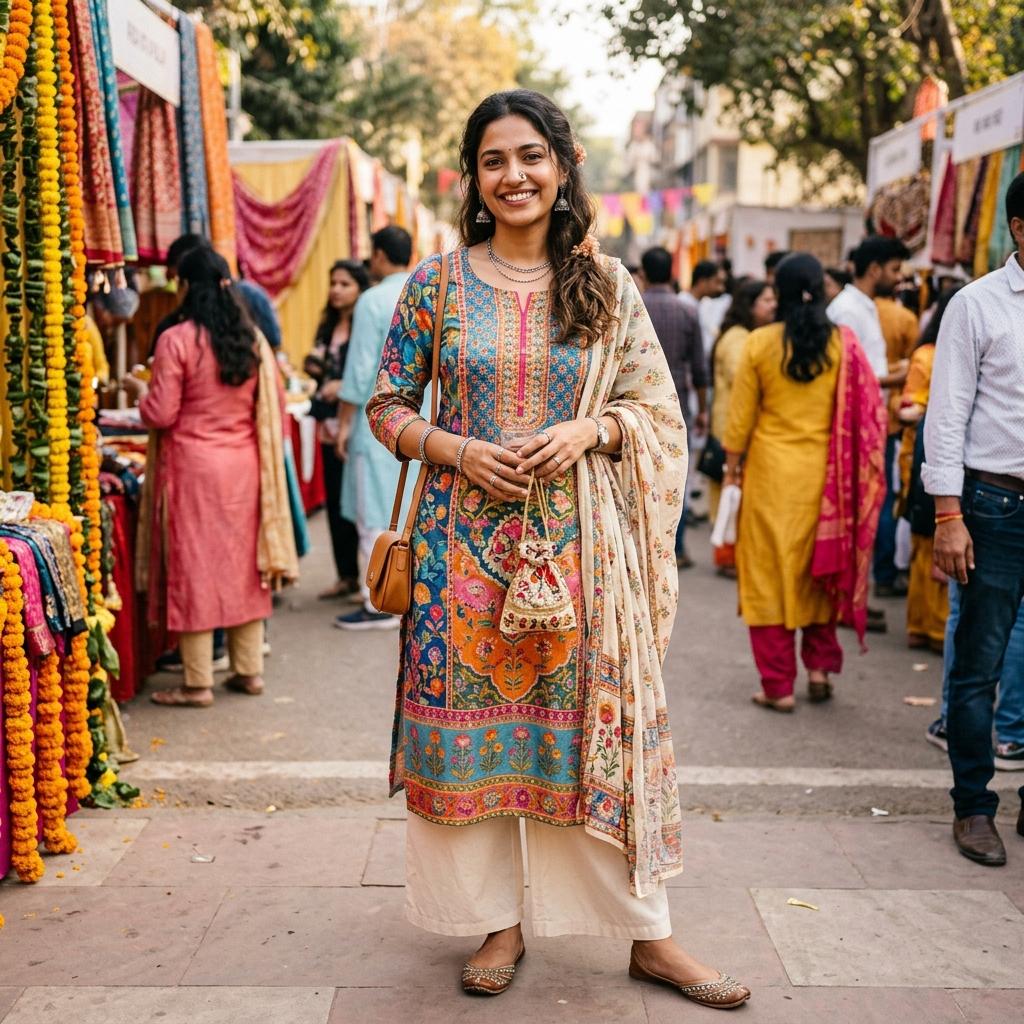
Bhai Dooj is a celebration that asks for warmth more than excess. There are tilak rituals, family photographs, sweets to arrange, gifts to exchange, and often a full day of moving between rooms or homes. The easiest way to look festive through all of it is to start with an outfit that feels like you, then build the accessories around comfort, colour, and one clear focal point.
Whether you choose a saree, an embroidered kurta set, a graceful suit, or a coordinated kurta-jacket look, let the occasion guide the finish. A rich detail at the neckline, a polished bangle stack, or a festive pair of earrings can carry the look beautifully; every accessory does not need to make the same statement.
Begin With a Comfortable Festive Base
Choose fabrics that hold their shape but still let you sit on the floor, help serve sweets, and greet relatives easily. Cotton-silk, soft silk, tissue, light brocade, georgette, and well-lined Chanderi all work well for a daytime celebration. If the family gathering is intimate, a bright kurta set can feel just as special as a saree.
| Outfit choice | Easy Bhai Dooj styling direction |
|---|---|
| Solid silk or cotton-silk saree | Statement earrings, a slim necklace, and a compact bangle stack |
| Printed kurta set | Small jhumkas, a ring, and bangles that repeat one print colour |
| Anarkali or suit with a dupatta | A short necklace or earrings, but not both at full volume |
| Kurta with a Nehru jacket | A classic watch, clean footwear, and a subtle brooch or pocket square |
| Lehenga-style skirt and blouse | Keep the neckline light and let the dupatta border lead |
Marigold yellow, vermilion red, rani pink, peacock blue, bottle green, plum, and cream with gold all photograph beautifully beside a tilak thali. If you prefer quieter colours, use a bright dupatta, bindi, or bangle stack to bring in the celebratory note.
Let One Jewelry Detail Lead
For a saree or suit with a decorated neckline, choose earrings as the main event: antique-gold jhumkas, pearl drops, or small chandbalis give enough sparkle without crowding the face. With a simpler neckline, a short pendant necklace or delicate temple-inspired chain can add the finishing touch.
Think about the rituals before reaching for very long earrings or a heavy choker. You will likely bend forward, hug family members, and move around frequently. Jewellery that sits securely and does not need adjusting will always look more elegant by the end of the day.
If you are dressing in a kurta and jacket, a clean watch, a ring, or a restrained lapel pin is usually sufficient. Avoid piling on several metal finishes; one consistent gold, silver, or antique-brass tone makes the outfit feel intentional.
Build a Bangle Stack That Can Move With You
Bangles bring the most joyful sound and colour to Bhai Dooj dressing, but a practical stack is better than an overly wide one. Start with two to four glass bangles in a shade picked from the saree border or dupatta, then add one slim metal kada as a separator.
Try these easy combinations:
- red or magenta outfits with red glass bangles, one antique-gold kada, and a small pearl ring
- yellow or orange ensembles with green bangles and brushed-gold earrings
- blue or teal looks with navy glass bangles and silver-toned studs
- ivory or cream outfits with a single gold kada, pearl drops, and a tiny red bindi
Keep the stack slimmer if your sleeves are heavily embroidered. If you are handling trays or helping in the kitchen, wear the fuller stack on one wrist and a simple watch or bracelet on the other.
Make the Tilak and Makeup Part of the Palette
The tilak plate often introduces red, gold, yellow, and floral colour into the room, so a few coordinated details can make the whole look feel considered. A small bindi, warm lip colour, soft kajal, and a touch of highlighter are enough for most daytime gatherings. Let the outfit and jewellery do the rest.
For hair, a low bun with a small gajra, a half-up style, or soft waves keeps earrings visible without demanding constant attention. Choose a hairstyle that works with your dupatta or pallu rather than forcing the drape to sit around it.
Choose a Bag and Shoes You Can Forget About
A small potli, structured clutch, or crossbody with a tucked-away strap is ideal for keeping your phone, lipstick, and keys close. Match the bag to the jewellery finish rather than trying to match it exactly to the fabric. A matte gold, tan, deep red, or woven neutral is surprisingly versatile.
For footwear, favour juttis, cushioned kolhapuris, low block heels, or neat sandals. A family celebration is rarely the right occasion to break in stiff new shoes. When your footwear is comfortable, you can move through every ritual, photograph, and meal with much more ease.
A Simple Bhai Dooj Styling Formula
Start with a festive outfit in one confident colour. Add either earrings or a short necklace, repeat one shade with a manageable bangle stack, and choose footwear that lets you stay present for the day. Finish with a small bag and a grooming detail that echoes the mood of the celebration.
AlankarAI can help compare your outfit colour, neckline, jewelry, bangles, footwear, and occasion to create a Bhai Dooj look that feels festive, personal, and effortless.
Want a personalized analysis?
Upload your own outfit photo and let AlankarAI find the perfect matching jewelry for you.
Start Styling NowIndian ethnic-fashion writers and stylists. Every guide is reviewed for accuracy and cultural context before publishing. Read our editorial standards →
Get help choosing the right ethnic accessories.
Subscribe for weekly guides, ask a styling question, or tell us whether this page helped. Your feedback shapes the next AlankarAI guides.
Was this helpful?
A quick tap helps us improve future guides.
Editorial note: AlankarAI guides are written to provide styling education. Some store links on the site may be monetized, but article recommendations are intended to remain useful whether you shop online, locally, or from your own wardrobe.