
By AlankarAI Editorial Team · 10 min read · Reviewed for practical styling guidance
The Power of the Bindi: Choosing the Right Shape for Your Face
A bindi is the final 'dot' that completes an Indian look. But did you know that the shape of your bindi can completely change your facial proportions? Learn how to choose between round, long, and designer bindis.
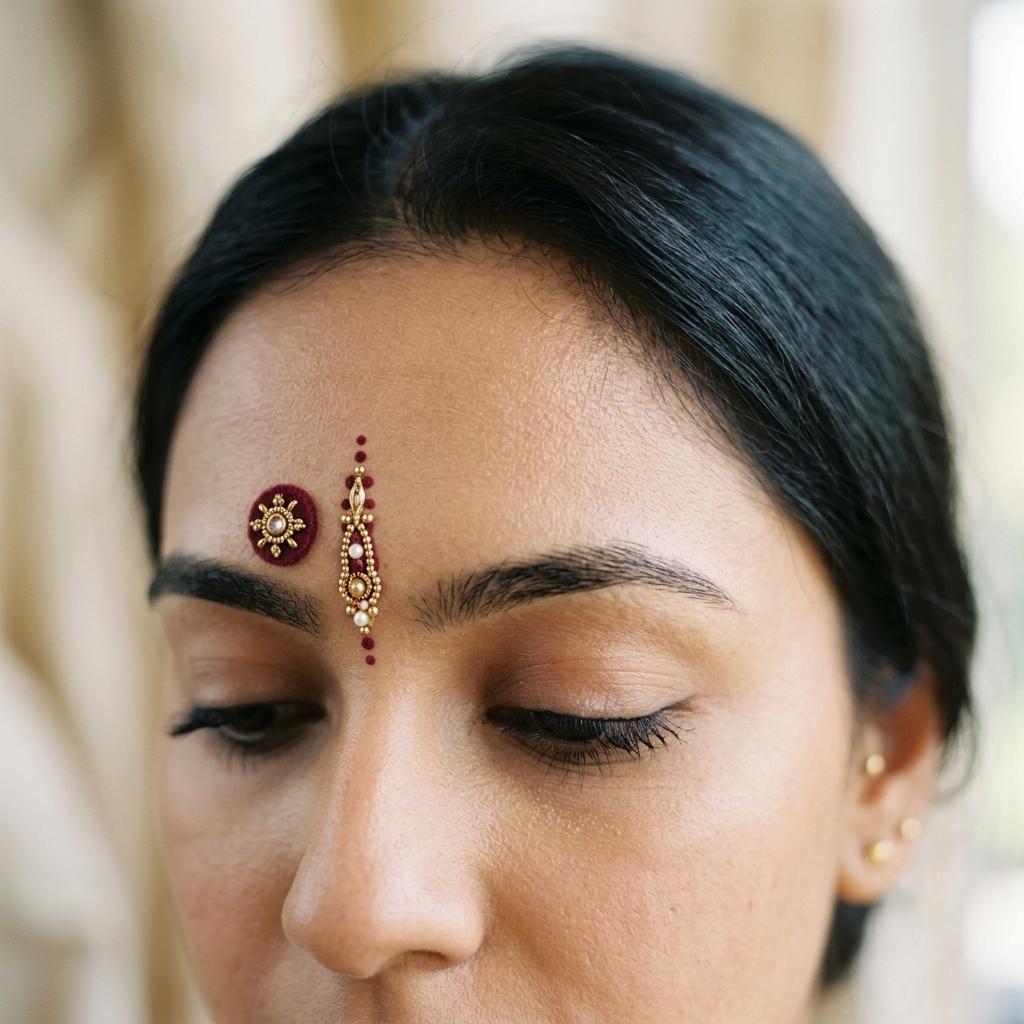
The Sacred Dot: Unlocking the Bindi's Styling Potential
In the vibrant tapestry of Indian ethnic fashion, few elements carry as much cultural weight and visual impact as the bindi. Far more than just a decorative dot, the bindi, derived from the Sanskrit word 'bindu' meaning 'drop' or 'point,' symbolizes the mystical third eye, wisdom, spiritual awakening, and a woman's marital status or auspiciousness. From ancient scriptures to modern runways, it has graced the foreheads of Indian women, evolving from a simple vermillion mark to an exquisite piece of artistry.
While many might instinctively reach for a bindi that matches the color of their saree or lehenga, the true artistry of bindi styling lies in understanding its power to sculpt and balance facial features. A professionally chosen bindi doesn't just complement your outfit; it enhances your natural beauty by subtly altering visual proportions, creating harmony, and drawing attention to your most captivating features.
At AlankarAI, we believe every detail counts in crafting the perfect Indian look. This in-depth guide moves beyond mere color coordination to reveal the secrets of choosing the ideal bindi shape for your face, empowering you to make a statement that is both authentic and exquisitely balanced. Let's delve into the world of bindis and discover how this small dot can make a monumental difference.
Mastering the Art of Bindi Selection: A Face Shape Guide
Understanding your face shape is the cornerstone of any effective styling strategy, and bindi selection is no exception. Each face shape presents unique characteristics, and the right bindi can either accentuate or soften these features, leading to a well balanced aesthetic.
1. Round Face: Elongate and Define
Characteristics of a Round Face: A round face is characterized by its soft curves, with the width and length appearing almost equal. The jawline is typically rounded, and the cheeks are often full. The goal for a round face is to add vertical length and create the illusion of more angularity.
The Expert's Choice: Long, Vertical, or Teardrop Bindis. These shapes are your best allies. A long, slender bindi, whether it's a simple vertical line, an elongated teardrop, or a delicate crescent moon (chand bindi) placed vertically, draws the eye upwards and downwards. This vertical movement instantly elongates the face, making it appear more oval and less circular. The pointed or elongated ends of these bindis subtly introduce angles, counteracting the natural softness of a round face.
- Stylist Insight: Consider bindis with a slight curve or a small decorative element at the top or bottom, as long as the overall impression remains vertical. Placement is key: a bindi placed slightly higher on the forehead can further enhance the elongating effect. Experiment with bindis featuring tiny embellishments like stones or pearls along their vertical axis for added sophistication.
What to Avoid: Large, Broad Circular Bindis. Steer clear of bindis that are excessively wide or perfectly round, especially those with a large diameter. These shapes will only emphasize the roundness of your face, making it appear fuller rather than balanced. Similarly, bindis that are very short and wide should be avoided as they interrupt the desired vertical flow.
2. Oval Face: The Canvas of Versatility
Characteristics of an Oval Face: Often considered the 'ideal' face shape in many aesthetic traditions, an oval face is characterized by its balanced proportions. It's slightly longer than it is wide, with a gently rounded jawline and forehead. The symmetry and harmony of an oval face make it incredibly versatile.
The Expert's Choice: Medium-sized Circular Bindis or Designer Bindis. With an oval face, you have the luxury of choice. A classic, medium-sized circular bindi perfectly complements the natural symmetry without overwhelming or distorting your features. It maintains the inherent balance of your face.
- Stylist Insight: This is where you can truly experiment with 'Designer Bindis.' These can include bindis with intricate patterns, delicate stonework, multiple tiny dots arranged artfully, or abstract shapes. Since you don't need to correct any proportions, you can focus on matching the bindi to the intricacy and style of your outfit. For bridal looks, an oval face can beautifully carry elaborate kundan or pearl-studded bindis that extend into forehead embellishments. You can also play with placement – slightly higher for a regal look, or closer to the brows for a more intense gaze.
What to Avoid: While an oval face is forgiving, avoid bindis that are disproportionately large or extremely small, as they might disrupt the natural balance. The key is moderation to maintain harmony.
3. Long / Rectangular Face: Add Width, Soften Edges
Characteristics of a Long/Rectangular Face: A long or rectangular face is longer than it is wide, with a straight hairline and jawline, often creating a more angular appearance. The forehead, cheekbones, and jawline tend to be of similar width. The objective here is to add horizontal width and soften the vertical lines.
The Expert's Choice: Wide, Broad Circular Bindis or Horizontal Designs. To counteract the length, opt for bindis that create a horizontal illusion. A larger, broad circular bindi is excellent as it breaks the vertical line of the face, making it appear shorter and more proportional. Bindis with a wider horizontal spread, or even multiple dots arranged horizontally, can also achieve this effect.
- Stylist Insight: Consider bindis with a distinct horizontal emphasis. This could be a traditional Marwari bindi (often larger and circular, sometimes with a small dangling element), or a bindi composed of several small stones arranged in a horizontal arc. You can also experiment with bindis that are slightly wider than they are tall. Placement slightly lower on the forehead, closer to the eyebrows, can also help to 'shorten' the visible forehead length.
What to Avoid: Vertical, Long, or Teardrop Bindis. Any bindi that emphasizes verticality will only make a long face appear even longer. Avoid slender, elongated bindis, vertical teardrops, or any design that draws the eye up and down, as this exacerbates the existing length.
4. Square Face: Soften Angles, Introduce Curves
Characteristics of a Square Face: A square face is defined by a strong, angular jawline and a broad forehead, with the width of the forehead, cheekbones, and jawline being roughly equal. The overall impression is one of strength and definition. The goal is to soften these strong angles and introduce gentle curves.
The Expert's Choice: Round, U-Shaped, or Curved Bindis. To beautifully contrast the sharp angles of a square face, choose bindis that are inherently curved. A classic round bindi is an excellent choice, as its circular shape provides a soft counterpoint to the strong jaw and forehead. U-shaped bindis, crescent moons (chand bindis) placed horizontally, or bindis with soft, sweeping designs are also highly effective.
- Stylist Insight: Look for bindis with delicate curves and intricate, non-angular patterns. Bindis that are slightly smaller to medium in size often work best, as very large bindis might overpower the face. Consider bindis with subtle embellishments like small pearls or kundan work that maintain the curved aesthetic. The gentle arc of a crescent moon bindi, placed with its curve facing upwards, can beautifully soften the forehead.
What to Avoid: Angular, Geometric, or Very Straight Bindis. Avoid bindis with sharp edges, square shapes, or prominent geometric patterns. These will only echo and emphasize the angularity of your face, potentially making it appear harsher.
Beyond Face Shape: Holistic Bindi Styling
While face shape is paramount, a truly expert bindi choice considers the entire ensemble and occasion.
1. Occasion & Outfit Harmony
- Everyday/Casual: Simple, small bindis (round or a subtle vertical line) in a matching or contrasting color.
- Festive/Celebratory: Medium to large bindis, often with embellishments like stones, glitter, or velvet. Designer bindis shine here.
- Bridal/Grand Events: Elaborate, multi-stone, kundan, or pearl-encrusted bindis. These can often be part of a larger 'bindi art' extending onto the forehead. The bindi should complement the grandeur of bridal jewelry and attire.
2. Hair & Makeup Synergy
- Hairstyle: If you have bangs or a side parting, ensure your bindi is placed optimally without being obscured. A center parting often provides the perfect canvas for a prominent bindi.
- Eyebrows: The shape and definition of your eyebrows can influence bindi placement. A well-groomed brow line frames the bindi beautifully.
- Eye Makeup: Heavy eye makeup might call for a simpler bindi, while a subtle eye look can be elevated by a more ornate bindi.
3. Jewelry Integration
The bindi is rarely worn in isolation. It should ideally harmonize with your earrings, necklace, and especially your maang tikka (forehead ornament).
- Matching Styles: If your jewelry is ornate and traditional (e.g., kundan, polki), a similar style of bindi will create a cohesive look.
- Metal Tones: Ensure the metallic elements of your bindi (if any) complement the metal tone of your jewelry (gold, silver, antique finish).
- Maang Tikka: If wearing a maang tikka, the bindi should sit either just below it or be integrated into its design. The bindi should not compete with the tikka but rather enhance it.
4. Color Psychology & Skin Tone
While face shape dictates the form, color adds personality.
- Traditional: Red, maroon, and black are timeless.
- Modern: Experiment with colors that match or contrast your outfit.
- Skin Tone: Warmer skin tones often glow with gold, maroon, and earthy tones. Cooler skin tones might prefer silver, blues, and purples.
Bindi Styling Matrix: Your Quick Reference Guide
Here's a comprehensive guide to help you quickly choose the perfect bindi for your face shape and occasion.
| Face Shape | Recommended Bindi Shapes | Visual Effect Achieved | Best for Occasions | Complementary Jewelry Style | Hair & Makeup Tip |
|---|---|---|---|---|---|
| Round | Long, Vertical, Teardrop, Vertical Crescent Moon | Elongates face, adds verticality, creates oval illusion | Casual, Festive, Formal | Delicate, elongated earrings; subtle maang tikka | High bun/updo, defined brows, subtle winged liner |
| Oval | Medium Circular, Designer Bindis, Intricate Patterns | Maintains natural balance, highlights symmetry | All occasions (versatile) | Any style (traditional, modern, heavy, light) | Center parting, soft waves, focus on eye makeup |
| Long/Rectangular | Wide Circular, Horizontal Designs, Broad Marwari Bindis | Adds width, shortens face, softens vertical lines | Festive, Bridal, Grand Events | Wider chokers, statement earrings, elaborate maang tikka | Side parting, soft curls around face, bold lip |
| Square | Round, U-Shaped, Curved, Horizontal Crescent Moon | Softens angles, introduces curves, balances strong jaw | Festive, Formal, Evening | Round/hoop earrings, delicate necklace, floral motifs | Loose waves, braided styles, soft smokey eyes |
The AlankarAI Advantage: Your Personalized Bindi Stylist
The bindi, though small, possesses immense power to transform your entire look. Choosing the right shape is not merely about decoration; it's about understanding geometry, balance, and personal aesthetics. It's about making a conscious choice that celebrates your unique beauty.
At AlankarAI, we take the guesswork out of this intricate art. Our styling tool goes beyond generic advice. By analyzing your precise facial features and proportions from a simple upload, AlankarAI can:
- Identify Your Face Shape: Accurately determine your face shape for precise recommendations.
- Suggest Optimal Bindi Shapes: Provide personalized recommendations for bindi shapes that will best flatter and balance your features.
- Virtual Try-On: Allow you to virtually try on different bindi styles, colors, and sizes, so you can see exactly how they look on your face before you commit.
- Holistic Ensemble Matching: Integrate bindi suggestions with your chosen outfit, hairstyle, and jewelry, ensuring a cohesive and harmonious ethnic look.
No more guessing games or fashion faux pas. With AlankarAI, you're not just choosing a bindi; you're crafting a well balanced, culturally rich, and uniquely YOU statement. Elevate your ethnic style with the confidence that comes from expert, AI-driven insights.
Ready to discover your perfect bindi? Upload your photo to AlankarAI today and unlock a world of personalized styling!
Want a personalized analysis?
Upload your own outfit photo and let AlankarAI find the perfect matching jewelry for you.
Start Styling NowIndian ethnic-fashion writers and stylists. Every guide is reviewed for accuracy and cultural context before publishing. Read our editorial standards →
Get help choosing the right ethnic accessories.
Subscribe for weekly guides, ask a styling question, or tell us whether this page helped. Your feedback shapes the next AlankarAI guides.
Was this helpful?
A quick tap helps us improve future guides.
Editorial note: AlankarAI guides are written to provide styling education. Some store links on the site may be monetized, but article recommendations are intended to remain useful whether you shop online, locally, or from your own wardrobe.