
By AlankarAI Editorial Team · 7 min read · Reviewed for practical styling guidance
Bindi Styling Guide for Sarees, Lehengas, and Kurtis: How to Choose Shape, Size, and Color
A bindi can change the whole balance of an ethnic outfit. Learn how to choose bindi size, shape, color, and placement for sarees, lehengas, kurtis, anarkalis, and wedding looks.
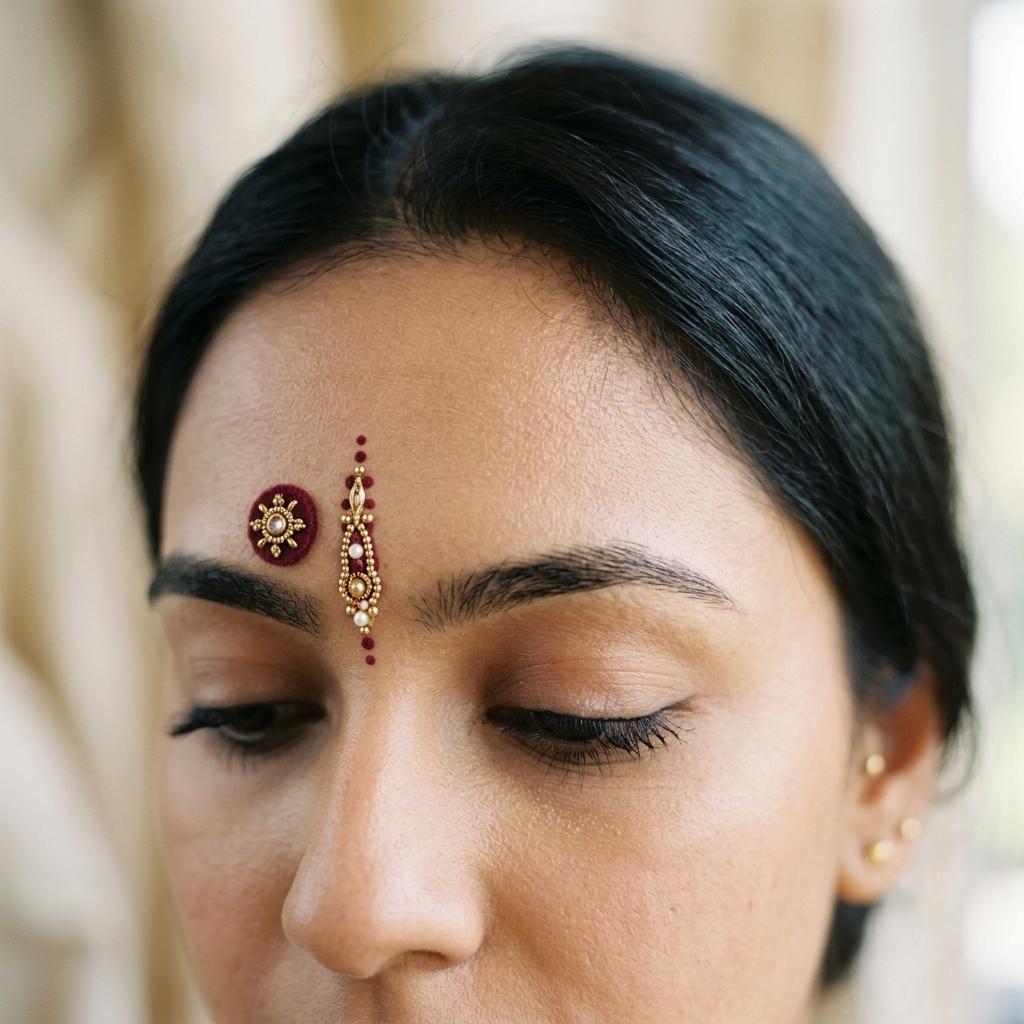
A bindi is small, but it can change the entire mood of an Indian ethnic outfit. The right bindi can make a saree look more graceful, a lehenga feel more bridal, a kurti look more polished, and a simple festive outfit feel complete. The wrong bindi can do the opposite: distract from the face, clash with jewelry, or make the styling feel unbalanced.
Most people choose a bindi by color alone. That helps, but it is only one part of the decision. Shape, size, placement, face structure, outfit weight, jewelry style, and occasion all matter. A tiny black bindi may look elegant with a cotton saree, while a stone bindi may suit a reception lehenga. A large round bindi can look powerful with a silk saree, but too strong with a lightweight georgette kurta.
This guide explains how to choose the right bindi for sarees, lehengas, kurtis, anarkalis, and wedding outfits without overthinking it.
1. Start With the Occasion
Bindi styling should respond to where you are going. A daily ethnic look, office festive day, puja, wedding ceremony, and reception do not need the same bindi.
Easy occasion guide
- Daily kurti or cotton saree: small black, maroon, brown, or simple colored bindi
- Office festive wear: small to medium matte bindi with clean shape
- Puja or temple visit: round red, maroon, or kumkum-style bindi
- Haldi or Mehndi: playful colored or floral-inspired bindi
- Sangeet: stone, shimmer, or decorative bindi
- Wedding ceremony: red, maroon, gold-accent, or bridal stone bindi
- Reception: sleek stone bindi, pearl bindi, or minimal metallic detail
The more formal the occasion, the more structured the bindi can be. For everyday wear, simplicity usually looks more elegant.
2. Choose Bindi Size Based on Face and Outfit Weight
Size is one of the most important bindi decisions. A bindi that is too small may disappear in a heavy bridal look. A bindi that is too large may overpower a soft kurti or pastel saree.
Small bindis
Small bindis work best with:
- kurtis
- cotton sarees
- office ethnic outfits
- minimal jewelry
- soft makeup
- printed everyday wear
They are subtle, clean, and easy to wear. If you are unsure, start small.
Medium bindis
Medium bindis are the safest festive option. They work with:
- silk sarees
- anarkalis
- festive kurta sets
- light lehengas
- wedding guest sarees
- jhumkas and bangles
Medium size gives enough presence without becoming dramatic.
Large bindis
Large bindis work best when the outfit has enough visual weight. Try them with:
- traditional silk sarees
- bridal sarees
- Banarasi looks
- temple jewelry
- strong kajal or classic makeup
- mature, elegant styling
Large bindis need confidence and balance. They look beautiful when the jewelry, hair, and outfit support them.
3. Match Bindi Shape to the Look
The shape of the bindi changes the expression of the outfit.
Round bindi
The round bindi is the most classic and versatile. It works with sarees, kurtis, lehengas, and anarkalis. Red, maroon, black, and brown round bindis are especially timeless.
Use a round bindi when you want the look to feel traditional, balanced, and easy.
Long or vertical bindi
Vertical bindis can make the face look slightly longer and more defined. They pair well with:
- long earrings
- sleek hairstyles
- high-neck blouses
- anarkalis
- formal sarees
Avoid very long bindis if the rest of the styling is already busy.
Stone bindi
Stone bindis add sparkle and are useful for weddings, parties, and receptions. They look best when they echo the jewelry tone.
- kundan jewelry: gold or white stone bindi
- pearl jewelry: pearl or champagne bindi
- diamond-look jewelry: clear stone bindi
- oxidized jewelry: black, silver, or dark stone bindi
Decorative bindi
Decorative bindis with multiple stones or shapes can look festive, but they need restraint. If the bindi is decorative, keep the forehead area clean and avoid too many hair accessories near the face.
4. Match Bindi Color With Outfit and Jewelry
Color matching should feel connected, not forced. The bindi does not have to match the outfit exactly. Sometimes a contrast looks better.
Safe color pairings
- Red saree or lehenga: red, maroon, gold-accent, or clear stone bindi
- Green outfit: maroon, gold, black, or emerald-toned bindi
- Yellow Haldi outfit: red, orange, brown, or floral-style bindi
- Pink outfit: maroon, rose, gold, pearl, or clear stone bindi
- White or ivory outfit: red, maroon, pearl, gold, or black bindi
- Black outfit: black, silver, clear stone, or deep red bindi
- Pastel outfit: pearl, champagne, rose gold, small maroon, or clear stone bindi
If your jewelry is the main focus, choose a bindi that supports the jewelry instead of competing with the outfit.
5. Bindi Styling for Sarees
Sarees are the easiest outfit to style with bindis because the bindi naturally supports the traditional frame of the look.
Cotton saree
Choose a small black, brown, or maroon bindi. Pair with oxidized earrings, small jhumkas, or simple bangles.
Silk saree
Choose a medium or large red, maroon, or gold-accent bindi. Temple jewelry and antique gold usually pair beautifully with this direction.
Chiffon or georgette saree
Choose a smaller, softer bindi. Pearl, clear stone, or slim round bindis work well because the fabric is light.
Organza saree
Choose a clean, minimal bindi. A tiny pearl or clear stone bindi can keep the look elegant.
6. Bindi Styling for Lehengas and Anarkalis
Lehengas and anarkalis need more balance because they often include embroidery, dupattas, and heavier earrings.
For lehengas:
- Use a stone bindi for receptions and Sangeet.
- Use maroon or red for bridal and traditional looks.
- Use pearl or champagne for pastel lehengas.
- Avoid oversized bindis if the maang tikka is already heavy.
For anarkalis:
- Use medium round bindis for festive looks.
- Use long bindis for elegant, formal styling.
- Use tiny bindis with printed anarkalis.
If you are wearing a maang tikka, keep the bindi smaller. Both pieces sit near the center of the face, so they should not fight for attention.
7. Placement Matters More Than People Think
The bindi should sit centered and slightly above the space between the eyebrows. Too low can make the face look crowded. Too high can look disconnected from the makeup.
Quick placement rules:
- Keep it aligned with the nose bridge.
- Leave a little breathing room above the eyebrows.
- Check placement after applying foundation or powder.
- If wearing a maang tikka, place the bindi where both pieces feel connected.
Take one quick photo before leaving. A bindi can look centered in the mirror but slightly off in photos.
8. How AlankarAI Can Help With Bindi Matching
Bindi styling depends on several small choices: outfit color, jewelry tone, fabric, occasion, face framing, and whether the look already includes a maang tikka or heavy earrings. AlankarAI helps by reading the outfit context first, then suggesting accessory directions that fit the whole look.
Use AlankarAI when you want to decide whether your outfit needs:
- a small everyday bindi
- a traditional red bindi
- a stone bindi for evening styling
- a pearl bindi for pastels
- a darker contrast bindi
- a minimal bindi because jewelry is already heavy
The best bindi is not always the most decorative one. It is the one that makes the face and outfit feel complete.
Conclusion
A bindi is one of the simplest ways to make an ethnic outfit feel intentional. Start with the occasion, choose the right size, match the shape to the mood, and let the color support the outfit and jewelry.
For daily wear, small and simple usually wins. For silk sarees and wedding looks, medium or larger traditional bindis can look beautiful. For receptions and pastel outfits, pearl or stone bindis often add just enough polish.
When in doubt, choose balance. The bindi should frame your expression, not overpower it. With a thoughtful bindi, even a simple saree or kurti can feel finished in seconds.
Want a personalized analysis?
Upload your own outfit photo and let AlankarAI find the perfect matching jewelry for you.
Start Styling NowIndian ethnic-fashion writers and stylists. Every guide is reviewed for accuracy and cultural context before publishing. Read our editorial standards →
Get help choosing the right ethnic accessories.
Subscribe for weekly guides, ask a styling question, or tell us whether this page helped. Your feedback shapes the next AlankarAI guides.
Was this helpful?
A quick tap helps us improve future guides.
Editorial note: AlankarAI guides are written to provide styling education. Some store links on the site may be monetized, but article recommendations are intended to remain useful whether you shop online, locally, or from your own wardrobe.