
By AlankarAI Editorial Team · 18 min read · Reviewed for practical styling guidance
Bridal Lehenga Styling: Balancing Heavy Work with the Perfect Accessories
Modern bridal lehengas are masterpieces of embroidery. But how do you pair them with heavy jewelry without looking cluttered? Discover the secrets to achieving the perfect 'Balanced Bridal' look.
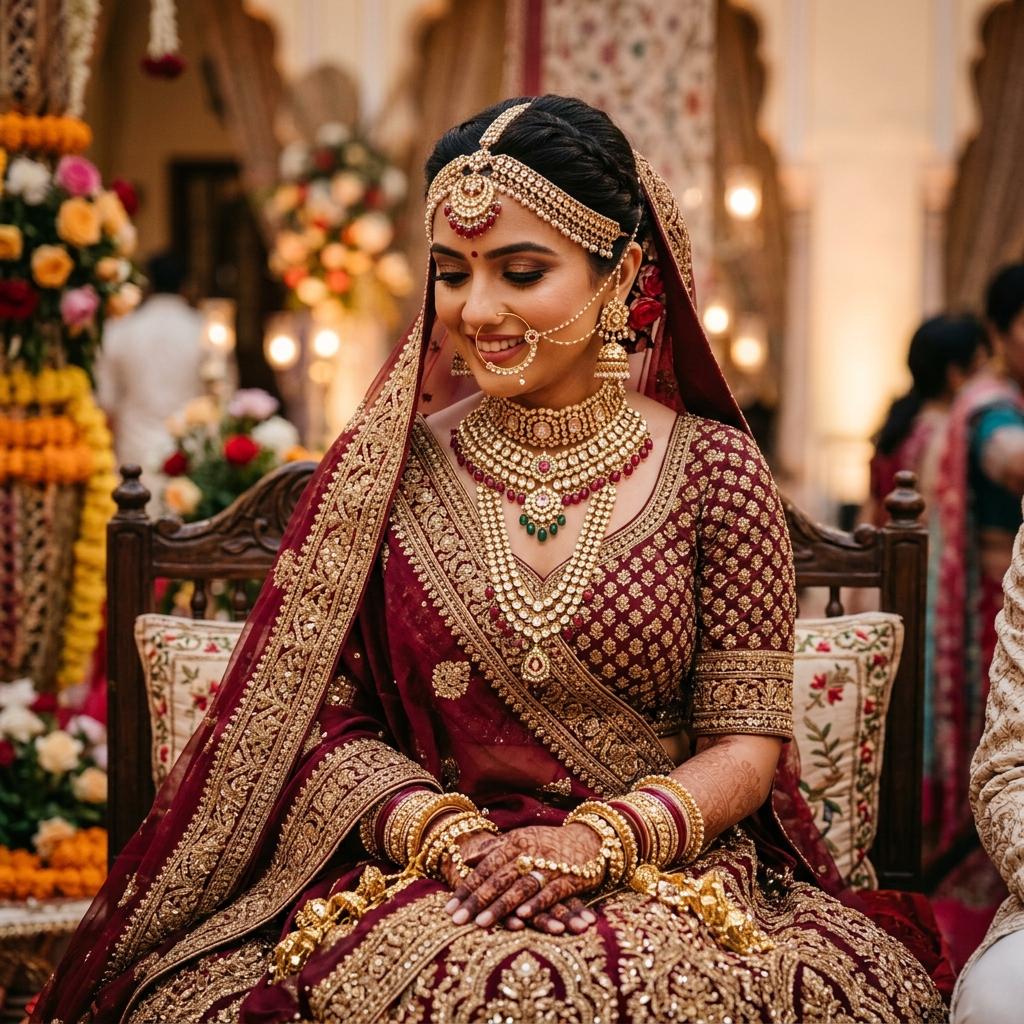
The Indian bridal lehenga is more than just an outfit; it's a tapestry of dreams, tradition, and intricate artistry. Modern designs push the boundaries of craftsmanship, featuring miles of opulent embroidery – from delicate zardozi and shimmering sequins to elaborate cutdana and resham work. While this grandeur is breathtaking, it presents a unique styling challenge: how do you complement such a magnificent ensemble with equally stunning jewelry without overwhelming the bride? The common pitfall is falling for the 'More is More' fallacy, where a desire for maximalism can inadvertently lead to a cluttered, heavy look that overshadows the bride herself.
As professional stylists at AlankarAI, we understand that your wedding day is about you shining through the splendor. The secret to a truly spectacular bridal appearance lies in mastering the art of Balance. It's about creating a harmonious visual narrative where every element — the lehenga, the jewelry, the makeup, and the hairstyle — works in concert to enhance your natural beauty, rather than competing for attention. This in-depth guide will walk you through the nuances of achieving that perfect 'Balanced Bridal' look, ensuring you stand out as the radiant star of your big day.
1. Let There Be a Hero: The Art of Focal Points
Every masterpiece needs a focal point, and your bridal look is no exception. Attempting to make every single element 'heavy' or 'statement-making' simultaneously results in visual noise, where no single piece can truly shine. The key is to designate one or two 'hero' elements that command attention, allowing other pieces to play a supportive, complementary role. This strategic approach ensures elegance and prevents your look from becoming overwhelming.
The Lehenga as the Hero
If your lehenga choli (blouse) features exceptionally heavy embroidery, intricate necklines, or elaborate sleeve detailing, let the fabric be your primary hero.
- Styling Insight: In this scenario, opt for a slightly lighter, perhaps single-layered or choker-style necklace that sits beautifully within or just above the blouse's neckline. This prevents the necklace from competing with the blouse's existing embellishments. Instead, channel your desire for grandeur into other areas: a magnificent, multi-tiered Maang Tikka, grand chandelier earrings (like intricate Jhumkas or Chandbalis), or a statement Haath Phool. The idea is to distribute the 'weight' of the embellishment across different parts of your upper body, ensuring visual interest without congestion.
The Jewelry as the Hero
Conversely, if your lehenga choli is relatively simpler – perhaps with minimal work on the neckline or a plain fabric that allows for a canvas – this is your stage for a truly show-stopping necklace.
- Styling Insight: This is the perfect opportunity to bring out that massive, multi-layered Polki, Kundan, or Meenakari necklace. Such a piece can transform a simpler blouse into a regal statement. When the necklace is the hero, consider balancing it with slightly less ornate earrings (perhaps studs, medium-sized drops, or simpler jhumkas that don't extend past the shoulder) and a more understated Maang Tikka. The goal is to allow the necklace to be the undisputed star, drawing all eyes to your décolletage and face.
The concept of 'negative space' is crucial here. Just as in art, empty space allows the eye to rest and appreciate the details that are present. Thoughtful use of negative space around your hero elements elevates the entire look, making it sophisticated rather than suffocating.
2. Managing the Metal: A Harmony of Hues
The metal tone of your jewelry is one of the most critical, yet often overlooked, aspects of bridal styling. Most traditional Indian lehengas feature embroidery in specific metallic threads – typically gold (zari) or silver (tara work). Matching your jewelry metal to your lehenga's metallic accents creates a cohesive, polished, and harmonious look.
The Golden Rule of Matching Metals
- Lehenga with Gold Zari: If your lehenga features traditional gold zari, antique gold work, or even contemporary rose gold tones, your jewelry should ideally follow suit. Opt for yellow gold, antique gold, or rose gold jewelry. This creates a seamless flow and enhances the richness of both the fabric and the accessories.
- Lehenga with Silver Zari: For lehengas adorned with silver zari, white gold, platinum-toned work, or even intricate thread work in cooler tones, silver or white gold jewelry is the perfect complement. This pairing exudes a modern, sophisticated elegance.
The Peril of Clashing Metals
Wearing yellow gold jewelry with a silver-worked lehenga, or vice-versa, can create a visual clash that looks 'disconnected' and can detract from the overall luxury of the ensemble. The eye struggles to reconcile the differing metallic temperatures, making the look appear less curated.
The Nuance of Mixed Metals and Gemstones
- The Exception: Multi-tonal Embroidery: Some contemporary lehengas feature embroidery that ingeniously blends gold and silver threads, or incorporates other metallic hues like copper or bronze. In such cases, an expert eye (or an styling tool like AlankarAI) can help you navigate the delicate balance of mixed-metal jewelry. For instance, a kundan set with both gold-toned settings and silver accents, or a polki set with a blend of white and yellow diamonds, could work beautifully.
- Gemstone Considerations: Beyond the metal, consider the dominant gemstones. If your lehenga has specific colored embellishments (e.g., emerald green, ruby red), choosing jewelry with complementary or contrasting gemstones can elevate the look. For example, a gold-worked lehenga with emerald green accents might pair exquisitely with a gold polki set featuring deep green emeralds. Pearls, with their iridescent quality, are often a neutral choice that can bridge different metal tones subtly, adding a touch of classic elegance.
3. The Crown Jewels: Maang Tikka vs. Matha Patti
The headgear is the veritable crown of the Indian bridal look, framing the face and adding a significant dimension of regal splendor. The choice between a Maang Tikka and a Matha Patti depends on several factors, including your face shape, forehead size, desired aesthetic, and the overall 'weight' of your other jewelry.
The Maang Tikka: Elegant Simplicity
A Maang Tikka typically consists of a pendant suspended by a chain, resting on the forehead, with a hook to secure it in the hair.
- Best For: Brides with smaller foreheads, or those who are opting for a very heavy necklace and want to keep the headpiece slightly understated. It's also an excellent choice if your hairstyle involves a prominent center parting that you wish to highlight without obscuring too much of your hair or forehead.
- Impact: Offers a delicate, focused sparkle, drawing attention to the center of the face without overwhelming it. It's versatile and can be paired with almost any bridal style, from minimalist to grand.
The Matha Patti: Regal Grandeur
A Matha Patti extends beyond the central Maang Tikka, featuring additional chains or embellished bands that drape across the hairline on either side, often connecting to the earrings or simply extending along the temples.
- Best For: Brides with larger foreheads, or those aiming for a more traditional, 'regal' or 'maharani' look. It beautifully frames the face, drawing attention to the eyes and cheekbones. It works exceptionally well with updos or intricately braided hairstyles, as it allows the patti to sit securely and prominently.
- Impact: Creates a broader, more impactful statement, enhancing the overall opulence. It can also help to visually balance a very heavy lehenga or a simpler necklace by adding significant embellishment to the upper part of the face. Some modern Matha Pattis are lighter, featuring delicate chains, while traditional ones can be quite substantial.
The Passa (Jhoomar): The Side Accent
Don't forget the Passa or Jhoomar, a fan-shaped or cascading headpiece worn on the side of the head, typically on the left.
- Styling Insight: A Passa adds an asymmetric touch of glamour, often chosen by Muslim brides but increasingly popular across all communities. It can be worn in conjunction with a Maang Tikka (especially if the tikka is simpler) or as a standalone statement piece. It works beautifully with side-swept hairstyles or intricate braids.
4. The Nath (Nose Ring): A Symbol of Bridal Charm
The Nath, or nose ring, is perhaps the most underrated yet incredibly impactful bridal accessory. It possesses a unique charm that can dramatically alter a bride's profile, adding an incredible amount of traditional 'vibe' and grace without contributing to visual 'weight'.
Cultural Significance and Modern Appeal
Historically, the Nath holds significant cultural and regional importance across India, symbolizing marital status and prosperity. From the grand Maharashtrian 'Nathni' to the delicate Punjabi 'Nath', its styles are as diverse as the country itself. Today, it’s a powerful fashion statement, embraced for its ability to infuse an ethereal, timeless beauty into the bridal look.
Choosing Your Nath Style
- The Classic Hoop: A simple, large gold or silver hoop, often adorned with a single pearl or a delicate gemstone, is a timeless choice. It adds drama and elegance without being overly ornate.
- Chained Nath: Many Naths come with a delicate chain that connects to the hair, often adorned with pearls or small beads. This style offers added security and a touch of traditional grandeur. It's particularly effective with updos where the chain can be beautifully showcased.
- Stud/Small Ring: For brides who prefer a more minimalist approach or are not accustomed to wearing larger nose rings, a small, ornate stud or a delicate ring can still add that touch of traditional charm without being overwhelming.
- Non-Pierced Options: For brides without a nose piercing, clip-on Naths are readily available, offering the same stunning aesthetic without the commitment.
Styling with Other Jewelry
- Balance: A large, ornate Nath pairs beautifully with a slightly simpler necklace or earrings, allowing it to be a subtle hero.
- Face Shape: Consider your face shape. A larger hoop can beautifully frame a rounder face, while a delicate stud might be better for a narrower face.
- Comfort: Comfort is paramount. Ensure the Nath is secure and doesn't cause discomfort, especially for a long wedding day.
5. The Hand Game: Bangles, Bracelets, and Rings
The hands of an Indian bride are adorned with a symphony of jewelry, each piece carrying cultural significance and contributing to the overall grandeur.
Chooda and Kaleere: Symbols of New Beginnings
- Chooda: A set of traditional red and white (or other colored) bangles, worn by Punjabi brides, symbolizing new beginnings and prosperity. Modern choodas come in various colors and designs, often embellished with stones.
- Kaleere: Gold or silver umbrella-shaped ornaments attached to the chooda, symbolizing blessings and good wishes.
- Styling Insight: These are often non-negotiable traditional pieces. The key is to ensure they complement the overall metal tone of your other jewelry. If your chooda is heavily embellished, you might opt for simpler rings or a delicate Haath Phool.
Kadas and Bangles: The Rhythmic Clink
- Kadas: Thicker, often intricately designed bracelets, worn individually or in pairs.
- Bangles: A multitude of thinner bangles, often mixed and matched.
- Styling Insight: The goal is a rich, full look on the wrists without hindering movement or appearing disjointed. You can mix plain gold/silver bangles with embellished ones, or stack designer bangles with ancestral pieces. Ensure the metal tones align with your lehenga and other jewelry. Consider the sleeve length of your blouse – long sleeves might require fewer bangles, while shorter sleeves can accommodate more.
Haath Phool and Rings: Delicate Artistry
- Haath Phool: An ornate piece that connects a bracelet to finger rings, often with chains across the back of the hand.
- Rings: From engagement rings to cocktail rings and delicate finger bands.
- Styling Insight: A Haath Phool can be a stunning statement, especially if your hands are otherwise minimally adorned. If you have very heavy bangles/kadas, a simpler Haath Phool or just a few carefully chosen rings might be preferable. Don't forget the importance of manicured hands and beautiful mehndi to complete the look.
6. The Waist & Ankles: Kamarbandh & Payal
These often-overlooked accessories can add a significant layer of sophistication and tradition to your bridal ensemble.
Kamarbandh (Waist Belt): Defining the Silhouette
A Kamarbandh is a decorative waist belt that accentuates the waistline and adds a touch of regal elegance.
- When to Wear: Ideal for brides whose lehenga choli is relatively simple at the waist, or if the lehenga skirt starts lower, allowing the kamarbandh to sit comfortably. It works beautifully with a fitted blouse and a flowing lehenga skirt.
- Considerations: Choose a kamarbandh that matches your jewelry's metal and embellishment style. Avoid it if your lehenga already has very heavy waist embroidery or if it's a very high-waisted design, as it might create unnecessary bulk. It can also be a great choice for brides who want to add an element of definition to their silhouette.
Payal (Anklets): The Melodious Touch
Payals are traditional anklets, often adorned with tiny bells (ghungroos) that create a melodious sound with every step.
- Traditional vs. Modern: Traditional payals are often heavy silver or gold, while modern designs include delicate chains with charms or minimal embellishments.
- Visibility: With floor-length lehengas, payals are often hidden, but their presence is felt through their gentle chime. If your lehenga allows for a glimpse of your ankles, choose a design that complements your overall jewelry.
- Styling Insight: Ensure the payals are comfortable and don't snag on your lehenga. Their subtle presence adds an authentic traditional touch, completing the bridal look from head to toe.
7. The Veil (Dupatta) & Hair Styling Synergy
The way your dupatta is draped and your hair is styled significantly impacts how your jewelry is perceived. These elements work in tandem to create the final bridal portrait.
Dupatta Draping and Jewelry Interaction
- Head Dupatta: If one dupatta is draped over the head, ensure your Maang Tikka or Matha Patti is securely placed and visible. The weight and embroidery of the head dupatta can influence the choice of earrings (lighter if the dupatta is heavy around the face, allowing the earrings to peek through).
- Shoulder Dupatta: If a second dupatta is draped over the shoulder or across the body, consider how it interacts with your necklace. A heavy dupatta might partially obscure a large necklace, making a simpler choker or a long, layered piece a better choice. Conversely, a sheer or lightly embroidered dupatta allows a statement necklace to shine.
- Styling Insight: Discuss your dupatta draping style with your stylist beforehand to ensure your jewelry choices are perfectly aligned.
Hairstyle and Headgear/Earring Harmony
- Updos: Classic updos (buns, braided updos) are perfect for showcasing intricate Matha Pattis, Passas, and grand chandelier earrings. They keep hair away from the face, allowing these pieces to be fully visible.
- Open Hair/Half-Up: If you prefer open hair or a half-up style, consider how it might interact with your earrings. Very long, heavy earrings might get tangled. A simpler Maang Tikka might be better than a full Matha Patti, as the hair will naturally frame the face.
- Styling Insight: Your hairstyle should complement your headgear and earrings, not compete with them. A professional hairstylist can help you achieve the perfect balance, securing heavy pieces comfortably for hours.
8. Color Harmony & Gemstone Play
Beyond metal tones, the colors within your jewelry, especially gemstones, play a vital role in creating a cohesive and vibrant bridal look.
Matching or Contrasting Gemstones
- Matching: If your lehenga has specific accent colors in its embroidery (e.g., emerald green, ruby red, sapphire blue), incorporating these colors into your jewelry through gemstones creates a sophisticated, coordinated look.
- Contrasting: For a more dramatic effect, choose contrasting gemstone colors. For example, a deep red lehenga might be beautifully accented by emerald green jewelry, or a pastel lehenga could be uplifted by vibrant fuchsia or turquoise stones.
- Neutral Gemstones: Pearls, white diamonds, and clear crystals are versatile and can complement almost any lehenga color, adding timeless elegance.
The Role of Specific Gemstones and Finishes
- Polki & Kundan: These traditional Indian jewelry styles often feature uncut diamonds (polki) or glass stones (kundan) set in gold, often with Meenakari (enamel work) on the reverse. Their rustic charm and inherent sparkle make them a favorite.
- Meenakari: The vibrant enamel work often found in Kundan and Polki jewelry adds a splash of color, allowing you to match or contrast with your lehenga's palette.
- Temple Jewelry: Inspired by temple architecture, this heavy gold jewelry often features motifs of gods and goddesses, adorned with rubies, emeralds, and pearls. It's perfect for a traditional South Indian bridal look.
- Pachchikam: A traditional Gujarati jewelry style, similar to Kundan, but often lighter and more accessible.
- Pearl Jewelry: Pearls offer a soft, lustrous sheen that can soften a heavily embroidered look or add classic grace to any ensemble.
Bridal Lehenga & Jewelry Styling Matrix
To help you visualize and plan your balanced bridal look, here's a detailed styling matrix:
| Lehenga Embroidery Style | Dominant Metal Tone | Necklace Suggestion | Earring Suggestion | Maang Tikka / Matha Patti | Nath (Nose Ring) | Hand Adornments (Bangles/Kadas/Rings) | Kamarbandh (Waist Belt) |
|---|---|---|---|---|---|---|---|
| Heavy Blouse/Neckline | Gold Zari | Delicate Choker / Single Strand Polki | Grand Chandbalis / Jhumkas (Gold/Polki/Kundan) | Multi-tiered Maang Tikka | Medium-Large Gold Hoop with Pearl / Chain Nath (Gold) | Heavy Chooda/Kadas, Haath Phool (Gold/Polki) | Optional, delicate |
| Heavy Blouse/Neckline | Silver/White Zari | Sleek Diamond Choker / White Gold Necklace | Diamond Chandbalis / White Gold Jhumkas | Delicate Matha Patti | Medium-Large Silver Hoop / Diamond Stud Nath | Silver/Diamond Bangles, Haath Phool (Silver/Diamond) | Optional, delicate |
| Simple Blouse/Minimal | Gold Zari | Statement Multi-layered Polki/Kundan Necklace | Medium Jhumkas / Studs (Gold/Polki/Kundan) | Simple Maang Tikka / Passa | Large Gold Hoop / Heavy Chain Nath (Gold) | Balanced mix of Kadas & Bangles, few rings | Highly Recommended |
| Simple Blouse/Minimal | Silver/White Zari | Statement Diamond/White Gold Necklace | Medium Diamond Drops / Studs | Simple Maang Tikka | Large Silver Hoop / Diamond Chain Nath | Balanced mix of Silver Bangles, few rings | Highly Recommended |
| All-Over Heavy Skirt | Gold Zari | Medium-Heavy Necklace (Polki/Kundan) | Medium-Large Jhumkas / Drops | Matha Patti (Regal) | Medium Gold Hoop | Heavy Chooda/Kadas, Haath Phool (Gold) | Optional |
| All-Over Heavy Skirt | Silver/White Zari | Medium-Heavy Necklace (Diamond/White Gold) | Medium-Large Diamond Drops | Matha Patti (Regal) | Medium Silver Hoop | Silver/Diamond Bangles, Haath Phool | Optional |
| Pastel/Contemporary | Rose Gold/Mixed | Delicate Diamond/Pearl Choker / Single Layer Kundan | Modern Drop Earrings / Pearl Drops | Minimal Maang Tikka | Small Diamond Stud / Delicate Rose Gold Hoop | Stacked Bracelets / Delicate Bangles | Optional, modern thin |
| Rich Jewel Tones | Gold Zari | Polki/Kundan with Matching/Contrasting Gemstones | Matching Jhumkas / Chandbalis with Gemstone accents | Traditional Maang Tikka | Gold Hoop with single colored stone | Heavy Kadas / Bangles with colored stones | Traditional, ornate |
Conclusion: Your AlankarAI Powered Radiance
Your wedding day is a celebration of love, culture, and your unique personality. The goal of bridal styling is not to mask you under layers of finery, but to elevate your natural beauty, allowing your inner radiance to shine through. By understanding the principles of balance – from designating hero elements and harmonizing metal tones to thoughtfully choosing headgear, hand adornments, and even the subtle details of your Nath – you can create a look that is both breathtakingly opulent and elegantly cohesive.
Navigating the myriad choices of lehenga designs, jewelry sets, and styling permutations can be overwhelming. This is where AlankarAI becomes your styling reference. Our styling tool takes the guesswork out of achieving your perfect 'Balanced Bridal' look.
How AlankarAI Elevates Your Bridal Styling:
- Virtual Try-On: Upload your chosen lehenga, or browse our extensive catalog, and virtually try on hundreds of jewelry combinations – from multi-layered necklaces to intricate Maang Tikkas and Naths. See how different pieces interact with your lehenga's embroidery and color palette.
- Personalized Recommendations: AlankarAI analyzes your lehenga's work (zari type, embroidery density), color, and neckline to suggest well balanced jewelry sets, adhering to the principles of metal harmony and hero elements discussed in this guide.
- Face Shape & Style Matching: Our AI can even consider your face shape and preferred aesthetic to recommend headgear and earring styles that will best complement your features.
- Eliminate Clutter, Ensure Cohesion: No more guessing if that heavy necklace will clash with your ornate blouse. AlankarAI visually simulates the entire ensemble, allowing you to fine-tune every detail and ensure a cohesive, clutter-free, and utterly stunning bridal appearance before you make any final purchase decisions.
Let AlankarAI be your reference in crafting a bridal look that is not just beautiful, but well balanced, reflecting your unique style and ensuring you are the confident at your event. Embrace tradition, celebrate modernity, and shine brightly with confidence and grace.
Want a personalized analysis?
Upload your own outfit photo and let AlankarAI find the perfect matching jewelry for you.
Start Styling NowIndian ethnic-fashion writers and stylists. Every guide is reviewed for accuracy and cultural context before publishing. Read our editorial standards →
Get help choosing the right ethnic accessories.
Subscribe for weekly guides, ask a styling question, or tell us whether this page helped. Your feedback shapes the next AlankarAI guides.
Was this helpful?
A quick tap helps us improve future guides.
Editorial note: AlankarAI guides are written to provide styling education. Some store links on the site may be monetized, but article recommendations are intended to remain useful whether you shop online, locally, or from your own wardrobe.