
By AlankarAI Editorial Team · 6 min read · Reviewed for practical styling guidance
Brocade Kurta Accessory Guide: How to Balance Rich Weaves With Jewelry, Dupatta, and Footwear
Brocade kurtas already bring shine, texture, and celebration. Learn how to style jewelry, dupattas, bangles, and footwear so the look stays polished instead of overloaded.
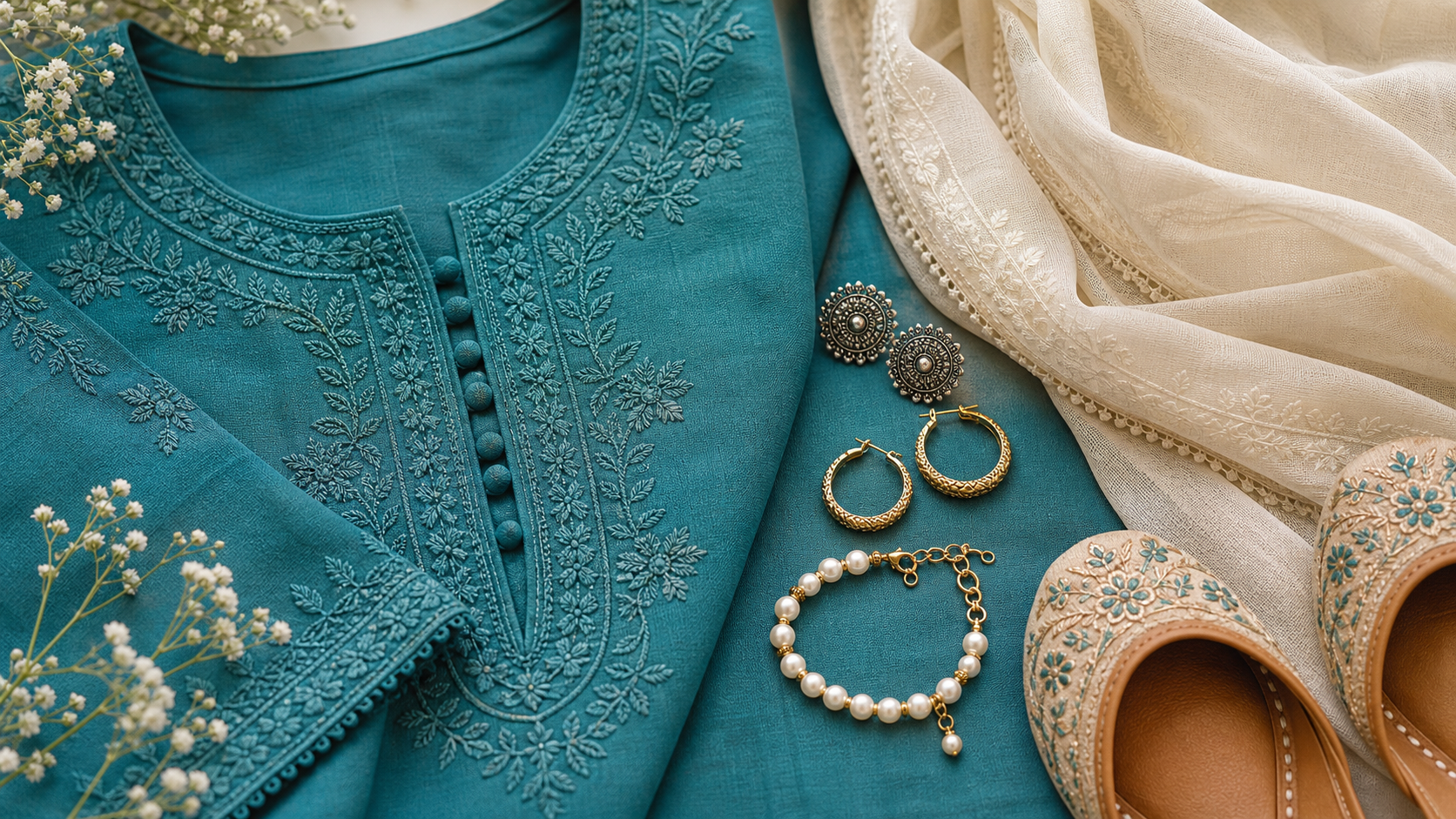
Brocade kurtas do not need much help looking festive. The woven motifs, gentle shine, and structured texture already create presence before any earring, dupatta, or bangle enters the outfit. That is exactly why styling them well depends more on restraint than on accumulation.
The strongest brocade looks feel celebratory, refined, and easy to wear. They let the fabric lead, then use accessories to sharpen the mood instead of covering the weave under too many competing details.
Start by Reading the Density of the Weave
Not every brocade kurta asks for the same accessory weight. Some designs carry small woven motifs on a calm base. Others have contrast zari, a decorated yoke, rich borders, or all-over pattern that already behaves like jewelry.
That first read should decide everything else.
| Brocade detail | Better styling response |
|---|---|
| Dense all-over weave | Compact earrings, lighter wrist styling |
| Decorative yoke or collar | Skip the necklace |
| Plain silhouette with woven motifs | Add one stronger accessory category |
| Rich sleeves or cuffs | Keep bangles edited |
| Minimal brocade with solid pants | Use dupatta or earrings to lift the look |
If the kurta already reflects light from multiple areas, the rest of the styling should organize that shine rather than increase it.
Match Jewelry Finish to the Brocade Mood
Brocade usually lives comfortably with warm metals. Antique gold, soft gold, kundan-look accents, pearl-and-gold combinations, and muted champagne finishes all work well because they echo the fabric instead of fighting it.
Silver can also work, but usually only when the brocade leans cool in color or the outfit is styled in a more contemporary direction. A charcoal, navy, teal, or wine brocade kurta can sometimes support oxidized or silver-tone earrings if the weave itself is not too ornate.
The easiest rule is simple: if the fabric already feels traditional and ceremonial, keep the jewelry warm and stable.
Let Earrings Lead Before You Add Anything Else
With brocade kurtas, earrings usually do more work than necklaces. They frame the face, show clearly in photos, and add polish without crowding the woven pattern near the neckline.
These directions usually work well:
- medium jhumkas for pujas, family dinners, and festive daywear
- chandbalis for evening functions or wedding-side styling
- pearl drops when the kurta color is pastel, ivory, blush, or sage
- kundan studs when the brocade is rich near the neck
- one stronger earring category instead of both oversized earrings and a necklace
If the kurta has a band collar, embroidery at the neck, or visible zari close to the face, earrings are often enough on their own.
Treat the Necklace as a Decision, Not a Default
Brocade textures can become crowded quickly when a necklace is added automatically. The neck should stay open unless the kurta shape clearly supports extra structure.
Use this simple filter:
- round or open neck with calmer weave: short necklace or pendant
- V-neck with space at the collarbone: slim collar or pendant
- high neck, yoke detail, or collar brocade: no necklace
- heavily woven front panel: keep the neck bare and let earrings lead
A bare neck is not incomplete when the fabric already carries visual richness. In many brocade outfits, it is the cleaner and more expensive-looking choice.
Keep Bangles and Rings Supportive
Brocade kurtas naturally feel festive, so bangles make sense. But the wrist should support the outfit, not compete with the weave or sleeve border.
Try combinations like these:
- two or three slim gold-tone bangles with one kada
- pearl-accented bangles for softer daytime styling
- glass bangles repeating one color from the kurta or dupatta
- one cocktail ring when the earrings are relatively simple
- one cuff only if the sleeves are plain
If the cuffs already carry zari or woven detail, reduce the stack immediately. Too much wrist styling can make brocade feel heavy instead of elegant.
Let the Dupatta Change the Outfit's Formality
One of the easiest ways to move a brocade kurta between occasions is through the dupatta. A lighter chiffon or organza dupatta can keep the look airy. A Banarasi-style, net, or bordered dupatta can push the same kurta into wedding-guest territory.
| Dupatta direction | Better styling move |
|---|---|
| Plain chiffon or organza | Slightly stronger earrings or bangles |
| Rich border near the face | Smaller earrings, no necklace |
| Contrast festive dupatta | Keep footwear and bag quieter |
| Tonal dupatta with soft shine | Use pearls or softer gold |
| No dupatta | Let earrings and footwear carry the finish |
The more decorative the dupatta becomes, the more disciplined the jewelry should become.
Footwear and Bags Should Echo, Not Compete
Brocade already brings decorative texture, so accessories below the waist should stay coordinated rather than flashy. Embroidered juttis, metallic flats, low block heels, mojaris, and neat sandals usually work better than shoes covered in heavy glitter or stones.
For bags, choose one finish that supports the brocade mood:
- fabric potli for traditional festive looks
- antique-gold clutch for richer jewel tones
- pearl or bead bag for softer pastel brocade
- structured compact clutch for modern evening styling
If the kurta is heavily woven, a quieter bag usually makes the full outfit look more intentional.
Hair and Makeup Should Respect the Fabric's Weight
Brocade has built-in formality, so hair and makeup do not need to become overly dramatic unless the event itself calls for it.
For daytime:
- softer lip tone
- neat braid, low bun, or brushed-open hair
- compact earrings
- light bindi if the outfit is traditional
For evening:
- stronger lip or liner
- defined waves or a clean bun
- a slightly fuller earring
- one sharper festive finishing detail, not many at once
If you add flowers, simplify one jewelry category. Brocade plus gajra plus a heavy dupatta plus a necklace often becomes more styling than the outfit actually needs.
A Simple Brocade Kurta Formula
If you want a repeatable approach, use this order:
- Check whether the weave, neckline, or sleeves already carry the most richness.
- Choose earrings first.
- Add a necklace only if the neckline has true breathing room.
- Match bangles to sleeve detail, not just the occasion.
- Use the dupatta to decide how formal the look should feel.
That method usually keeps the outfit festive, balanced, and photograph-friendly without flattening the beauty of the brocade itself.
How AlankarAI Helps
AlankarAI can compare brocade density, kurta color, neckline shape, sleeve detail, dupatta styling, and occasion type to recommend whether the look needs jhumkas, pearls, a quieter wrist, or no necklace at all. That matters because brocade styling is not about proving how many accessories you own.
It is about giving a rich fabric enough space to look rich.
Want a personalized analysis?
Upload your own outfit photo and let AlankarAI find the perfect matching jewelry for you.
Start Styling NowIndian ethnic-fashion writers and stylists. Every guide is reviewed for accuracy and cultural context before publishing. Read our editorial standards →
Get help choosing the right ethnic accessories.
Subscribe for weekly guides, ask a styling question, or tell us whether this page helped. Your feedback shapes the next AlankarAI guides.
Was this helpful?
A quick tap helps us improve future guides.
Editorial note: AlankarAI guides are written to provide styling education. Some store links on the site may be monetized, but article recommendations are intended to remain useful whether you shop online, locally, or from your own wardrobe.