
By AlankarAI Editorial Team · 4 min read · Reviewed for practical styling guidance
Ear Cuffs with Sarees and Kurtas: A Guide to Comfortable Styling
Pair ear cuffs with sarees and kurtas by balancing studs, necklines, hairstyles, and bangles, with a practical try-on check before you head out.
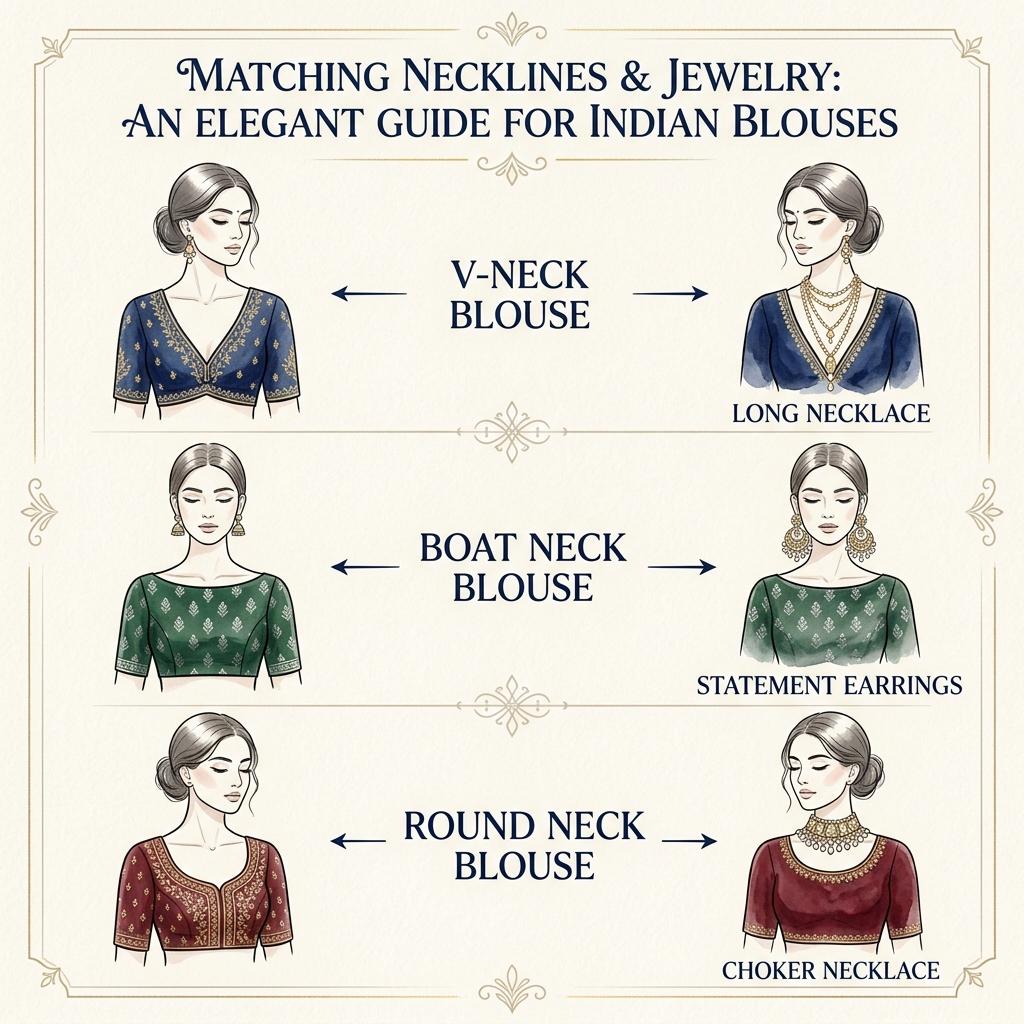
An ear cuff brings a little detail above the usual earring position. With a cotton saree, it can be the small finishing touch beside a plain blouse; with an embroidered kurta, it can add interest while leaving the neckline open. You can begin with a piece you already own and build the rest of the outfit around how it sits.
The most useful starting point is the actual cuff, rather than a matching jewelry set. Notice its size, finish, fastening, and whether it feels comfortable alongside your everyday earrings.
Start with the Fit
Ear cuffs vary in construction. Some sit around the edge of the ear without a piercing, while others connect to a pierced stud or have a chain attachment. Follow the fitting instructions for your own piece and avoid forcing a fixed design into a different shape.
Try it on before getting fully dressed. Turn your head, speak, and move around normally. A cuff should feel secure without pinching; if it hurts or repeatedly slips, choose another piece for the occasion. A more elaborate look is only enjoyable when you are comfortable wearing it.
If the cuff connects to a stud, check the chain when you turn your head. It should not tug at the piercing or catch on your hair.
Give the Cuff a Clear Neighbour
A small, smooth stud is an easy companion for an ornate cuff. It leaves room to appreciate the detail higher on the ear. If the cuff is a simple metal band, try a modest drop earring and compare the two pieces together.
You can also wear a cuff on one side. Keep matching studs in both ears if you like a familiar base, then let the cuff provide the asymmetry. There is no need to buy a second cuff just to make the arrangement identical.
With jhumkas, look at both scale and movement. A compact jhumka may sit neatly below a fine cuff, while a wide, swinging pair can crowd a more elaborate design. Try the combination with your hair arranged before deciding.
Let the Blouse or Kurta Set the Next Step
A high embroidered neckline already carries detail close to the face. Begin with your cuff and studs, then assess whether you want a necklace at all. The embroidery may provide enough interest on its own.
With a plain open neckline, a fine chain can connect the look without filling every space. If you prefer a statement necklace, try a smaller cuff and see whether both details remain distinct from a conversational distance.
For a saree, arrange the pallu before making this choice. A decorated border near the shoulder can change the balance considerably. Keep the accessories you enjoy seeing together, rather than adding a necklace simply because it belongs to a set.
Arrange Hair Around the Fastening
A side tuck or low bun can make a cuff easier to see. Loose hair can work just as well, especially with a smooth design that does not catch when strands move across it.
Put hairpins in place first, then add the cuff. Check behind the ear, where pins, spectacle arms, earring backs, and cuff attachments may share the same space. Move each item as you normally would during the day.
If you plan to wear a dupatta over your head, try that arrangement too. Raised prongs and chains can catch on delicate fabric. A simpler piece may be more comfortable for that part of the celebration.
Repeat One Detail at the Wrist
You do not need an elaborate bangle stack to complete the look. A gold-toned cuff can connect with a slim gold-toned kada, while a silver-toned design can sit alongside a few textured bangles in a similar finish.
For a cuff with coloured stones or enamel, repeat one shade from the piece in your bangles if it also works with the outfit. Keep the remaining bangles simple so the repeated colour feels intentional without becoming a requirement for every accessory.
If your saree already has several colours, let the wristwear follow its border and keep the cuff in a neutral metal finish. Use what you have before looking for an exact match.
Three Wardrobe Combinations to Try
| Outfit | Ear cuff pairing | Finishing detail |
|---|---|---|
| Plain cotton saree with a contrast blouse | Fine cuff with small studs | A slim kada echoing the metal finish |
| Embroidered high-neck kurta | Textured cuff with simple studs | A few bangles drawn from the embroidery colours |
| Silk saree with a quieter blouse | Stone-set cuff with compact drops | A low bun and a restrained bangle stack |
Treat these as starting points for a try-on. The same cuff can feel understated or festive depending on the fabric, hairstyle, and other jewelry around it.
Finish with a Movement Check
Once you are dressed, turn your head, adjust your pallu or dupatta, and put on your spectacles if you wear them. Check that the cuff remains comfortable and that its edges stay clear of fabric and hair.
Ear cuffs offer another way to enjoy jewelry with ethnic wear. Start with a comfortable fit, give the design enough room beside your earrings, and repeat a detail at the wrist only if you like the connection.
Want a personalized analysis?
Upload your own outfit photo and let AlankarAI find the perfect matching jewelry for you.
Start Styling NowIndian ethnic-fashion writers and stylists. Every guide is reviewed for accuracy and cultural context before publishing. Read our editorial standards →
Get help choosing the right ethnic accessories.
Subscribe for weekly guides, ask a styling question, or tell us whether this page helped. Your feedback shapes the next AlankarAI guides.
Was this helpful?
A quick tap helps us improve future guides.
Editorial note: AlankarAI guides are written to provide styling education. Some store links on the site may be monetized, but article recommendations are intended to remain useful whether you shop online, locally, or from your own wardrobe.