
By AlankarAI Editorial Team · 7 min read · Reviewed for practical styling guidance
Ethnic Wear Color Mistakes: 10 Common Pairing Problems and How to Fix Them
Color can make or break a saree, lehenga, kurta, or wedding guest look. Learn the most common ethnic wear color mistakes and how to fix them with jewelry, bangles, bindis, dupattas, bags, and makeup.
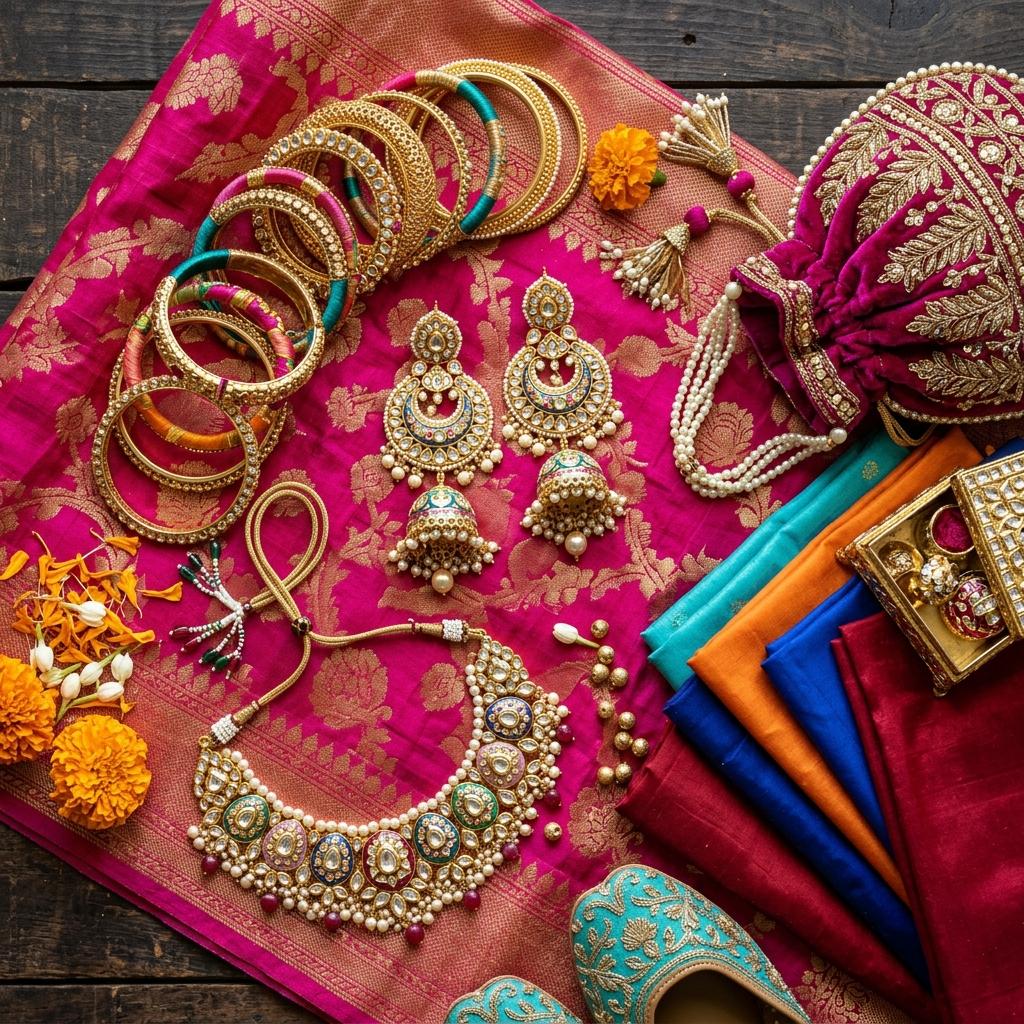
Color is usually the first thing people notice in an ethnic outfit. A beautiful saree, lehenga, kurta, or anarkali can look polished when the colors support each other. The same outfit can look confusing when the jewelry, bangles, bindi, bag, dupatta, and makeup all compete for attention.
Most color mistakes are not about having “bad taste.” They happen because Indian ethnic wear often has many color elements at once: base fabric, border, blouse, dupatta, embroidery, stones, bangles, footwear, flowers, and makeup. When too many of those elements shout at the same volume, the final look feels busy.
The good news is that color styling becomes much easier once you know the common mistakes. This guide explains the problems and gives practical fixes for sarees, lehengas, festive suits, bridal outfits, and wedding guest looks.
1. Matching Everything Too Exactly
The most common mistake is trying to match every accessory to the exact outfit color. A green saree with green bangles, green earrings, green bindi, green clutch, and green eyeshadow can look flat instead of elegant.
Better fix
Use one main color and one or two supporting colors.
For example:
- green saree with antique gold jewelry
- emerald bangles with a gold clutch
- maroon bindi instead of green bindi
- nude or warm brown makeup
Exact matching works best in small accents, not across the whole look.
2. Ignoring the Border Color
In sarees and dupattas, the border often gives the best clue for accessories. If you only match the base color, you may miss the most natural styling anchor.
Better fix
Pick jewelry or bangles from the border color.
Examples:
- pink saree with gold border: gold bangles and kundan earrings
- blue saree with silver border: silver, pearl, or diamond-style jewelry
- cream suit with red dupatta border: red bindi or red bangle accents
- green lehenga with orange border: orange potli or bangles in tiny accents
The border helps the look feel intentional.
3. Wearing Too Many Bright Colors Together
Indian outfits can carry bright colors beautifully, but too many strong colors can compete. A yellow outfit with hot pink bangles, blue earrings, red lipstick, green bindi, and a multicolor bag may feel scattered.
Better fix
Use the “one bright hero” rule.
Choose one strong color to lead, then keep the rest warm, metallic, neutral, or tonal.
For a yellow Haldi outfit:
- hero: yellow
- support: white flowers, gold bangles, soft pink lip
- avoid: too many unrelated neon accents
Bright outfits usually need calmer accessories.
4. Choosing Jewelry Metal Without Checking Undertone
Gold, silver, rose gold, oxidized, pearls, and antique finishes all change the color mood of an outfit. The wrong metal can make the outfit feel colder, duller, or less festive.
Better fix
Use metal to support the outfit temperature.
- warm colors like red, orange, mustard, rust, and maroon usually love gold or antique gold
- cool colors like icy blue, lavender, mint, and grey often work with silver, pearls, or white stones
- jewel tones like emerald, royal blue, wine, and purple can handle gold, kundan, or polki
- earthy colors like olive, beige, indigo, and terracotta work well with oxidized silver or antique finishes
Metal is part of the color palette, not an afterthought.
5. Forgetting Skin Tone and Makeup
An outfit color can look different depending on makeup and skin tone. Sometimes the clothing is fine, but the lipstick, blush, or bindi makes the color look harsh.
Better fix
Use makeup to bridge the outfit and face.
If the outfit is very cool-toned, use soft rose, mauve, or berry makeup. If the outfit is warm-toned, use peach, coral, brown, or brick tones. For deep traditional colors, maroon, brown, and classic red can work beautifully.
Avoid copying the outfit color directly onto the eyelids unless the look is editorial or very intentional.
6. Using Black as the Default Fix
Black accessories are useful, but they are not always the best answer. A pastel lehenga with a black clutch or black footwear can feel too heavy. A soft organza saree may lose its elegance with harsh black accents.
Better fix
Try softer neutrals first:
- ivory
- champagne
- nude
- tan
- blush
- metallic gold
- pearl
- soft silver
Use black when the outfit already has black, deep contrast, or a strong evening mood.
7. Not Repeating Any Color
Some looks fail because every piece is separate. The outfit is one color, jewelry another, bangles another, bag another, and makeup another. Nothing repeats, so the look has no rhythm.
Better fix
Repeat one color at least twice.
Examples:
- emerald stones and emerald bangle accents
- maroon bindi and maroon lipstick
- gold border and gold bangles
- pearl earrings and pearl clutch
- pink dupatta border and pink potli tassels
Repeating a color makes the outfit feel styled instead of assembled.
8. Making the Blouse and Saree Fight Each Other
A contrast blouse can look stunning, but the colors need a relationship. Random contrast can make the outfit feel disconnected.
Better fix
Choose blouse contrast from:
- saree border
- embroidery thread
- pallu detail
- jewelry stone color
- a neighboring color family
For example, a teal saree can work with a magenta blouse if there is pink in the border or jewelry. A plain teal saree with a random neon blouse may feel abrupt.
9. Wearing Heavy Color With Heavy Embroidery
Deep colors plus heavy embroidery plus colorful stones plus heavy makeup can become visually dense. This is common in bridal and reception looks.
Better fix
Let one thing breathe.
If the lehenga is deep maroon with gold embroidery, you may not need colorful jewelry. Gold, kundan, pearls, and a controlled bangle stack may be enough. If the outfit is pastel with delicate embroidery, colored stones can add life.
Heavy color and heavy work need edited accessories.
10. Ignoring Event Lighting
Colors behave differently in daylight, indoor yellow light, camera flash, and evening lighting. Pastels can wash out under harsh light. Dark colors can lose detail at night. Metallics can reflect strongly in photos.
Better fix
Match color depth to event setting.
- daytime events: pastels, florals, fresh colors, pearls, lighter jewelry
- evening events: jewel tones, metallics, deeper lips, stronger earrings
- temple or puja: red, maroon, cream, gold, silk tones
- sangeet: contrast, shimmer, and movement-friendly accents
- reception: polished metallics, monochrome, wine, navy, emerald, ivory
Always check the outfit once in similar lighting before the event.
Quick Color Fix Chart
| Problem | Quick fix |
|---|---|
| Outfit feels too matched | Add metallic or neutral contrast |
| Outfit feels too busy | Remove one bright accessory color |
| Jewelry feels wrong | Change metal tone |
| Face looks washed out | Warm up lipstick, blush, or bindi |
| Accessories feel random | Repeat one color twice |
| Pastel outfit feels dull | Add pearls, stones, or one soft contrast |
| Dark outfit feels heavy | Add shine, skin space, or lighter jewelry |
| Saree/blouse contrast feels odd | Repeat blouse color in bangles or bag |
Color Pairing Ideas That Usually Work
Red
Gold, kundan, pearls, maroon, emerald, ivory, antique gold.
Pink
Rose gold, pearls, champagne, mint, silver, ruby accents, ivory.
Green
Gold, emerald, maroon, ivory, pink accents, antique finish.
Blue
Silver, pearls, white stones, gold for royal blue, coral accents, navy-on-navy.
Yellow
White flowers, gold, peach, green accents, pearl, soft pink.
Ivory
Gold, pearls, emerald, ruby, champagne, pastel stones.
Black
Gold, silver, oxidized, pearls, deep red, emerald, mirror work.
Final Styling Formula
Use this order when the colors feel confusing:
- Identify the outfit base color.
- Identify the border or embroidery color.
- Choose one jewelry metal.
- Repeat one accent color in two places.
- Keep makeup in the same temperature family.
- Remove one accessory if the look feels busy.
Color styling is not about matching everything. It is about creating a clear visual story. When the base color, border, jewelry, bangles, bindi, and makeup support each other, the outfit looks more expensive, more thoughtful, and easier to wear.
Want a personalized analysis?
Upload your own outfit photo and let AlankarAI find the perfect matching jewelry for you.
Start Styling NowIndian ethnic-fashion writers and stylists. Every guide is reviewed for accuracy and cultural context before publishing. Read our editorial standards →
Get help choosing the right ethnic accessories.
Subscribe for weekly guides, ask a styling question, or tell us whether this page helped. Your feedback shapes the next AlankarAI guides.
Was this helpful?
A quick tap helps us improve future guides.
Editorial note: AlankarAI guides are written to provide styling education. Some store links on the site may be monetized, but article recommendations are intended to remain useful whether you shop online, locally, or from your own wardrobe.