
By AlankarAI Editorial Team · 5 min read · Reviewed for practical styling guidance
Gharchola Saree Jewelry Guide: Gold, Kundan, and Balanced Bridal Pairings
Gharchola sarees already carry rich checks, zari, and bridal color, so the best styling is balanced rather than overloaded. Learn how to pair gold, kundan, pearls, bangles, and blouses with Gharchola drapes for weddings and family functions.
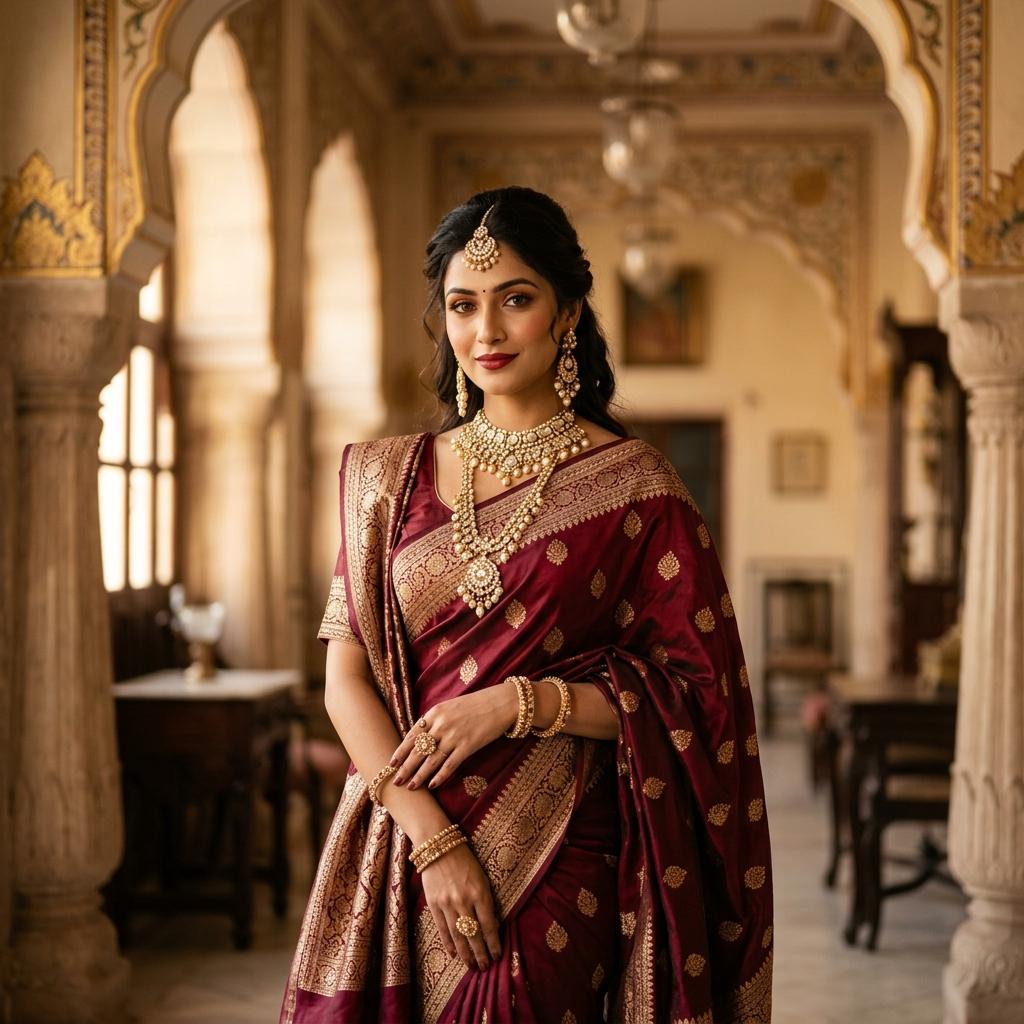
Gharchola sarees already arrive with presence. The checked grid, zari detailing, traditional red and maroon palette, and wedding association give the drape weight before you add jewelry. That is exactly why styling them well is less about adding every possible bridal piece and more about deciding which elements should lead.
The strongest Gharchola looks feel rooted, festive, and edited. Let the saree hold its ceremonial richness, then use jewelry to frame the face, support the neckline, and reinforce the bridal mood without making the outfit feel crowded.
Start with the Density of the Saree
Not every Gharchola carries the same visual intensity.
If the checks are dense, the zari is bright, and the border is heavy, keep the jewelry more focused. If the saree has a cleaner body with a strong pallu or border, you have room for a necklace and fuller wrist styling.
Use this simple rule:
- heavily worked Gharchola = earrings, necklace, and selective bangles
- medium-detail Gharchola = fuller bridal set with restraint elsewhere
- lighter Gharchola for smaller functions = statement earrings plus one neck or wrist focus
This keeps the saree visible instead of burying it under too many competing details.
Gold Is the Most Natural Match
Traditional gold remains the easiest partner for Gharchola sarees. It echoes the zari, supports the warm red family, and keeps the styling rooted in the heritage of the drape.
Strong gold-led options include:
- classic jhumkas
- antique gold chokers
- short temple-inspired necklaces
- one solid kada with a small bangle stack
- gold studs for quieter family events
If the saree is being worn for a wedding ritual, gold usually feels more coherent than very cool silver or high-shine western stones.
Kundan and Polki Work for Bridal Softness
If you want the look to feel more bridal than festive, kundan and polki-style pieces are usually the safest step. They bring structure and occasion without fighting the Gharchola pattern.
They work especially well when:
- the blouse neckline is open enough for a choker
- the saree border is rich but not overly glittery
- the event is a wedding, engagement, or close family celebration
- you want a softer finish than full yellow-gold layering
For many Gharchola looks, a kundan choker with matching earrings and a clean maang tikka is enough. Adding extra long necklaces, oversized passa, and stacked hair accessories all together can quickly become too heavy.
Pearls Help Soften the Red Palette
Pearls are useful when a Gharchola outfit needs a little lightness. They break up the intensity of maroon, red, rust, and gold without making the styling feel disconnected.
Good pearl directions include:
- pearl-edged kundan earrings
- a pearl-and-gold choker
- one pearl bracelet with gold bangles
- pearl drops for a bride who wants a softer daytime look
Pearls are especially helpful for engagement functions, family pujas, or wedding mornings where you want polish without full reception-level heaviness.
Match the Jewelry to the Blouse Neckline
The blouse decides whether the attention should stay near the face or move to the neck.
High neck, closed neck, and heavily embroidered blouse fronts usually look better with earrings, tikka, and bangles rather than a large necklace. V-necks, sweetheart necklines, and deeper round necks can carry chokers, short kundan collars, or layered bridal necklaces more easily.
If the blouse sleeves already have zari, beads, or embroidery, reduce the bangles slightly. A crowded sleeve and wrist area can make the whole look feel stiff in photographs.
Bangles Should Support, Not Drown, the Saree
Gharchola styling often includes bangles by default, but the stack still needs editing. Glass bangles in red or green, gold kadas, pearl bangles, or a bridal stack can all work depending on the function.
Try these combinations:
- classic bridal Gharchola = red glass bangles with two stronger gold kadas
- engagement or family wedding = pearl bangles with antique gold
- smaller festive event = one kada and a few slim bangles
- heavily embroidered blouse = reduce the stack and let the sleeves lead
The goal is rhythm at the wrist, not noise.
Footwear and Bag Should Stay Traditional
Because Gharchola sarees already feel ceremonial, the finishing accessories should stay aligned with that mood. Embroidered juttis, metallic sandals, block heels, and classic potlis usually work better than glossy western clutches or sharply modern bags.
Match the bag to one finish already present:
- gold zari = matte gold potli or clutch
- pearl-edged jewelry = pearl-accented bag
- green bangles or accents = subtle green detailing in the potli
If the jewelry is already strong, let the footwear and bag remain supportive rather than decorative on their own.
Quick Pairing Guide
| Gharchola styling direction | Best jewelry match |
|---|---|
| Deep red with bright zari | Traditional gold or antique gold |
| Maroon with softer gold work | Kundan, polki, or pearl-and-gold |
| Red and green bridal styling | Gold plus green bangles or kundan |
| Daytime family ceremony | Pearls, lighter gold, or small kundan |
| Heavily embroidered blouse | Earrings, tikka, and edited bangles |
How AlankarAI Helps
AlankarAI can compare the saree color depth, zari intensity, blouse neckline, sleeve detail, and event type to suggest whether the look needs traditional gold, kundan, pearls, or a more restrained bridal mix. That matters because one Gharchola may need full wedding structure while another works better with lighter family-function styling.
For Gharchola sarees, the best result usually comes from respecting what is already rich. Let the checks, color, and zari carry the heritage, then add jewelry that sharpens the look instead of overwhelming it.
Want a personalized analysis?
Upload your own outfit photo and let AlankarAI find the perfect matching jewelry for you.
Start Styling NowIndian ethnic-fashion writers and stylists. Every guide is reviewed for accuracy and cultural context before publishing. Read our editorial standards →
Get help choosing the right ethnic accessories.
Subscribe for weekly guides, ask a styling question, or tell us whether this page helped. Your feedback shapes the next AlankarAI guides.
Was this helpful?
A quick tap helps us improve future guides.
Editorial note: AlankarAI guides are written to provide styling education. Some store links on the site may be monetized, but article recommendations are intended to remain useful whether you shop online, locally, or from your own wardrobe.