
By AlankarAI Editorial Team · 16 min read · Reviewed for practical styling guidance
Groom's Style Guide: How to Properly Accessorize Your Sherwani
Styling for grooms has evolved beyond just the sherwani. From the choice of Mala to the placement of the Kalgi, learn the essential rules for a sharp, sophisticated wedding look.
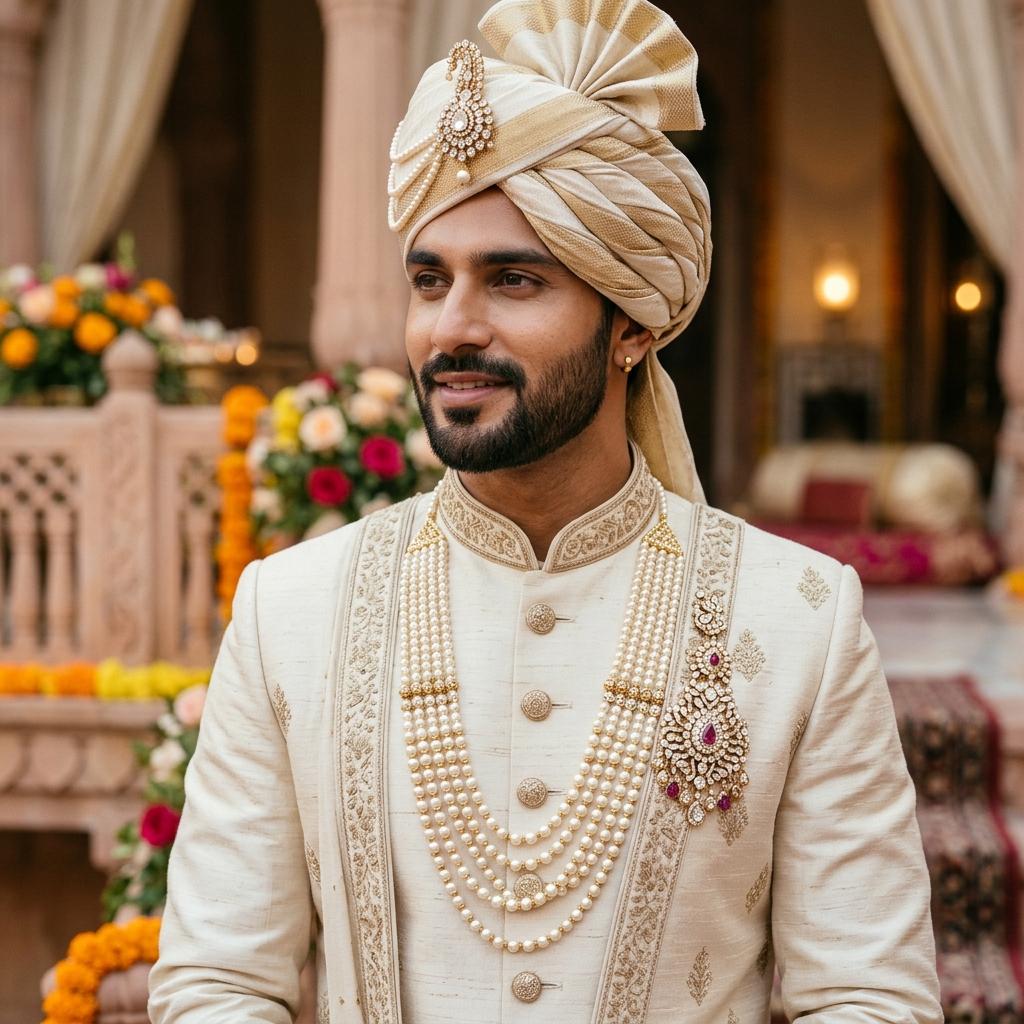
For too long, men's wedding fashion was seen as 'simple' compared to the bride's. The focus often defaulted to the bride's elaborate ensemble, leaving the groom with a seemingly straightforward task of choosing a sherwani. However, in 2026, the modern Indian groom understands that his wedding day look is a powerful statement of his personality, his cultural heritage, and his readiness for a lifetime commitment. It's no longer just about the sherwani itself, but about the meticulously chosen details that elevate it from a garment to a regal, sophisticated statement.
A well-accessorized groom embodies confidence, tradition, and an impeccable sense of style. Each accessory, from the majestic Kalgi to the understated pocket square, plays a crucial role in crafting a cohesive and impactful aesthetic. These aren't mere afterthoughts; they are the threads that weave together a narrative of grandeur and personal flair. Whether you're opting for a classic, heavily embroidered Sherwani, a contemporary Bandhgala, or a fusion Indo-Western ensemble, the art of accessorizing is paramount. This in-depth guide from AlankarAI delves into the essential rules, cultural significance, and professional styling insights to ensure every groom steps out looking nothing short of spectacular.
The Foundation: Your Sherwani & Turban (Safa/Pagdi)
Before diving into the embellishments, it's crucial to acknowledge the canvas: your sherwani and the accompanying turban. The style, fabric, color, and embroidery of your sherwani will dictate the direction of your accessory choices. Similarly, the turban (Safa or Pagdi) is not just a head covering but an integral part of the groom's regalia, setting the stage for the Kalgi.
Sherwani Styles and Fabrics
- Classic Sherwani: Often long, reaching below the knee, with intricate embroidery (zardozi, resham, dabka) on rich fabrics like raw silk, brocade, or velvet. This style demands traditional, opulent accessories.
- Achkan/Indo-Western: A shorter, more fitted version, sometimes paired with trousers or churidars. This offers flexibility for both traditional and contemporary accessory choices.
- Bandhgala: A formal, tailored jacket, often in luxurious wool blends, velvet, or silk. Accessories here tend to be more refined and minimalist.
- Fabric Choices: Silk, velvet, brocade, raw silk, jacquard – each fabric carries a different weight and sheen, influencing the texture and material of your chosen accessories.
The Turban (Safa/Pagdi)
The turban is arguably the most culturally significant accessory for an Indian groom. It symbolizes honor, respect, and celebration.
- Color & Fabric: Often coordinated with the sherwani, or chosen in a contrasting, complementary color. Fabrics range from crisp cottons to rich silks and shimmering chanderi.
- Draping Style: Regional variations abound, from the elaborate Rajasthani pagdi to the simpler Punjabi safa. The draping style impacts where the Kalgi can be placed and how it will sit.
- Embellishment: Some turbans come pre-stitched with subtle embellishments, which should be considered when selecting a Kalgi.
1. The Mala: A Regal Essential
A multi-layered mala (necklace) is more than just an ornament; it's a profound symbol of tradition and grandeur, drawing inspiration from the regalia of Indian royalty. It instantly elevates the groom's presence, adding a touch of majestic elegance.
Cultural Significance & Evolution
Historically, malas were worn by kings and noblemen, signifying wealth, power, and status. Made from precious stones, pearls, and gold, they were statements of authority. Today, the groom's mala carries this legacy, symbolizing his significant role in the wedding ceremony and his new status.
Types of Malas and Materials
Beyond just pearls, the modern groom has a plethora of choices:
- Pearl Malas:
- Classic Off-White/Cream: The most versatile and timeless choice, complementing almost any sherwani color. Look for lustrous, uniform pearls.
- Layered Variations: Multi-strand designs (2-5 layers) add depth and grandeur. Some feature graduated pearl sizes.
- Accent Pearls: Incorporating smaller gold beads, crystal spacers, or semi-precious stones between pearls for added texture.
- Gemstone Malas:
- Emerald/Ruby/Sapphire: Often paired with contrasting sherwanis (e.g., emeralds with a cream or gold sherwani, rubies with an ivory or deep blue). These add a pop of rich color and luxury.
- Kundan/Polki Malas: Featuring uncut diamonds set in gold foil, these are incredibly opulent and perfectly match sherwanis with Kundan or Polki embroidery.
- Gold/Silver Malas:
- Temple Jewelry Style: Elaborate designs with motifs of deities, often in antique gold finishes, ideal for a very traditional, culturally rooted look.
- Chain Malas: Simpler, thicker gold or silver chains, sometimes with a prominent pendant, for a more understated yet powerful statement.
- Beaded Malas: Made from glass beads, onyx, or other semi-precious stones, offering a contemporary twist with a range of colors and textures.
Professional Styling Nuances for the Mala
- The Length & Fit: The mala should ideally fall just above the mid-point of your chest, resting gracefully.
- Too Long: It can look disproportionate, swing awkwardly, and interfere with the sherwani's buttons or design.
- Too Short: It can appear restrictive, like a choker, and lose its regal impact.
- Collar Interaction: Ensure the mala doesn't clash with the sherwani's collar (e.g., a very high mandarin collar might require a slightly shorter, tighter mala).
- Color Coordination vs. Contrast:
- Harmonious Match: Off-white pearls with an ivory sherwani, gold beads with a gold-embroidered sherwani.
- Strategic Contrast: Emerald green beads with a beige or cream sherwani, ruby red with a white or light blue sherwani. This creates visual interest and makes the mala stand out.
- Weight & Volume: Consider the overall weight of the mala. A heavy, multi-layered piece suits a grand, heavily embroidered sherwani, while a single-strand or lighter mala might be better for a simpler Bandhgala.
- Skin Tone: Warmer skin tones often glow with gold and yellow-toned pearls or gemstones, while cooler tones might prefer silver, white pearls, or blue/green gemstones.
2. The Kalgi (Turban Ornament)
The Kalgi is truly the 'crown jewel' of the groom's look, a direct echo of royal headwear. It signifies honor, prestige, and the groom's paramount position on his wedding day. Its placement and style are critical for a commanding presence.
Historical Context & Symbolism
Originating from the headwear of maharajas and emperors, the Kalgi was a symbol of ultimate authority and regal bearing. Adorned with feathers and jewels, it marked the wearer as a person of significance and power. For the groom, it represents his kingly status for the day and the auspiciousness of the occasion.
Types of Kalgis
- Feather Kalgis: Traditionally featuring peacock feathers (symbolizing beauty and immortality) or egret plumes, often set in a jeweled base. These add height and a dramatic flourish.
- Jeweled Kalgis:
- Kundan/Polki: The most popular choice, featuring uncut diamonds in intricate gold settings, often with colored enamel (meenakari) work. These are highly opulent.
- Diamond/Cubic Zirconia: For a modern, sparkling appeal.
- Colored Gemstones: Emeralds, rubies, sapphires, often used as central stones or accents.
- Antique Gold/Silver: Kalgis with intricate metalwork in an aged finish, perfect for a vintage-inspired look.
- Minimalist Kalgis: Smaller, single-stone or simple metal designs for grooms who prefer a more understated elegance.
Placement & Security
- The Golden Rule: The Kalgi should be securely pinned at the center or slightly to the side (usually the left) of the Safa (turban). The slight asymmetry can add character.
- Angle: It should sit upright or with a gentle tilt, never drooping. Use multiple pins if necessary to ensure it stays firmly in place throughout the ceremonies.
- Framing the Face: Consider how the Kalgi frames your face. Taller Kalgis can elongate the face, while wider ones can balance a narrower face.
- Turban Draping: The Kalgi should integrate seamlessly with the turban's folds. Some turban styles might require a specific Kalgi type or placement.
Matching & Cohesion
- Stone & Metal Harmony: This is a crucial "pro tip": Match the stones (e.g., Kundan, diamonds, emeralds) and metal tones (gold, silver, antique) in your Kalgi to those in your Mala. This creates a cohesive, 'royal' appearance, showing meticulous attention to detail.
- Sherwani Embroidery: If your sherwani has specific embroidery (e.g., zardozi in gold, or silver thread work), ensure your Kalgi's metal tone aligns.
- Statement Piece: If the Kalgi is particularly elaborate, it can be the primary statement piece, with other accessories being more subdued.
3. The Brooch & Pocket Square
These smaller, yet impactful accessories offer opportunities for personalization and sophistication, adding layers of interest to the sherwani.
The Brooch (Lapel Pin)
Once a functional clasp, the brooch has evolved into a powerful decorative element for the modern groom, adding instant luxury and a focal point.
- Placement: Most commonly worn on the left lapel of the sherwani or Bandhgala. It can also be pinned on the button placket for sherwanis without traditional lapels, or even on a stole.
- Types:
- Jeweled Brooches: Kundan, Polki, diamond, or gemstone-encrusted brooches are popular, mirroring the opulence of the mala and kalgi.
- Enamel Brooches: Feature intricate meenakari work, adding a pop of color and traditional artistry.
- Themed Brooches: Animal motifs (e.g., lion, horse), floral designs, or abstract patterns for a unique touch.
- Antique Metal Brooches: For a vintage or heritage look, often in oxidized silver or brass.
- When to Wear:
- Plain Sherwanis: A jeweled brooch adds immediate grandeur and breaks the monotony of a solid color.
- Embroidered Sherwanis: Choose a brooch that complements the existing embroidery without competing. If the sherwani is heavily embellished, a simpler, elegant brooch might be better, or you might skip it altogether to avoid an overly busy look.
- Bandhgalas: A sophisticated brooch is a perfect accompaniment to the tailored elegance of a Bandhgala.
The Pocket Square
Often overlooked or misused, the pocket square is a subtle yet significant detail that can tie your entire look together.
- Fabric & Texture:
- Silk: Offers a luxurious sheen and drapes beautifully, ideal for formal occasions.
- Linen/Cotton: Provides a matte finish and more casual texture, suitable for daytime events or a relaxed vibe.
- Velvet: Adds richness and depth, perfect for winter weddings or evening events.
- Folding Techniques:
- The Puff Fold: The most popular for sherwanis, offering a soft, relaxed, and elegant look.
- The Presidential Fold: A crisp, straight line, best for very formal, minimalist Bandhgalas.
- The Pointed Fold: One or two points showing, adding a touch of sharpness, suitable for a contemporary look.
- Color & Pattern Strategy:
- Beyond the Cliché: Resist the common urge to simply match the pocket square to the bride's lehenga. While a subtle nod is acceptable, a direct match can look uninspired.
- Complement, Don't Match: Choose a color that complements your own turban, the embroidery on your sleeves, a specific motif on your sherwani, or even a gemstone in your mala/kalgi.
- Contrast for Impact: A contrasting color (e.g., a deep maroon pocket square with a cream sherwani and gold embroidery) can create a sophisticated visual break.
- Patterns: Subtle patterns like paisleys, jacquards, or small florals can add depth, ensuring the pattern doesn't clash with the sherwani's embroidery.
4. Footwear: The Jutti Factor
Your shoes are not just a functional necessity; they are an integral part of your accessory kit, grounding your entire ensemble. For a sherwani, the traditional Jutti or Mojari is the undisputed choice.
Cultural Significance & Craftsmanship
Juttis and Mojaris are traditional Indian handcrafted leather footwear, often embroidered with intricate designs. They are steeped in history, having been worn by royalty and nobility for centuries. Their distinct pointed or rounded toes and flat soles are instantly recognizable.
Types & Materials
- Embroidered Juttis: The most popular choice, featuring detailed embroidery in silk thread, zari (gold/silver thread), zardozi, mirror work, or beadwork. These should ideally complement the sherwani's embroidery or color palette.
- Velvet Juttis: Luxurious and rich, particularly for winter weddings or evening events. Often embellished with minimal embroidery or a subtle motif.
- Leather Juttis: Plain or subtly textured leather juttis offer a more understated elegance, focusing on the quality of the material.
- Mojaris: Often more ornate than juttis, with heavier embroidery and sometimes a slightly more elongated toe.
- Color Matching: While often matching the sherwani's base color, a contrasting jutti that picks up an accent color from the embroidery or turban can be stylish. For example, a gold embroidered jutti with a navy sherwani.
Comfort & Fit
- Break Them In! This cannot be stressed enough. Nothing ruins a groom's composure like painful shoe bites. Wear your juttis around the house for a few hours over several days before the wedding.
- Quality Matters: Invest in good quality juttis made from soft leather that will mold to your feet.
- Sizing: Ensure a snug but comfortable fit. Juttis tend to stretch slightly with wear.
Beyond the Jutti (For Specific Styles)
While juttis are paramount for sherwanis, for a modern Bandhgala suit or an Indo-Western fusion outfit, designer loafers (especially embroidered or velvet ones) or even well-polished dress shoes might be considered, provided they align with the overall formality and style.
5. Additional Accessories for the Regal Groom
To truly perfect the look, consider these supplementary accessories that add layers of sophistication and personal touch.
Stoles & Dupattas
A stole or dupatta draped over one shoulder or across the arms adds immense grandeur and a touch of royal flair.
- Fabric: Rich silks, velvets, brocades, or jacquards, often with borders that match the sherwani's embroidery.
- Draping Styles: Can be simply draped over one shoulder, wrapped around the neck, or intricately pleated and pinned to the sherwani.
- Color & Embroidery: Should complement the sherwani and other accessories. A contrasting stole can add a vibrant pop of color.
Rings & Bracelets
Subtle yet powerful, these personal accessories speak volumes.
- Rings: Wedding rings are a given, but other rings (e.g., a family heirloom or a statement ring) can be worn. Ensure they don't clash with the overall metallic tone of your other jewelry.
- Bracelets/Kadas: A traditional gold kada or a sleek watch can add elegance. Avoid overly chunky or distracting bracelets that might compete with the mala.
Watches
A classic, understated watch is a timeless accessory.
- Style: Choose a dress watch with a leather strap or a metallic band that matches the tone of your other accessories (e.g., gold watch with gold-toned jewelry).
- Placement: Worn on the left wrist, ensuring it's not too tight or too loose.
Kamarbandh (Waistband)
For a truly historical and royal look, a jeweled or embroidered kamarbandh can be worn around the waist, especially with a longer sherwani. It cinches the waist, creating a more defined silhouette and adding another layer of opulence.
Styling Matrix: Harmonizing Your Groom's Accessories
Achieving a cohesive look requires careful consideration of how each accessory interacts with the other. This matrix provides expert guidance for pairing different elements.
| Sherwani Style/Color | Primary Mala Choice | Kalgi & Brooch Metal Tone | Pocket Square Strategy | Jutti Style & Color | Stole/Dupatta Suggestion |
|---|---|---|---|---|---|
| Classic Ivory/Gold Silk | Multi-layer Pearl (off-white) or Kundan/Polki | Gold | Deep Maroon/Emerald Green (silk, puff fold) | Gold embroidered or beige velvet | Maroon/Emerald velvet with gold border |
| Royal Blue Velvet (heavy emb.) | Pearl with Ruby/Sapphire accents, or Diamond | Silver/White Gold | Silver-grey or subtle patterned blue (silk, presidential) | Navy velvet with silver embroidery or plain black leather | Silver-grey raw silk or matching velvet (minimal emb.) |
| Mint Green Raw Silk (light emb.) | Single-strand Pearl or light Kundan | Gold | Cream/Gold (linen/silk, puff fold) | Cream/Gold embroidered or light beige leather | Cream/Gold Chanderi or light silk with subtle motifs |
| Deep Red Brocade | Pearl with Gold/Emerald accents, or Gold chain | Gold | Cream/Gold or subtle red pattern (silk, pointed fold) | Gold embroidered or deep red velvet | Gold brocade or cream silk with red border |
| Contemporary Black Bandhgala | Diamond/Black Onyx beads or minimalist gold chain | Silver/Black Gunmetal | Crisp White/Silver (silk, presidential fold) | Black leather loafers or plain black velvet juttis | Optional: Black silk with subtle texture or no stole |
| Pastel Pink/Peach | Pearl with Rose Gold/Kundan accents | Rose Gold/Gold | Ivory/Cream or light grey (silk, puff fold) | Cream/Peach embroidered or light gold leather | Ivory/Cream Chanderi or light silk with self-embroidery |
Conclusion: Crafting Your Regal Persona with AlankarAI
The journey of accessorizing your sherwani is an art form, a delicate balance of tradition, personal style, and meticulous detail. A well-accessorized groom looks intentional, powerful, and utterly ready for his big day, exuding confidence that comes from knowing every element is perfectly in place. Remember: moderation is key. Choose two or three key accessories and let them speak for themselves, ensuring they harmonize rather than compete.
Navigating the myriad choices of malas, kalgis, brooches, and juttis can be overwhelming. This is where AlankarAI steps in as your styling reference. Our styling tool is designed to take the guesswork out of crafting your perfect wedding look.
Here’s how AlankarAI transforms your groom's styling experience:
- Upload Your Sherwani: Simply upload an image of your chosen sherwani – whether it's a classic royal blue velvet or a contemporary pastel raw silk.
- AI-Powered Analysis: Our engine analyzes the sherwani's color, fabric, embroidery style, and overall aesthetic.
- Personalized Recommendations: Based on its analysis and your specified preferences (e.g., traditional, modern, opulent, minimalist), AlankarAI curates a selection of perfectly matched accessories.
- Mala: It will suggest the ideal length, material (pearl, Kundan, gemstone), and color palette for your mala, ensuring it complements your sherwani and enhances your facial features.
- Kalgi: AlankarAI recommends kalgis that align with your sherwani's embellishments and your desired level of grandeur, advising on stone types and metal tones for perfect cohesion with your mala.
- Brooches & Pocket Squares: It offers suggestions that either subtly complement or strategically contrast, guiding you on fabric, fold, and placement.
- Juttis & Stoles: Our AI ensures your footwear and additional drapes complete the regal picture.
- Virtual Try-On: Visualize how different accessory combinations look with your sherwani before making any decisions.
- Cohesion & Confidence: AlankarAI eliminates styling mishaps, ensuring every accessory works in perfect harmony to create a cohesive, regal, and unforgettable look that reflects your unique personality and the significance of your wedding day.
Gentlemen, ready to level up your wedding game and step into your special day with notable style and confidence? Upload your sherwani to AlankarAI today and let our engine curate the perfect mala, kalgi, and complete accessory ensemble for you. Your journey to a truly magnificent groom's look begins here.
Want a personalized analysis?
Upload your own outfit photo and let AlankarAI find the perfect matching jewelry for you.
Start Styling NowIndian ethnic-fashion writers and stylists. Every guide is reviewed for accuracy and cultural context before publishing. Read our editorial standards →
Get help choosing the right ethnic accessories.
Subscribe for weekly guides, ask a styling question, or tell us whether this page helped. Your feedback shapes the next AlankarAI guides.
Was this helpful?
A quick tap helps us improve future guides.
Editorial note: AlankarAI guides are written to provide styling education. Some store links on the site may be monetized, but article recommendations are intended to remain useful whether you shop online, locally, or from your own wardrobe.