
By AlankarAI Editorial Team · 4 min read · Reviewed for practical styling guidance
Half Saree Jewelry Styling Guide: How to Balance Davani Colors, Temple Jewelry, Bangles, and Flowers for Festive Family Functions
Half saree outfits already carry color, drape, and youthful festive detail. Learn how to style jewelry, bangles, flowers, bindis, and footwear so the look feels celebratory without becoming too heavy.
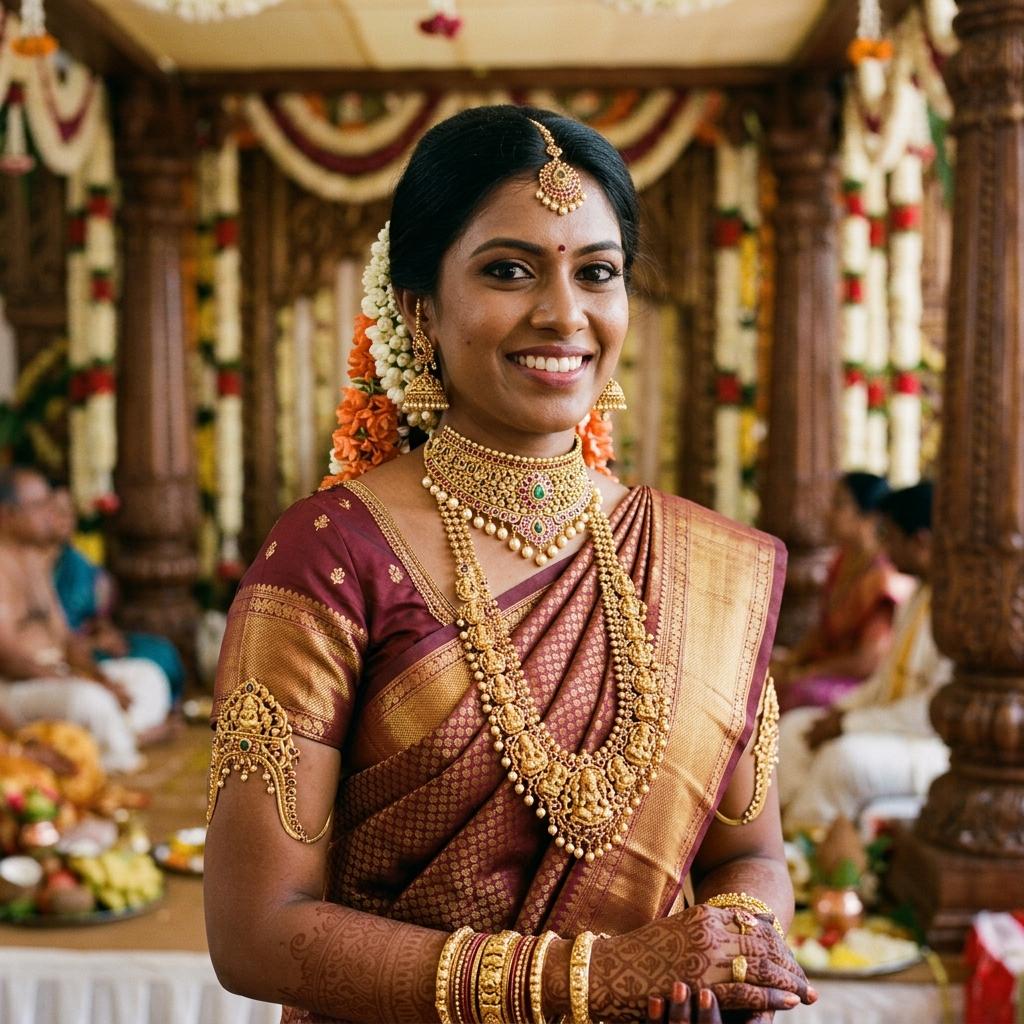
Half saree styling has its own rhythm. The dupatta drape, skirt volume, blouse detail, and color contrast already create more visual movement than many other festive outfits. That is why jewelry decisions matter so much. If every accessory tries to compete with the pavadai and davani, the full look can become crowded very quickly.
The most polished half saree looks usually choose one lead: the color story, the jewelry, or the hair styling. Once that lead is clear, the rest of the outfit becomes easier to edit.
Start With the Function, Not Just the Outfit
Half sarees appear across many settings: puberty ceremonies, weddings, Navratri functions, temple visits, festive family gatherings, and engagement-related events. The same silhouette does not need the same accessory weight in every setting.
| Setting | Best styling direction |
|---|---|
| Temple visit or daytime puja | Lighter earrings, edited bangles, practical footwear |
| Family festive gathering | Stronger earrings or necklace, one clear wrist detail |
| Wedding function | Richer temple or pearl jewelry with controlled layering |
| Youthful festive event | Color-led bangles, braid flowers, lighter neck styling |
The outfit should respond to how long you will wear it, how much movement the function requires, and whether the look needs devotional polish or wedding-level presence.
Let the Davani Color Story Lead
Half sarees often combine two or three strong colors at once. A contrasting davani, bright skirt border, and embellished blouse can already carry the festive mood before jewelry enters the picture.
These combinations usually work well:
- maroon and mustard with antique gold
- teal and magenta with temple earrings
- navy and pink with pearls plus gold
- green and orange with matte gold and glass bangles
- ivory and gold with jasmine flowers and edited jewelry
When the outfit has heavy contrast, avoid introducing too many additional stone colors in the accessories. Repeating one of the existing outfit tones usually looks more refined.
Match Jewelry to the Blouse Neckline
The blouse shape decides whether the jewelry should stay near the ears or move toward the neck.
| Blouse detail | Better jewelry response |
|---|---|
| High neck or closed neck | Statement earrings, no necklace |
| Round or scoop neck | Short necklace or choker with smaller earrings |
| V-neck blouse | Pendant or compact necklace above the border line |
| Heavy sleeve or neckline embroidery | Reduce neck styling and simplify the wrist |
Half saree outfits can carry temple jewelry beautifully, but the set does not need to be complete every time. Often, medium jhumkas or chandbalis with one bangle direction feel more balanced than a full necklace-earring-maang tikka combination.
Choose Bangles Based on Sleeve and Border Weight
Bangles matter because the half saree silhouette naturally draws attention to the wrist when the dupatta is arranged well. But a broad skirt border or embellished sleeve already adds visual structure, so the wrist should support the outfit instead of competing with it.
A few reliable routes are:
- slim glass bangles that repeat the davani color
- one antique gold kada with a small supporting stack
- pearl-accent bangles for softer ivory or pastel looks
- green or maroon stacks for temple-led festive dressing
If the blouse sleeves are highly embellished, reduce the stack size. If the blouse is plain and the skirt is solid, the bangles can do more of the decorative work.
Use Flowers and Hair Accessories Carefully
Fresh flowers often complete half saree styling better than another heavy jewelry category. Jasmine strings, a braid with flowers, or a small gajra can add the festive finish without making the upper half feel overloaded.
Hair accessories work best when they support the hairstyle instead of acting like a second focal point. If the earrings are already large and the braid is decorated, skip extra forehead jewelry unless the function is especially ceremonial.
Keep Footwear and Bag Practical
Half sarees are usually worn for functions that involve walking, greeting relatives, standing for photographs, or moving through temple and family spaces. Juttis, embellished flats, low block heels, and comfortable sandals usually work better than delicate high heels.
For bags, keep the scale compact. A small potli or structured festive clutch is enough. If the outfit already has tassels, zari, and multiple colors, the bag should stay supportive instead of flashy.
A Simple Half Saree Styling Formula
If you want one repeatable method, use this order:
- Start with the davani and skirt color contrast.
- Decide whether earrings or necklace should lead.
- Match bangles to one outfit tone instead of many.
- Add flowers or hair detail as the finishing layer.
- Keep footwear comfortable enough for long wear.
This keeps the look festive and graceful without drifting into unnecessary heaviness.
How AlankarAI Helps
AlankarAI can compare half saree colors, blouse neckline, sleeve detail, border weight, and occasion mood to suggest the right balance of temple jewelry, pearls, bangles, bindis, flowers, and footwear. For half saree styling, that balance matters because the outfit already brings movement and color on its own.
The best result is not the heaviest one. It is the look where the davani, jewelry, and finishing details all feel connected.
Want a personalized analysis?
Upload your own outfit photo and let AlankarAI find the perfect matching jewelry for you.
Start Styling NowIndian ethnic-fashion writers and stylists. Every guide is reviewed for accuracy and cultural context before publishing. Read our editorial standards →
Get help choosing the right ethnic accessories.
Subscribe for weekly guides, ask a styling question, or tell us whether this page helped. Your feedback shapes the next AlankarAI guides.
Was this helpful?
A quick tap helps us improve future guides.
Editorial note: AlankarAI guides are written to provide styling education. Some store links on the site may be monetized, but article recommendations are intended to remain useful whether you shop online, locally, or from your own wardrobe.