
By AlankarAI Editorial Team · 4 min read · Reviewed for practical styling guidance
Hariyali Teej Styling Guide: How to Wear Green Bangles, Sarees, and Festive Jewelry Without Overdoing the Look
Hariyali Teej styling looks best when green feels intentional rather than overwhelming. Learn how to balance bangles, sarees, suits, jewelry, bindis, and hair for a polished festive look.
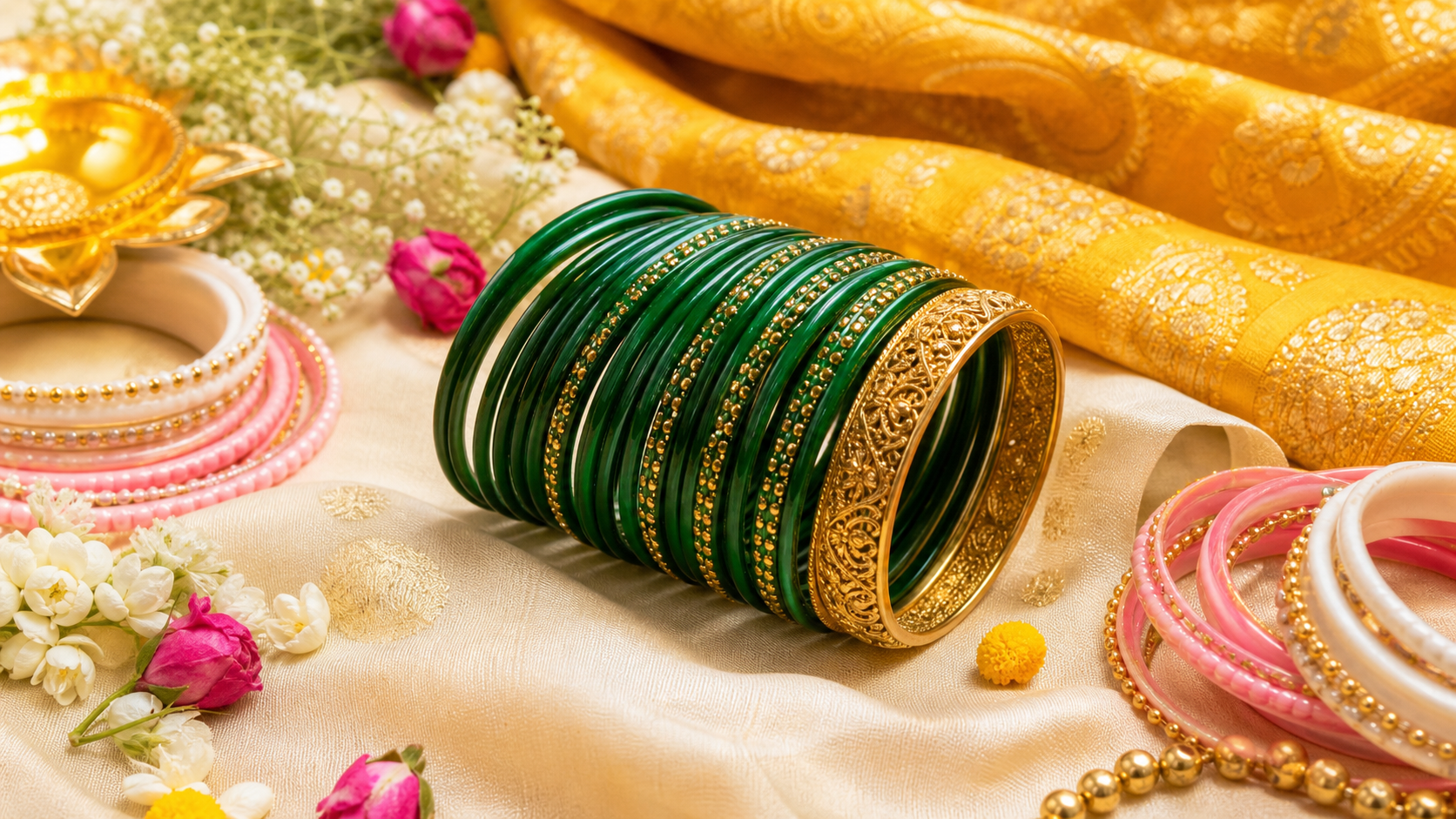
Hariyali Teej dressing usually starts with one instinctive choice: green. The color feels traditional, festive, and seasonally right, which is why it appears across bangles, sarees, lehengas, kurtas, bindis, and even floral details. But once every piece begins leaning green, the outfit can quickly feel heavier than intended.
The strongest Hariyali Teej looks do not rely on matching everything perfectly. They build around one leading green element, then use gold, ivory, pink, or soft contrast to keep the styling festive without making it look crowded.
Let One Green Element Lead
Green can enter the look through fabric, bangles, jewelry stones, or makeup accents. Choosing one main area first makes the rest of the outfit easier to control.
| Lead element | Best styling response |
|---|---|
| Green saree | Keep bangles and jewelry more edited |
| Green bangle stack | Use a lighter outfit base or softer blouse |
| Green suit or kurta set | Add gold or pearl accents for structure |
| Green lehenga detail | Let earrings or maang tikka finish the look |
| Floral green accents | Simplify wrist styling and neckline |
If everything is equally bold, nothing feels intentional. Teej styling looks best when one area clearly carries the festive color story.
Style Green Bangles With Balance
Green bangles are one of the most recognizable Teej accessories, but the stack size should depend on the outfit rather than the occasion alone.
For silk sarees and richer festive suits, a fuller stack with one or two gold kadas can work beautifully. For lighter cotton, chiffon, or georgette outfits, a smaller stack often looks cleaner. If the blouse or kurta sleeves already have embroidery, reduce the wrist weight so the outfit does not start competing with itself.
Glass bangles create movement and sound, which is part of the charm, but they do not need support from every other accessory category at full strength.
Choose Outfit Colors That Support Green
Hariyali Teej does not require an entirely monochrome outfit. In fact, green often looks stronger when it has another tone beside it.
Some of the easiest combinations are:
- green with gold for a classic festive look
- green with ivory for a lighter daytime feel
- green with pink for a brighter celebratory mood
- green with mustard for a warmer traditional palette
- green with maroon for a richer evening direction
If the outfit itself is already deep emerald or bottle green, use bangles or jewelry in a slightly different green so the styling still has separation.
Match Jewelry to the Mood of the Outfit
Gold is usually the most natural partner for Hariyali Teej styling because it keeps the outfit rooted in a festive Indian palette. Temple-inspired details, kundan-look pieces, pearl accents, and classic jhumkas all work depending on the weight of the clothing.
If the saree or suit has zari, mirror work, or stronger embroidery, choose either statement earrings or a fuller wrist instead of making both equally heavy. If the fabric is simpler, jewelry can do more of the visual work.
The aim is not to make Teej styling minimal. It is to make the festive richness feel organized.
Use Bindi, Hair, and Flowers as Finishers
Small details often complete a Teej look more effectively than adding another large accessory. A green or maroon bindi, a neat bun, soft waves, or fresh gajra can make the outfit feel complete without increasing visual weight.
This matters especially when the outfit already includes:
- green bangles
- earrings with colored stones
- an embroidered dupatta or saree border
- festive sandals or juttis
When those pieces are already in place, the finishing touches should frame the look rather than compete with it.
Adjust the Styling for Daytime vs Evening Functions
Daytime Teej events usually look better with fresher styling: lighter fabrics, cleaner jewelry, and a less crowded wrist. Evening celebrations can take deeper greens, antique gold, richer lip color, and slightly stronger earrings or necklaces.
The occasion timing matters because green behaves differently in daylight than it does under indoor festive lighting. A combination that feels elegant in the afternoon can become heavy by evening if every element is reflective, bright, or embellished.
How AlankarAI Helps
AlankarAI can compare green tones, outfit fabric, sleeve detail, jewelry finish, and occasion timing to suggest the right balance of bangles, earrings, bindis, and festive accents. The best Teej styling keeps the color story celebratory while still making the outfit feel polished and wearable.
Want a personalized analysis?
Upload your own outfit photo and let AlankarAI find the perfect matching jewelry for you.
Start Styling NowIndian ethnic-fashion writers and stylists. Every guide is reviewed for accuracy and cultural context before publishing. Read our editorial standards →
Get help choosing the right ethnic accessories.
Subscribe for weekly guides, ask a styling question, or tell us whether this page helped. Your feedback shapes the next AlankarAI guides.
Was this helpful?
A quick tap helps us improve future guides.
Editorial note: AlankarAI guides are written to provide styling education. Some store links on the site may be monetized, but article recommendations are intended to remain useful whether you shop online, locally, or from your own wardrobe.