
By AlankarAI Editorial Team · 8 min read · Reviewed for practical styling guidance
Karwa Chauth Styling Guide: How to Match Sarees, Bangles, Jewelry, Dupattas, and Finishing Details Without Overdressing
Karwa Chauth outfits look strongest when saree color, bangles, jewelry, dupatta choice, and practical comfort work together. Use this guide to build a polished festive look that feels traditional, photogenic, and manageable through puja, fasting hours, and evening celebrations.
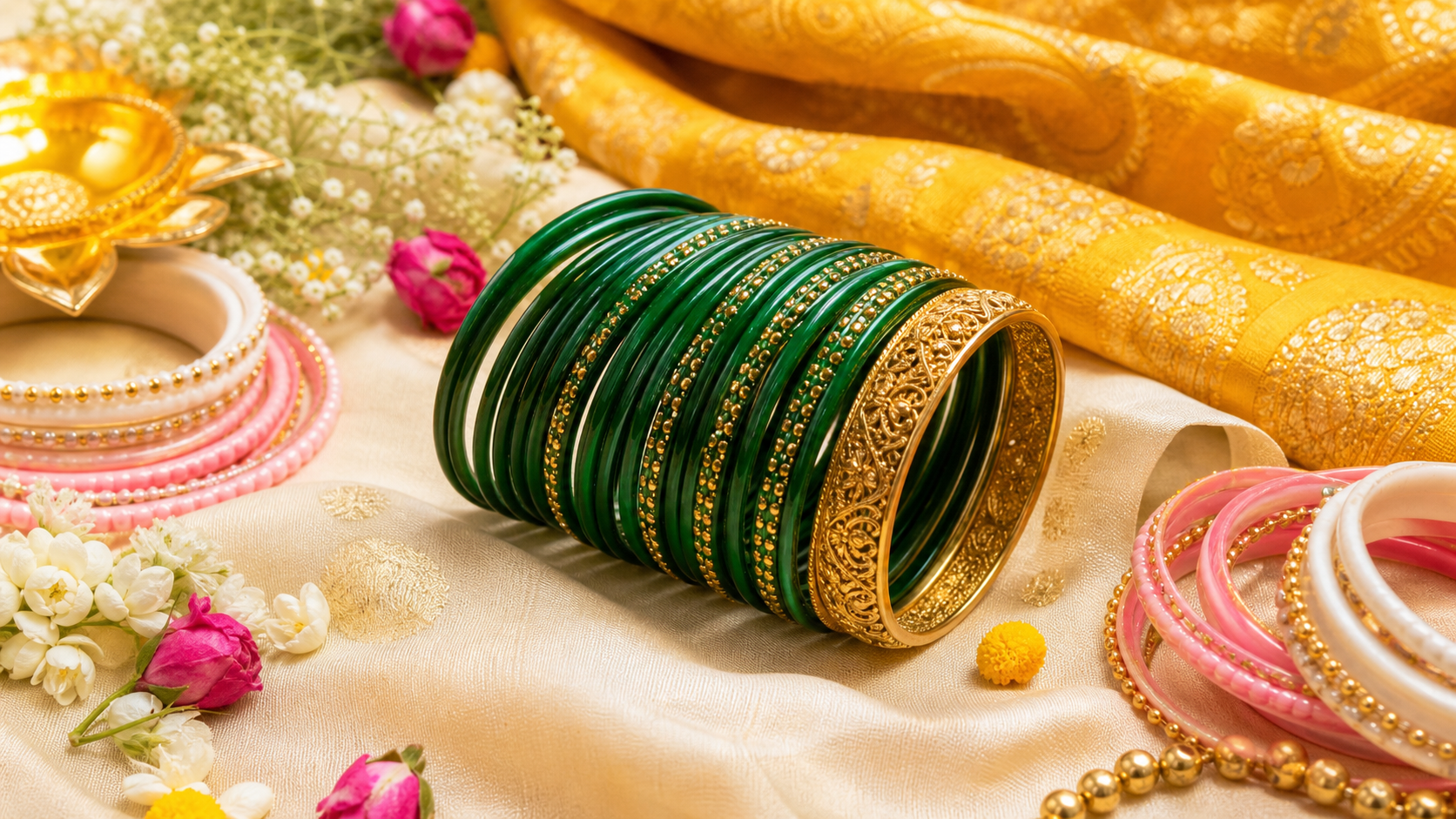
Karwa Chauth styling sits in a specific space.
It is festive, emotional, photographed, and usually worn for long hours. The outfit often has to work from late afternoon preparation into evening puja, moon sighting, family photos, and dinner. That means the best look is not always the heaviest one. It is the one that still feels composed at the end of the day.
Many people begin with the idea that Karwa Chauth dressing should look fully ceremonial from head to toe. That can work, but only when the fabric, jewelry weight, hairstyle, and comfort level support each other. If every element competes for attention, the outfit starts feeling harder rather than richer.
The cleaner approach is to treat the look as a system.
Choose the garment first. Then decide whether color, bangles, or jewelry will lead. After that, use dupatta, makeup, and finishing details to support the main direction instead of adding a second or third styling story.
Start With the Mood of the Outfit
Karwa Chauth outfits usually fall into one of these categories:
| Outfit direction | Styling effect | Better accessory response |
|---|---|---|
| Red, maroon, rani pink, deep berry sarees or suits | Traditional, ceremonial, strongly festive | Gold, kundan-look, green or red bangles, warmer makeup |
| Blush, peach, rose gold, or pastel festive looks | Softer, more modern, photo-friendly | Pearls, champagne stones, edited bangles, cleaner hair |
| Green, emerald, or bottle-green outfits | Rich, auspicious, high contrast with gold | Gold earrings, green glass bangles, smaller extra details |
| Ivory, gold, or muted neutral outfits with festive borders | Elegant, restrained, elevated | One stronger jewelry focal point and a sharper bindi story |
If the outfit already carries strong embroidery, zari, mirror work, or a rich border, the accessories should become more selective. If the garment is simpler, the bangles or earrings can do more work.
The mistake is assuming the occasion automatically requires maximum styling in every category.
Decide Whether Bangles or Jewelry Should Lead
Karwa Chauth is one of the few festive occasions where bangles often matter as much as earrings. They feel traditional, visible in photographs, and naturally aligned with the mood of the day. But that does not mean they must compete with a heavy necklace, statement earrings, a maang tikka, and multiple rings all at once.
A better method is to choose one lead direction.
If bangles are the focus:
- build a fuller wrist with glass bangles, one or two kadas, or a richer red-green-gold stack
- keep earrings medium or compact
- use a lighter neck story unless the blouse is very simple
If earrings are the focus:
- choose chandbalis, jhumkas, or kundan drops with more presence
- reduce the wrist to a cleaner stack
- skip extra shine around the neck unless the neckline really needs it
If the necklace is the focus:
- keep the earrings shorter or closer to the ear
- avoid making the bangles equally dense
- let the blouse neckline frame the neckpiece rather than crowd it
Karwa Chauth styling looks more expensive when one area clearly leads and the others support it.
Match Jewelry Weight to the Fabric and Time of Day
The right jewelry depends less on trend and more on surface, drape, and schedule.
Light chiffon, georgette, crepe, organza, and softer festive sarees often look better with edited jewelry weight. Satin-finish sarees, brocade blouses, silk blends, velvet accents, and stronger festive suits can support more defined ceremonial pieces.
Use this practical check:
- If the fabric is light and flowing, avoid jewelry that feels too structurally heavy.
- If the blouse has strong embroidery near the face, reduce earring complexity first.
- If the outfit is plain but richly colored, let either bangles or earrings add the celebratory density.
- If both the fabric and the jewelry are highly reflective, remove one layer before the look becomes harsh in photographs.
Time matters too. A daytime preparation look can stay softer. The evening puja look can take stronger polish. That does not always mean adding more pieces. Sometimes it only means sharpening the bindi, refreshing lipstick, and switching from a lighter stack to a fuller wrist.
Use Bangles to Echo, Not Fight, the Outfit
Bangles are often the emotional center of a Karwa Chauth look, but they work best when they repeat the outfit instead of introducing random contrast.
Reliable bangle directions include:
- red saree or lehenga with red glass bangles, one gold kada, and a few green accents
- green outfit with gold-led bangles and just enough matching green glass to keep the wrist alive
- maroon or wine looks with antique-gold or deep ruby-toned wrist styling
- blush or pastel outfits with fewer glass bangles and more stone, pearl, or metallic structure
If the sleeves, blouse, or dupatta borders are already heavily detailed, reduce the width of the stack. If the forearm remains visually clean, a fuller wrist can look balanced instead of busy.
This is also where proportion matters. A delicate saree with an extremely bridal bangle stack can feel mismatched. A stronger silk or brocade look, however, can absorb that density more naturally.
Let the Dupatta or Pallu Bridge the Whole Look
For suits, lehengas, and pre-draped festive sets, the dupatta often decides whether the outfit looks coherent. For sarees, the pallu plays a similar role.
If the outfit base is red or maroon, the dupatta or pallu can repeat gold, green, or a slightly darker tonal family. If the blouse is plain, a richer border can support stronger earrings or a more ceremonial bangle stack. If the border is already ornate, scale the rest back.
Useful combinations include:
- red suit with a green-bordered dupatta and red-gold bangles
- bottle-green saree with antique-gold earrings and a cleaner pallu drape
- blush lehenga with champagne or pearl-led accessories and a softer dupatta fall
- maroon saree with kundan-look earrings and a red bindi rather than multiple extra color accents
The drape should also survive the evening. Karwa Chauth styling often involves standing, sitting for puja, handling thali items, and moving between indoor and terrace or balcony spaces. A secure drape always looks more graceful than a dramatic one that needs constant correction.
Keep Neck, Hair, and Maang Styling in Proportion
This is where many festive looks become overloaded.
If the blouse has a higher neck, detailed yoke, or broad embellished straps, skip the necklace. If the neckline is open and the saree or suit is otherwise quiet, a short necklace or choker can work. If you are already wearing large earrings and a fuller bangle stack, let the neck remain lighter.
Hair should support the jewelry, not hide it.
| Hair direction | Works best with |
|---|---|
| Low bun with center or soft side part | Sarees, stronger earrings, gajra, more traditional styling |
| Half-up hair | Softer lehenga or suit looks, medium earrings, balanced festive styling |
| Sleek ponytail or controlled waves | Contemporary outfits, cleaner necklines, lighter jewelry |
| Braid with light floral detail | Long festive evenings, classic styling, visible earrings |
Maang tikka, passa, or stronger hair jewelry should usually appear only when the rest of the outfit is intentionally ceremonial. If the look is otherwise minimal, a bindi often does enough.
Dress for the Ritual, Not Only the Photo
Karwa Chauth styling should still account for how the day is actually lived.
You may be fasting. You may be doing puja preparations. You may be outside in humidity or moving between rooms for hours. That means footwear, blouse fit, earring weight, and drape security matter more than they would for a short evening reception.
The most dependable choices are:
- juttis, lower block heels, or secure wedges instead of unstable stilettos
- earrings that feel substantial but not painful after several hours
- bangles that sound and move well without becoming so dense that they feel restrictive
- fabrics that hold shape without overheating too quickly
Comfort is not separate from polish on a day like this. It is part of polish.
A Simple Karwa Chauth Styling Formula
If you want a fast method, use this order:
- Pick the outfit and identify whether the fabric is light, structured, or richly festive.
- Choose one lead element: bangles, earrings, or neckline jewelry.
- Repeat the outfit color through the wrist instead of adding unrelated contrast.
- Use the dupatta or pallu to bridge the blouse and jewelry story.
- Finish with a secure hairstyle, practical footwear, and a bindi that suits the mood.
That order usually produces a look that feels festive, traditional, and well edited without slipping into costume territory.
How AlankarAI Helps
AlankarAI can compare outfit color, embroidery density, neckline shape, drape style, occasion formality, and jewelry weight to suggest better bangles, earrings, necklaces, bindis, and finishing details. For Karwa Chauth looks, that matters because small imbalances become obvious very quickly once the outfit is photographed from multiple angles and worn for several hours.
The strongest festive outfit is not the one with the most ornament.
It is the one where every detail agrees with the rest.
Want a personalized analysis?
Upload your own outfit photo and let AlankarAI find the perfect matching jewelry for you.
Start Styling NowIndian ethnic-fashion writers and stylists. Every guide is reviewed for accuracy and cultural context before publishing. Read our editorial standards →
Get help choosing the right ethnic accessories.
Subscribe for weekly guides, ask a styling question, or tell us whether this page helped. Your feedback shapes the next AlankarAI guides.
Was this helpful?
A quick tap helps us improve future guides.
Editorial note: AlankarAI guides are written to provide styling education. Some store links on the site may be monetized, but article recommendations are intended to remain useful whether you shop online, locally, or from your own wardrobe.