
By AlankarAI Editorial Team · 4 min read · Reviewed for practical styling guidance
Kurta Styling Without a Dupatta: Jewelry, Bangles, and Finishing Details
Build a complete kurta outfit without a dupatta by balancing embroidery, earrings, wristwear, trouser shape, and a practical bag.
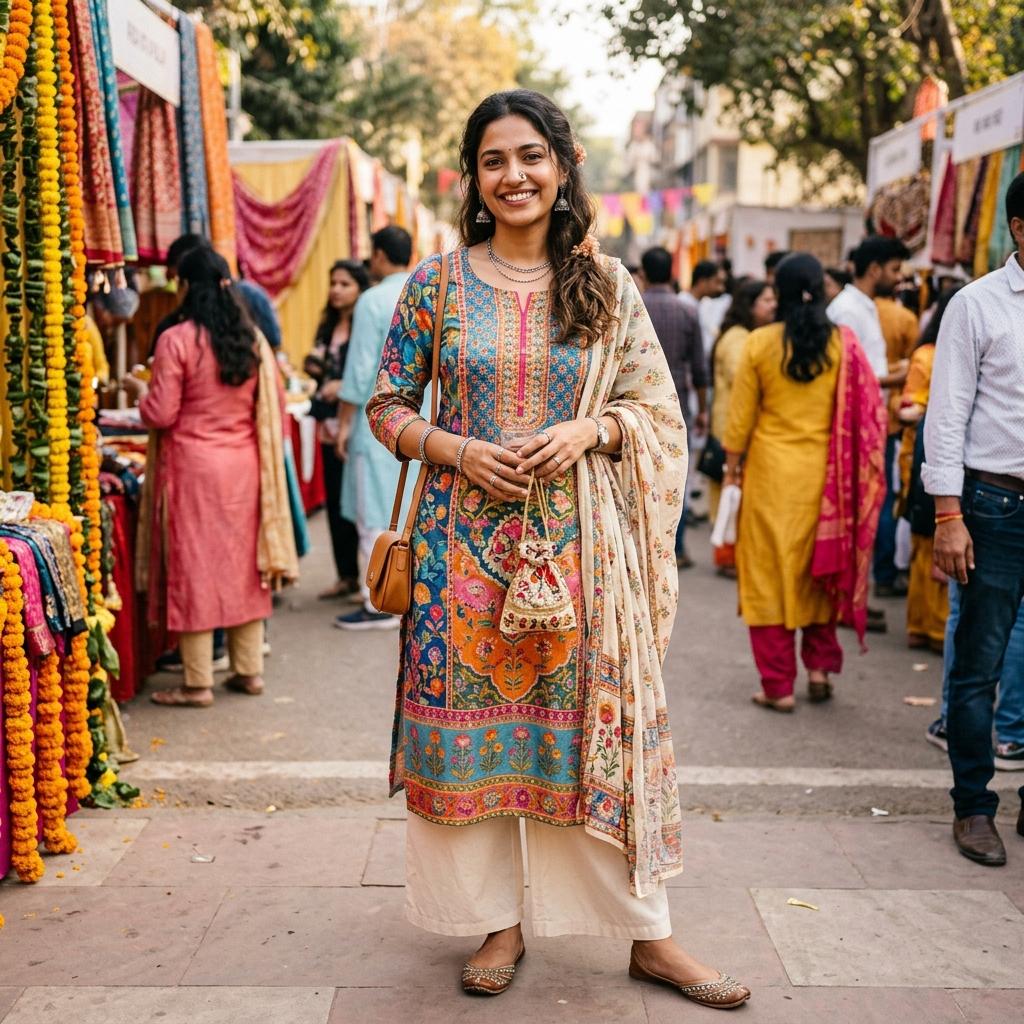
An embroidered kurta can carry an outfit beautifully on its own. Leaving off the dupatta gives the neckline, sleeves, and side seams a clearer outline, while keeping your hands free for a family lunch or an evening gathering. The finishing touches come from choosing where you want the detail to sit.
Start with the kurta and trousers you plan to wear. Check the outfit standing and seated before adding jewelry. You may find that a decorated neckline already supplies the focal point you need.
Let the Embroidery Lead
Look at where the embroidery is concentrated. A dense yoke draws attention upward, so try earrings first and assess the outfit before reaching for a necklace. Small drops can echo a bead or thread color without covering the work.
If the kurta is plain through the chest with embroidery at the hem, a pendant can bring detail closer to the face. Check that it hangs clear of buttons and does not land awkwardly across the placket. A pendant that swings against raised threadwork may be better saved for a smoother fabric.
With scattered motifs, repeat one visible detail in the jewelry: a pearl accent, a warm metal finish, or one colored stone. The pieces can relate without matching every thread.
Frame the Neckline with Earrings
For a band collar, begin with studs or compact drops that leave a little space beside the jaw. With a wider neckline, try longer earrings and see how they look with your hair arranged as planned.
Statement earrings can finish a simple kurta outfit without needing another large accessory. Turn your head to check that the earrings clear the collar and any shoulder embroidery. If a pair keeps catching, switch to a smoother shape or a shorter length.
An open hairstyle softens the outline around the face; tied-back hair makes the earrings more visible. Choose the combination you enjoy wearing, then judge the overall balance from a few steps away.
Work Around the Sleeves
Three-quarter sleeves leave space for a slim bangle stack or one kada. Start with a few pieces and move your arms naturally. The bangles should slide comfortably without crowding the sleeve edge.
Full sleeves with embroidered cuffs may need very little wristwear. Try a ring or small earrings as the supporting detail, especially when a bracelet would sit directly over the stitching.
For flared sleeves, check clasps and raised settings against the fabric. Smooth bangles are a useful starting point, but inspect the actual pieces: even a simple-looking bangle can have a rough seam.
Give the Lower Half a Clear Shape
Without a dupatta, the relationship between the kurta hem and trousers is easier to see. Straight trousers create a neat outline under a long kurta. Wider trousers can add movement beneath a shorter cut, provided the proportions feel comfortable to you.
Try the outfit with your intended footwear before making a decision. Check that trouser hems clear the floor and do not slip beneath your heel as you walk. A decorative jutti can repeat a small accent from the kurta; a plain pair lets the embroidery remain the focus.
Choose a Bag That Sits Comfortably
A compact handheld bag leaves the front of the kurta visible. If you prefer a shoulder bag, check where its strap crosses the embroidery and whether the hardware rubs against raised work.
Put your essentials inside before testing it. A bag can hang differently once it holds a phone, keys, and wallet. Walk and sit with it, then check that your bangles do not repeatedly knock against the handle.
Three Combinations to Try
| Kurta detail | Jewelry starting point | Finishing touch |
|---|---|---|
| Richly embroidered neckline | Short drops and one smooth kada | Straight trousers and a plain handheld bag |
| Plain neckline with a decorated hem | A small pendant and studs | Footwear that repeats one embroidery color |
| Detailed full-length cuffs | Visible earrings and a simple ring | A bag strap that clears the sleeve work |
Do One Complete Outfit Check
Look at the kurta from the front and side in ordinary daylight. Confirm that the neckline, armholes, and side slits give you the coverage you want when you move. If you prefer an inner layer, choose one that sits smoothly and feels comfortable beneath the fabric.
Finally, sit down, reach forward, and walk a few steps. Adjust any jewelry that catches and any accessory that needs constant attention. A kurta outfit without a dupatta feels complete when the embroidery is visible, the accessories have room to move, and you can get on with your plans comfortably.
Want a personalized analysis?
Upload your own outfit photo and let AlankarAI find the perfect matching jewelry for you.
Start Styling NowIndian ethnic-fashion writers and stylists. Every guide is reviewed for accuracy and cultural context before publishing. Read our editorial standards →
Get help choosing the right ethnic accessories.
Subscribe for weekly guides, ask a styling question, or tell us whether this page helped. Your feedback shapes the next AlankarAI guides.
Was this helpful?
A quick tap helps us improve future guides.
Editorial note: AlankarAI guides are written to provide styling education. Some store links on the site may be monetized, but article recommendations are intended to remain useful whether you shop online, locally, or from your own wardrobe.