
By AlankarAI Editorial Team · 4 min read · Reviewed for practical styling guidance
Leheriya Dupatta Styling: Jewelry and Bangles for a Colorful Finish
Give a colorful leheriya dupatta room to shine with thoughtful earrings, a compact bangle stack, and a simple bag. Build easy combinations around the colors and neckline already in your outfit.
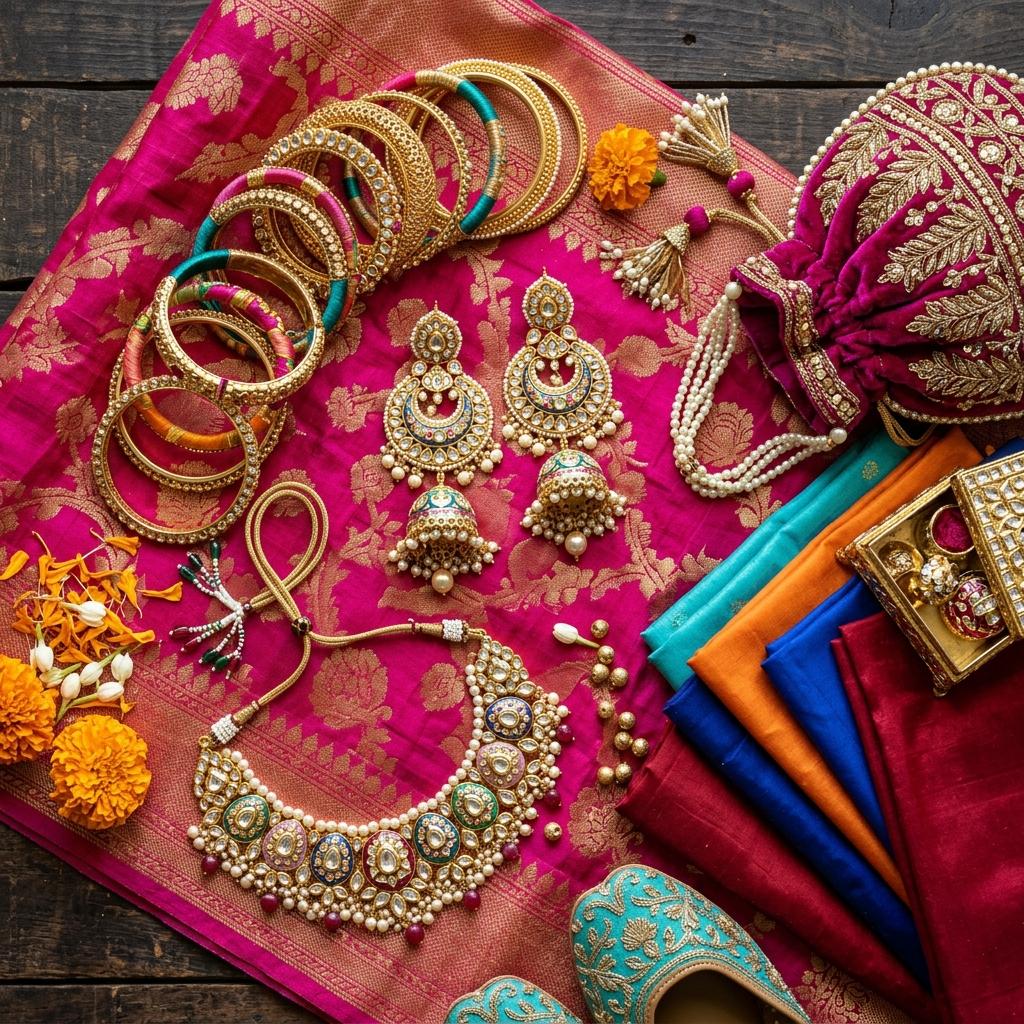
A leheriya dupatta brings movement to an outfit before you add a single accessory. Its flowing stripes can brighten a plain kurta, soften a monochrome suit, or introduce a playful color beside a familiar festive ensemble.
Start by draping it over the outfit you intend to wear. Look at the colors near your face, the amount of fabric across the neckline, and where the ends fall. Those details make choosing jewelry much easier than trying to match every shade in the dupatta.
Choose One Color to Repeat
A multicolored dupatta does not need a multicolored accessory at every point. Pick one shade you enjoy and repeat it in a small bangle group, an earring detail, or your bag.
With a pink-and-yellow dupatta over an ivory suit, try pink bangles and simple metal earrings. With blue and green over a navy kurta, a single green accent can connect the pieces. Leave the remaining accessories quieter so the stripes remain easy to see.
If the dupatta already contrasts strongly with the kurta, plain metal jewelry is a useful starting point. The fabric can provide all the color the outfit needs.
Let the Drape Guide the Earrings
A dupatta spread across both shoulders sits close to the earrings. Start with studs or compact drops, especially if the border has tassels or raised embroidery. Turn your head to check that the earrings do not catch the edge.
A single-shoulder drape leaves more space beside the face. Try a medium jhumka or a longer drop, then look at the full outfit. A broad decorative border may already frame that area enough without a large earring.
For a dupatta gathered loosely around the neck, a necklace may disappear beneath the folds. Put on the earrings first and decide whether the neckline needs anything else once the fabric has settled.
Build a Bangle Stack with a Clear Pattern
Choose a small group of bangles in one dupatta color and add a slim metal bangle at either end if you like a defined finish. You can also alternate two colors from the fabric, keeping the stack narrow enough to wear comfortably.
A plain kada is another option when the dupatta contains several bright shades. It adds shape at the wrist without introducing a new color combination.
Check the sleeve length before building the stack. Embroidered cuffs may need only a ring, while shorter sleeves leave more room for bangles. Bend your arm and pick up your bag to make sure the pieces do not press into the cuff or your hand.
| Outfit starting point | Jewelry to try | Color detail |
|---|---|---|
| Ivory suit with a pink-and-yellow dupatta | Small metal drops and a compact stack | Repeat pink at one wrist |
| Navy kurta with a blue-and-green dupatta | Smooth studs and a narrow kada | Add a green bag or bangle |
| Plain pastel suit with a bright dupatta | One defined pair of earrings | Let the dupatta carry the bright shades |
| Embroidered kurta with a leheriya dupatta | Compact earrings and a simple ring | Repeat the embroidery's metal tone |
These are wardrobe starting points, so adjust them to the actual shades and proportions of your clothes.
Give the Border Its Own Space
If your dupatta has a decorative border, arrange it where it can be seen. On a plain kurta, letting one edge fall down the front can create a clear line without adding a necklace over it.
With an embellished neckline, try placing the dupatta to one side. This gives the neckline and border separate areas to show. Check that a pin or fastening does not pull the fabric into a tight bunch, and keep exposed points away from skin.
Avoid gathering every tassel beside a bracelet or bag handle. Let the ends hang freely where possible, then walk a few steps to check whether their position stays comfortable.
Keep the Bag and Footwear Easy to Pair
A plain bag in the kurta color can settle a busy outfit. Alternatively, choose one dupatta shade for the bag and keep the footwear close to the base outfit or jewelry finish.
If you already own embroidered juttis, try them before looking for another pair. They may provide enough additional detail on their own. A simple hand-held bag can then complete the outfit without repeating all the embroidery.
Carry the bag during your final try-on. A shoulder strap may shift a loose drape, while a short handle can crowd a broad bangle stack. Choose the combination that needs the least adjustment.
Change One Detail for the Occasion
For a daytime gathering, begin with a plain suit, compact earrings, and a few bangles. Keep the dupatta arranged so you can sit and move easily.
For an evening celebration, change to a more defined earring or a decorative kada. Look at the result before adding a necklace as well. The same dupatta can feel dressed up with one considered change.
Before leaving, check the outfit from the front and side, turn your head, and sit down. If jewelry catches the border or the wrist feels crowded, simplify that area. A leheriya dupatta already brings plenty of character; choose accessories that let you enjoy wearing it.
Want a personalized analysis?
Upload your own outfit photo and let AlankarAI find the perfect matching jewelry for you.
Start Styling NowIndian ethnic-fashion writers and stylists. Every guide is reviewed for accuracy and cultural context before publishing. Read our editorial standards →
Get help choosing the right ethnic accessories.
Subscribe for weekly guides, ask a styling question, or tell us whether this page helped. Your feedback shapes the next AlankarAI guides.
Was this helpful?
A quick tap helps us improve future guides.
Editorial note: AlankarAI guides are written to provide styling education. Some store links on the site may be monetized, but article recommendations are intended to remain useful whether you shop online, locally, or from your own wardrobe.