
By AlankarAI Editorial Team · 4 min read · Reviewed for practical styling guidance
Long Necklace Styling Guide: How to Place Pendants and Beads with Sarees and Kurtas
Find the right place for a long necklace in your ethnic outfit. Balance pendant length, pallu placement, kurta embroidery, earrings, and bangles with a few practical try-on checks.
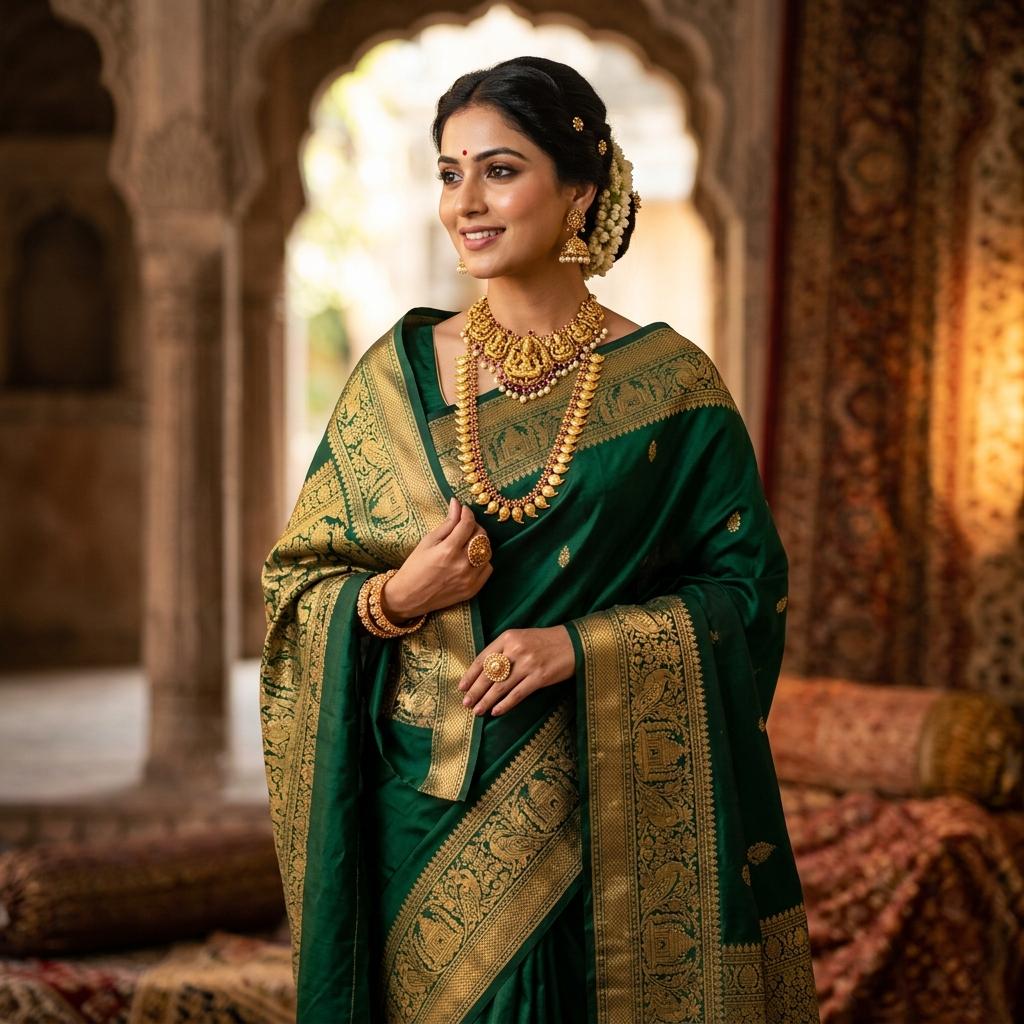
A long necklace can give a plain kurta a focal point or bring a saree blouse and pallu into one composition. The useful question is where it lands. A pendant that disappears into a busy border needs a different placement from a strand of beads worn against an open area of fabric.
Put on the outfit before choosing the necklace. Settle the neckline and drape, then look at the space between your collarbone and waist. Choose a length that lets the jewelry show without covering the detail you most want to keep visible.
Place the Pendant on a Clear Area
Start with one long necklace and let it hang naturally. If the pendant sits directly on a kurta motif, blouse seam, or thick saree border, try an available adjustment in the chain. Even a small change can make its outline easier to see.
A plain kurta front gives a carved pendant or a strand of contrasting beads plenty of room. On a printed kurta, try a piece with a simple, defined shape and check whether you can still distinguish it from a few steps away.
Necklace length is a try-on decision. The same chain can land differently with another neckline, a different drape, or a change in posture. Check the placement while sitting as well as standing.
Work Around the Saree Pallu
With a neatly pleated pallu, a long necklace can sit over the blouse and the inner edge of the drape. Arrange it after the pallu is secured so the chain does not pull a fold out of place.
With an open pallu, decide how much of the necklace you want visible. A pendant can sit against a plain section of fabric, while a decorative border may already provide enough detail across the chest. Move the necklace or try a simpler strand if the two compete for the same space.
Raise an arm and turn gently during your try-on. If the pendant slips beneath the pallu each time, choose a different length or let earrings carry the jewelry detail for that outfit.
Give Kurta Embroidery Room
A kurta with dense work around the neckline may suit a long, fine chain that places its pendant below the embroidery. Keep the chain itself simple so it does not add another busy pattern over the yoke.
For a buttoned kurta, check whether the necklace catches on the placket. With a high neckline, try beads or a metal pendant against the fabric and assess the whole front before adding earrings.
If you wear a dupatta down both sides, settle those vertical folds first. The necklace should sit comfortably within the opening rather than being squeezed between shifting fabric.
Balance Earrings and Bangles
A large pendant is a useful place to begin. Add studs or compact drops, then try one smooth kada or a narrow bangle stack. This keeps the outfit easy to assess before introducing more detail.
For a fine chain with a small pendant, you may prefer fuller earrings. Tie your hair as you plan to wear it and check the balance around the face and chest together.
You can repeat a metal finish or one bead color at the wrist without matching every piece. If the necklace has several colors, choose just one for the bangles and let the outfit provide the rest.
Try These Combinations
| Outfit | Long necklace starting point | Supporting accessories |
|---|---|---|
| Plain ivory kurta | Colored beads or a defined metal pendant | Small earrings and one slim kada |
| Silk saree with a narrow border | A long gold-tone necklace over a clear section of the drape | Compact studs and a restrained bangle stack |
| Printed cotton kurta | A simple pendant that stands out against the print | Smooth metal bangles and a plain bag |
| Saree with a richly embroidered blouse | A fine chain, if the pendant has an open area to sit | Small drops; assess the look before adding wristwear |
Layer Only When the Lengths Stay Separate
To add a shorter necklace, leave a visible gap between it and the long piece. Start with one simple chain and one decorative necklace. Two large pendants can overlap when you sit, even if they look separate while standing.
Walk around for a few minutes and check whether the chains twist together. If they need constant adjustment, wear the stronger piece on its own. A single necklace can provide all the detail the outfit needs.
Finish with a Practical Check
Bend forward, sit down, and pick up your bag. Check that the pendant does not knock against the bag clasp or catch on embroidery. Feel for rough settings before wearing the piece against delicate fabric.
Take one full-length look with your footwear and dupatta in place. When the necklace has a clear position, the earrings feel comfortable, and the bangles leave your hands free, the outfit is ready to wear.
Want a personalized analysis?
Upload your own outfit photo and let AlankarAI find the perfect matching jewelry for you.
Start Styling NowIndian ethnic-fashion writers and stylists. Every guide is reviewed for accuracy and cultural context before publishing. Read our editorial standards →
Get help choosing the right ethnic accessories.
Subscribe for weekly guides, ask a styling question, or tell us whether this page helped. Your feedback shapes the next AlankarAI guides.
Was this helpful?
A quick tap helps us improve future guides.
Editorial note: AlankarAI guides are written to provide styling education. Some store links on the site may be monetized, but article recommendations are intended to remain useful whether you shop online, locally, or from your own wardrobe.