
By AlankarAI Editorial Team · 14 min read · Reviewed for practical styling guidance
The Ultimate Guide to Selecting the Perfect Maang Tikka
A Maang Tikka can completely transform your ethnic look, but choosing the wrong one can throw off your facial proportions. Discover how to match this iconic jewelry piece to your face shape, outfit, and personal style.
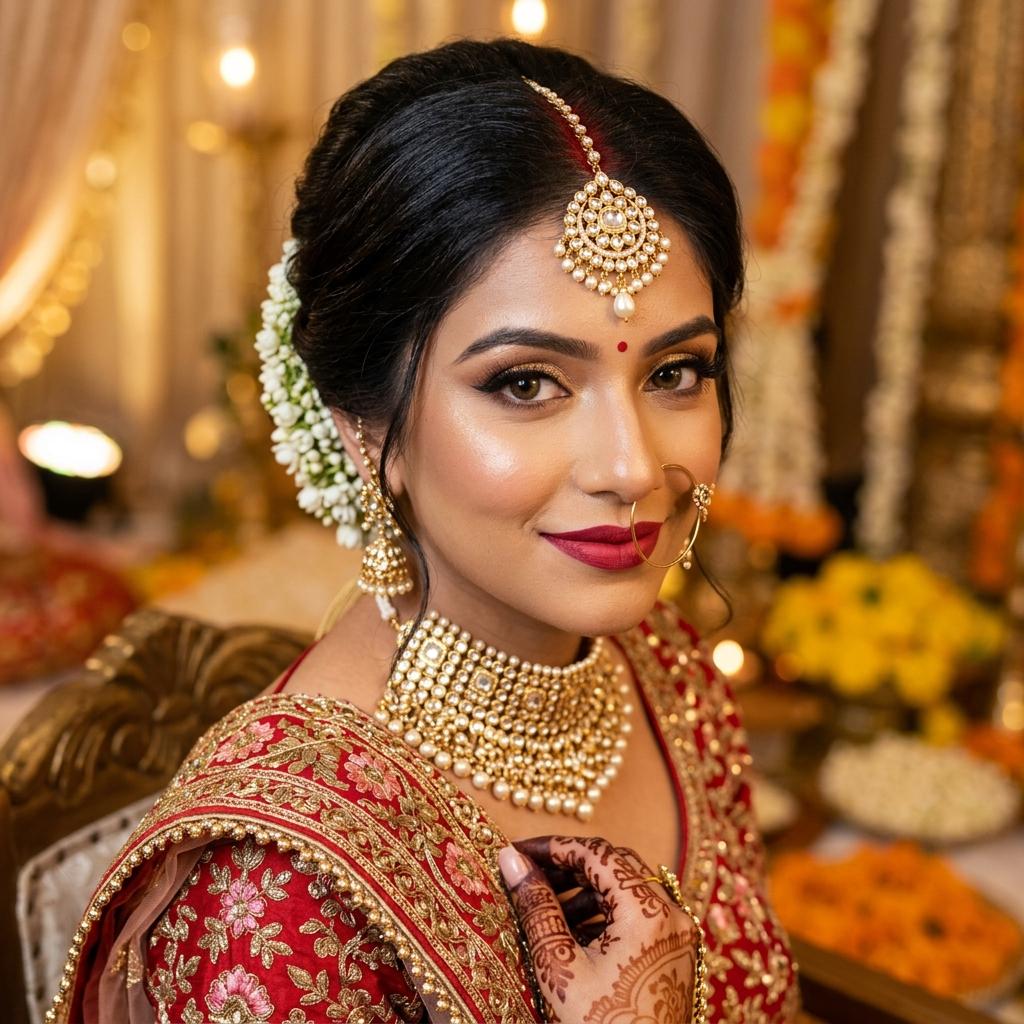
The Maang Tikka, a mesmerizing piece of head jewelry, holds a sacred and significant place in Indian culture and fashion. Tracing its origins back to ancient times, this adornment, worn on the forehead at the parting of the hair, symbolizes wisdom, the third eye, and auspiciousness. From the regal courts of Rajasthan to the vibrant weddings of the South, the Maang Tikka has evolved into a quintessential accessory that elevates any ethnic ensemble, drawing attention directly to the wearer's face and enhancing their natural beauty.
More than just an embellishment, a Maang Tikka is a statement. It can transform a simple outfit into a grand affair or add a touch of understated elegance to a contemporary look. However, the sheer variety available today – from delicate, minimalist chains to dramatic, oversized centerpieces adorned with intricate craftsmanship – can be overwhelming. The true artistry lies not just in the piece itself, but in how it harmonizes with your unique features, your outfit, and the occasion.
At AlankarAI, we understand that looking flawless is about proportion, balance, and personal expression. This in-depth guide is crafted by our expert stylists to empower you with the knowledge to select the Maang Tikka that doesn't just sit on your forehead, but truly belongs there, enhancing your radiance and confidence.
1. Deciphering Your Face Shape: The Foundation of Maang Tikka Selection
The most critical factor in choosing a Maang Tikka is your face shape, as this piece of jewelry sits centrally and directly impacts how the width and length of your face are perceived. Understanding your face shape allows you to select a design that creates flattering optical illusions, balancing your features and accentuating your best angles.
Round Face
Characteristics: A round face is typically characterized by soft curves, a similar width and length, and a full chin. Styling Insight: The goal here is to create the illusion of length and introduce some angularity to break the roundness. Recommendations:
- Angular or Teardrop Pendants: Opt for Maang Tikkas with sharp, geometric, or elongated pendants (e.g., diamond, rectangular, or pointed teardrop shapes). These designs draw the eye vertically, making your face appear longer.
- Sleek, Longer Chains: Choose designs with a slightly longer chain that allows the pendant to sit lower on your forehead, further enhancing the illusion of length.
- Avoid: Overly circular, chunky, or very wide pendants, as these will only emphasize the roundness of your face.
Oval Face
Characteristics: Considered the most versatile face shape, an oval face is longer than it is wide, with a gently rounded jawline and forehead. Styling Insight: Congratulations! An oval face shape can beautifully carry almost any Maang Tikka style. This allows for immense freedom in experimentation. Recommendations:
- Versatility is Key: Whether it's an oversized Rajasthani Borla, a delicate pearl drop, an intricate Kundan design, or a contemporary geometric piece, you have the liberty to experiment.
- Experiment with Proportions: Feel free to try both small, understated pieces and grand, elaborate designs, depending on your outfit and the occasion.
- Consider Hairstyle: While face shape is forgiving, ensure the tikka complements your chosen hairstyle.
Square Face
Characteristics: A square face has a strong, angular jawline, a broad forehead, and relatively equal width and length. Styling Insight: The aim is to soften the strong angles of your jawline and forehead, introducing curves and fluidity to your profile. Recommendations:
- Rounded or Teardrop Shapes: Choose Maang Tikkas with softer, rounded, or teardrop-shaped pendants. Designs with a crescent moon shape or intricate floral motifs work wonderfully.
- Kundan with Soft Edges: A traditional Kundan piece with a rounded or curvilinear design can add a gentle curve to your profile, softening harsh lines.
- Avoid: Square, rectangular, or overly geometric Maang Tikkas, as they can further emphasize the angularity of your face.
Heart-Shaped Face
Characteristics: Defined by a wider forehead, prominent cheekbones, and a narrower, pointed chin. Styling Insight: The goal is to balance the wider upper half of the face with the narrower lower half. Recommendations:
- Elaborate & Multi-tiered Designs: An elaborate, multi-tiered Maang Tikka or a Matha Patti (with decorative chains along the hairline) works beautifully. These styles add visual weight and interest to the forehead area, balancing the proportions.
- Broader Pendants: Tikkas with slightly broader pendants can also help balance the forehead.
- Avoid: Very small, delicate single-strand tikkas that might make the forehead appear even wider.
Long/Oblong Face
Characteristics: Similar to an oval face but noticeably longer, often with a narrow forehead and chin. Styling Insight: The objective is to create the illusion of width and reduce perceived length. Recommendations:
- Broader, Circular Designs: Opt for Maang Tikkas that are wider rather than longer. Circular, spherical (like a Borla), or broad crescent-shaped pendants work well to add width.
- Matha Patti: A Matha Patti that extends along the hairline can also help to break up the length of the face.
- Avoid: Long, dangling, or sleek vertical designs, as these will only elongate the face further.
Diamond Face
Characteristics: Characterized by a narrow forehead and jawline, with the widest point being the cheekbones. Styling Insight: The aim is to soften the cheekbones and add width to the forehead and jawline areas. Recommendations:
- Rounded or Teardrop Shapes: Similar to a square face, rounded or teardrop pendants can soften the angles of the cheekbones.
- Matha Patti: A delicate Matha Patti can add a gentle width to the forehead without overwhelming it.
- Avoid: Tikkas that are too wide or heavy at the temples, as this might emphasize the cheekbones.
2. Harmonizing with Your Forehead Size: The Perfect Placement
Beyond face shape, the size of your forehead plays a crucial role in determining the scale and style of your Maang Tikka. The right choice ensures the jewelry sits elegantly without overwhelming or disappearing on your face.
Broad Foreheads
Styling Insight: A broad forehead can beautifully accommodate larger, more intricate designs without looking cluttered. Recommendations:
- Statement Pieces: A larger, statement Maang Tikka or a heavy Matha Patti is your best friend. These fill the space elegantly, making the forehead appear balanced and adorned rather than bare.
- Multi-tiered Tikkas: Designs with multiple chains or a broader pendant base work exceptionally well.
- Cultural Styles: Traditional Borlas or elaborate Kundan Matha Pattis are ideal.
Narrow Foreheads
Styling Insight: The key here is subtlety and delicacy. A massive piece will overwhelm your face and make your forehead disappear entirely. Recommendations:
- Sleek, Single-Chain Designs: Stick to sleek, single-chain designs with small, delicate pendants.
- Minimalist Aesthetics: Choose minimalist pieces, often with a small pearl, crystal, or a tiny floral motif.
- Avoid: Heavy, wide, or multi-tiered Maang Tikkas. They can make your forehead appear even smaller and disproportionate to the rest of your face.
3. Coordinating with Your Outfit and Occasion: The Ensemble Effect
The Maang Tikka should never exist in isolation; it must feel like a natural, harmonious extension of your entire ensemble. The occasion, the style of your outfit, and even the time of day will dictate the appropriate level of grandeur and intricacy.
Bridal Glamour: The Ultimate Statement
Styling Insight: For a heavy bridal lehenga, saree, or traditional gown, you can – and should – go all out! This is the moment for your Maang Tikka to shine as a centerpiece. Recommendations:
- Intricate Workmanship: Think intricate Kundan work, dazzling Polki diamonds, vibrant Meenakari detailing, or a traditional South Indian Kempu style.
- Regional Nuances: Consider your cultural theme. A spherical Borla for a Rajasthani bride, a heavy Nethi Chutti with multiple strands for a South Indian bride, or an elaborate Matha Patti for a North Indian wedding.
- Matching Metals & Stones: Ensure the metal tone (gold, silver, rose gold) and gemstone colors complement your bridal jewelry set and outfit embroidery.
- Layering: For a truly grand bridal look, consider pairing your Maang Tikka with a Jhoomar (side headpiece) for an added touch of regal elegance.
Bridesmaid & Guest Looks: Elegant Subtlety
Styling Insight: For sangeets, mehendi ceremonies, receptions, or other festive gatherings, the goal is elegance without overshadowing the bride. Recommendations:
- Contemporary Options: Explore contemporary options like oxidized silver, floral motifs, or a simple Polki or American Diamond (AD) drop.
- Balance: If your outfit is heavily embellished, opt for a simpler Maang Tikka. If your outfit is more understated, a slightly more elaborate tikka can add a focal point.
- Color Play: Match smaller colored stones in your tikka to an accent color in your outfit.
- The AlankarAI Advantage: Unsure if that heavy Borla works with your pastel Anarkali or if a delicate pearl tikka suits your lehenga? Use the AlankarAI styling engine to visualize different Maang Tikka styles with your specific outfit. Our AI analyzes colors, patterns, and silhouettes, ensuring perfect harmony before you make a decision, saving you time and potential fashion missteps.
Casual & Festive Wear: Everyday Charm
Styling Insight: For lighter functions, pujas, or even everyday festive wear, a Maang Tikka can add a touch of traditional charm without being overly formal. Recommendations:
- Minimalist Designs: Delicate single-chain tikkas with a small pendant, often featuring pearls, simple crystals, or a tiny floral motif.
- Lightweight Materials: Consider lightweight options like brass, silver-plated pieces, or even fabric-based tikkas for a bohemian touch.
- Fusion Styles: Small, contemporary designs can beautifully complement Indo-western outfits.
4. The Hairstyle Connection: Framing Your Maang Tikka
Your hairstyle is not just a backdrop; it's an integral part of how your Maang Tikka will sit, look, and feel. The right hairstyle can enhance the tikka's beauty and ensure it stays securely in place.
Sleek & Traditional Styles
Ideal For: Heavy, elaborate Maang Tikkas, Matha Pattis, and Borlas. Recommendations:
- Center-Parted Bun/Braid: A sleek center-parted bun or a neatly braided hairstyle provides a clean, stable canvas for elaborate designs. This allows the tikka to be the undisputed focal point.
- Puff with Center Parting: A slight puff at the crown with a crisp center parting can also work, adding volume while maintaining a traditional base.
- Secure Placement: Always ensure the tikka's hook is securely pinned into your hair, preferably with bobby pins matching your hair color, to prevent it from shifting.
Soft & Flowing Styles
Ideal For: Lighter, delicate, or bohemian Maang Tikkas. Recommendations:
- Open Waves/Curls: Soft, open waves or gentle curls pair beautifully with more lightweight, single-strand, or contemporary pieces. The natural flow of the hair complements the delicacy of the tikka.
- Half-Up, Half-Down: This versatile style can work with a variety of tikkas, from moderately elaborate to delicate. Ensure the tikka's chain is clearly visible and not lost amidst the hair.
- Avoid: Very heavy tikkas with open hair, as they might feel uncomfortable, pull on your hair, or not sit securely.
Side-Parted Styles
Styling Insight: While most Maang Tikkas are designed for a center parting, a delicate, single-strand tikka can be adapted for a side-parted look. Recommendations:
- Delicate & Minimal: Choose a very light tikka with a small pendant. The chain can be pinned slightly off-center, or the tikka can be positioned closer to the forehead, allowing the side-parted hair to fall around it.
- Jhoomar/Passa Pairing: If you prefer a side parting, consider opting for a Jhoomar (side headpiece) in place of or in addition to a very subtle Maang Tikka.
5. Exploring Maang Tikka Styles and Their Cultural Significance
Understanding the different styles and their cultural roots enriches your appreciation and helps you make a truly informed choice.
Traditional Maang Tikka Types
- The Classic Maang Tikka: A single pendant suspended from a chain, worn at the hair parting. This is the most common and versatile style.
- Borla: Hailing from Rajasthan, the Borla is a distinctive spherical or bell-shaped Maang Tikka, often adorned with Kundan, Meenakari, or precious stones. It's a statement piece, traditionally worn by Rajasthani brides and women.
- Matha Patti: This style features a central tikka with additional ornamental chains that extend along the hairline on both sides, resembling a headband. Matha Pattis frame the entire forehead, offering a grand and regal look, popular in North Indian bridal wear.
- Nethi Chutti/Chutti: Predominantly seen in South Indian bridal traditions, the Nethi Chutti is similar to a Matha Patti but often features more intricate gold work, sometimes with multiple delicate chains or a broader, solid band that sits lower on the forehead.
- Jhoomar/Passa: While not a Maang Tikka itself, the Jhoomar (or Passa) is a side headpiece, typically worn on the left side of the head, often in conjunction with a Maang Tikka. It's a hallmark of Muslim bridal wear and adds an extra layer of grandeur.
Contemporary & Fusion Styles
- Minimalist Tikkas: Featuring a delicate chain and a tiny pearl, crystal, or simple geometric pendant, perfect for modern aesthetics or lighter functions.
- Floral Motifs: Tikkas incorporating stylized floral designs, often in lighter metals or with enamel work, for a fresh, feminine look.
- Oxidized & Antique Finish: These tikkas offer a rustic, bohemian charm, often paired with Indo-western outfits or cotton/linen ethnic wear.
- American Diamond (AD) & Crystal Tikkas: Offering sparkle and glamour at a more accessible price point, these are popular for receptions and parties.
6. The AlankarAI Styling Matrix: Your Guide to Perfect Pairings
To help you navigate the vast world of Maang Tikkas, here's an actionable styling matrix, combining face shape, occasion, and style recommendations.
| Maang Tikka Style | Face Shape Compatibility | Occasion/Outfit Vibe | Ideal Hairdo | Key Features/Materials |
|---|---|---|---|---|
| Classic Teardrop | Round, Square, Diamond | Festive, Formal, Bridal | Center-parted bun/waves | Gold/Silver, Kundan, Polki, AD |
| Spherical Borla | Oval, Long, Broad Forehead | Rajasthani Bridal, Grand Festive | Sleek bun, low ponytail | Gold, Kundan, Meenakari, Pearls |
| Heavy Matha Patti | Oval, Heart, Broad Forehead | Bridal, Grand Celebrations | Tight center-parted bun | Gold/Silver, Kundan, Polki, Gems |
| Delicate Matha Patti | Oval, Heart, Diamond, Narrow Forehead | Bridesmaid, Sangeet, Festive | Half-up, soft waves | Silver, Pearls, Crystals, AD |
| Elongated/Geometric | Round, Square, Long | Modern Festive, Contemporary | Sleek center part, low bun | Oxidized Silver, Gold-plated, AD |
| Small Pearl/Crystal | Narrow Forehead, Oval, Long | Casual Festive, Everyday Elegance | Open waves, loose braid | Silver, Gold, Pearls, Crystals |
| Nethi Chutti | Oval, Heart, Broad Forehead | South Indian Bridal, Grand | Traditional braided hair | Gold, Ruby, Emerald, Temple jewelry |
| Floral Motif | Oval, Heart, Round (delicate) | Mehendi, Sangeet, Summer Weddings | Soft waves, low bun/braid | Gold, Enamel, Pearls, Lightweight |
Conclusion: AlankarAI – Your Personal Maang Tikka Stylist
The Maang Tikka is more than just an ornament; it's a reflection of tradition, elegance, and personal style. Selecting the perfect one requires a thoughtful consideration of your unique facial features, the occasion, and the overall aesthetic you wish to achieve. By understanding the nuances of face shapes, forehead sizes, outfit harmonies, and the rich cultural tapestry of different Maang Tikka styles, you can confidently choose a piece that truly enhances your beauty.
But what if you could have an expert stylist by your side, guiding you through every choice? This is where AlankarAI transforms your styling journey. Our styling tool takes the guesswork out of finding your suitable match. Simply upload a picture of your face and outfit, and AlankarAI will:
- Analyze Your Features: Our AI accurately identifies your face shape and forehead size.
- Recommend Personalized Styles: Based on its analysis and your outfit details, AlankarAI suggests Maang Tikka styles that will perfectly complement your features and ensemble.
- Virtual Try-On: Visualize how different Maang Tikkas look on you in real-time, allowing you to experiment with various designs, sizes, and materials before making a decision.
- Curate Complete Looks: Beyond Maang Tikkas, AlankarAI can help you curate entire jewelry sets, ensuring every piece harmonizes beautifully.
Empower your ethnic fashion choices with intelligence and artistry. Let AlankarAI be your trusted companion in discovering the jewelry pieces that were practically made for you, ensuring every look you create is nothing short of breathtaking. Embrace the tradition, embrace your style, and let AlankarAI illuminate your path to perfection.
Want a personalized analysis?
Upload your own outfit photo and let AlankarAI find the perfect matching jewelry for you.
Start Styling NowIndian ethnic-fashion writers and stylists. Every guide is reviewed for accuracy and cultural context before publishing. Read our editorial standards →
Get help choosing the right ethnic accessories.
Subscribe for weekly guides, ask a styling question, or tell us whether this page helped. Your feedback shapes the next AlankarAI guides.
Was this helpful?
A quick tap helps us improve future guides.
Editorial note: AlankarAI guides are written to provide styling education. Some store links on the site may be monetized, but article recommendations are intended to remain useful whether you shop online, locally, or from your own wardrobe.