
By AlankarAI Editorial Team · 6 min read · Reviewed for practical styling guidance
Mirror-Work Lehenga Jewelry Styling Guide: How to Balance Sparkle, Earrings, Bangles, and Dance-Friendly Comfort
Mirror-work lehengas already carry energy and shine. Use this guide to style jewelry, bangles, hair, bags, and footwear so the look feels festive, balanced, and comfortable enough for long wedding functions.
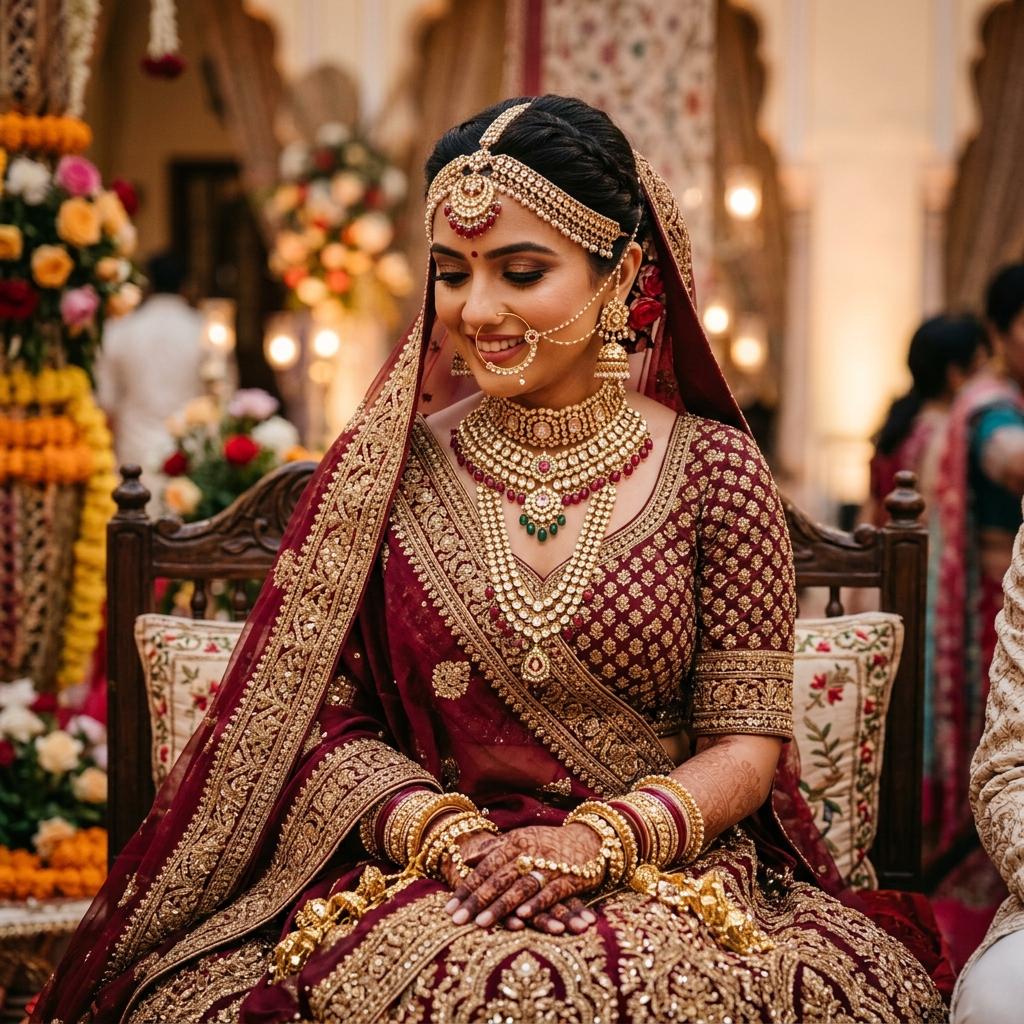
Mirror-work lehengas rarely need help looking festive. The blouse, skirt, and dupatta already catch light, create movement, and bring plenty of celebration on their own. That is exactly why they are easy to over-style.
The strongest mirror-work looks do not try to compete with the outfit. They decide where the emphasis should sit, then keep the rest of the styling controlled. That approach matters even more for Mehendi, Sangeet, cocktail-style family functions, and high-energy wedding evenings where comfort and movement affect how polished the outfit feels after the first hour.
Start With the Mirror Density
Not all mirror work behaves the same way. A few scattered mirrors on a pastel lehenga create a very different effect from a blouse and dupatta that are fully reflective.
| Mirror-work level | Better styling direction |
|---|---|
| Light scattered mirrors | Stronger earrings or bangles can lead |
| Mirror-heavy blouse | Keep the neckline clear and focus on ears or wrists |
| Mirror-heavy skirt and dupatta | Reduce jewelry and let the outfit stay dominant |
| Mixed gota, thread, and mirror work | Repeat one finish instead of layering many jewelry ideas |
This first decision usually fixes half the styling problem. When the outfit surface already reflects a lot of light, jewelry should sharpen the look, not create more noise.
Choose One Jewelry Category to Lead
Mirror-work lehengas often look best when only one jewelry category feels pronounced. That lead might be earrings, a choker, bangles, or a maang tikka, but it should not be all four at once.
These combinations usually work well:
- statement chandbalis with no necklace
- a compact choker with smaller studs or short jhumkas
- stacked bangles with cleaner earrings
- a maang tikka focus when the blouse neckline is simple and the hair is pulled back
This keeps the eye moving through the look instead of stopping at multiple competing reflective points.
Let the Blouse Neckline Decide the Necklace
A mirror-work blouse often already acts like jewelry. If the neckline has mirrors, beads, tassels, or gota edging, a necklace can easily make the upper half feel crowded.
Use this quick rule:
| Blouse detail | Better necklace choice |
|---|---|
| High neck or mirror-heavy neck | Skip the necklace |
| Deep V or plain scoop neck | Short choker or collarbone piece |
| Sweetheart or strap-led blouse | Compact necklace or pendant |
| One-shoulder or dramatic blouse | Earrings only |
| Mirror blouse plus heavy dupatta border | Keep the neck fully clean |
Many mirror-work lehengas improve immediately when the neck is left open and the earrings do the work.
Match Metal and Stone Finish to the Outfit Mood
Mirror work can lean playful, bohemian, festive, or evening-ready depending on the color palette and embroidery around it. The jewelry finish should follow that mood.
- oxidized silver works well with multicolor, folk-inspired, and garba-style mirror work
- antique gold suits warmer lehengas with gota, zari, or traditional embroidery
- pearl accents soften mirror work when the lehenga is pastel or daytime-friendly
- kundan or polki details work better when the mirror work is controlled rather than everywhere
The cleaner choice is usually the better one. If the lehenga already has bright color, reflective surfaces, and a decorated dupatta, jewelry with simpler shapes often looks more expensive.
Keep Bangles Rhythmic, Not Heavy
Bangles belong naturally with mirror-work lehengas because they echo movement and celebration. But the wrist styling should stay proportional to sleeve detail and earring size.
Try these pairings:
- silver-toned bangles with oxidized earrings for folk or Navratri-style looks
- thin gold bangles with one kada for warmer festive lehengas
- pearl-and-metal stacks for pastel mirror-work outfits
- colorful glass bangles only when the rest of the jewelry is very edited
If the blouse sleeves already carry mirror borders or tassels, use a slimmer stack. Too much weight at the wrist can make the outfit feel noisy in photos and tiring on the dance floor.
Hair and Forehead Styling Need Restraint Too
Mirror-work lehengas already create motion near the shoulders and dupatta line. That means hair should usually either stay controlled or stay simple.
Low buns, braids, half-tied waves, and sleek ponytails usually work better than very large open-volume styling. They show the earrings, prevent tangling, and help the look stay neat through dancing.
If you add a maang tikka, reduce the earring scale slightly. If you want oversized chandbalis, keep the forehead styling lighter. The same principle applies to bindis: one clean, deliberate accent usually feels better than a highly decorated forehead plus heavy ears plus a mirrored blouse.
Use the Bag and Footwear to Calm the Look
Mirror-work lehengas can tempt people to match every accessory with more glitter. That often weakens the outfit instead of strengthening it.
A better approach is to make the bag and footwear supportive rather than competitive:
- metallic juttis for comfort-heavy functions
- block heels in gold, silver, or nude when the lehenga is long and formal
- a small potli or clutch that repeats one tone from the lehenga instead of every embellishment
- cleaner footwear when the dupatta and skirt are already very ornate
If the footwear, bag, and jewelry all sparkle separately, the outfit starts to feel fragmented.
Make the Look Function-Specific
Mirror-work lehengas can shift across wedding events, but the accessory plan should change with the function.
| Function | Best styling direction |
|---|---|
| Mehendi | playful earrings, edited bangles, easy footwear |
| Sangeet | secure statement earrings, practical heels, lighter neck styling |
| Cocktail-style family event | cleaner metallics, sharper makeup, more controlled jewelry |
| Garba or festive dance night | movement-friendly earrings, slimmer bangles, tied-back hair |
| Wedding guest evening look | one elevated focal point, polished bag, disciplined layering |
The same lehenga does not need the same jewelry for every event. Occasion logic should lead the final choices.
A Simple Mirror-Work Lehenga Styling Formula
If you want one repeatable structure, use this order:
- Check how dense the mirror work is across blouse, skirt, and dupatta.
- Choose one focal category: earrings, neck, wrists, or forehead.
- Match jewelry finish to the lehenga mood instead of adding every festive metal.
- Keep bag and footwear quieter than the outfit.
- Prioritize movement, secure draping, and comfort for long events.
That formula keeps the look energetic and festive without losing polish.
How AlankarAI Helps
AlankarAI can compare mirror density, blouse neckline, dupatta weight, event type, and color palette to suggest the right balance of earrings, bangles, necklaces, hair details, and bags. For mirror-work lehengas, that balance matters because the outfit already provides so much visual texture. The best styling choice is usually not more sparkle. It is better control.
Want a personalized analysis?
Upload your own outfit photo and let AlankarAI find the perfect matching jewelry for you.
Start Styling NowIndian ethnic-fashion writers and stylists. Every guide is reviewed for accuracy and cultural context before publishing. Read our editorial standards →
Get help choosing the right ethnic accessories.
Subscribe for weekly guides, ask a styling question, or tell us whether this page helped. Your feedback shapes the next AlankarAI guides.
Was this helpful?
A quick tap helps us improve future guides.
Editorial note: AlankarAI guides are written to provide styling education. Some store links on the site may be monetized, but article recommendations are intended to remain useful whether you shop online, locally, or from your own wardrobe.