
By AlankarAI Editorial Team · 11 min read · Reviewed for practical styling guidance
Nath Styling Guide: How to Choose the Right Nose Ring for Your Face Shape, Outfit, and Occasion
The nath is one of the most expressive pieces in Indian ethnic jewelry. Learn how to choose the right style, size, side, and metal for your face shape, outfit type, and occasion — from bridal Maharashtrian naths to everyday studs.
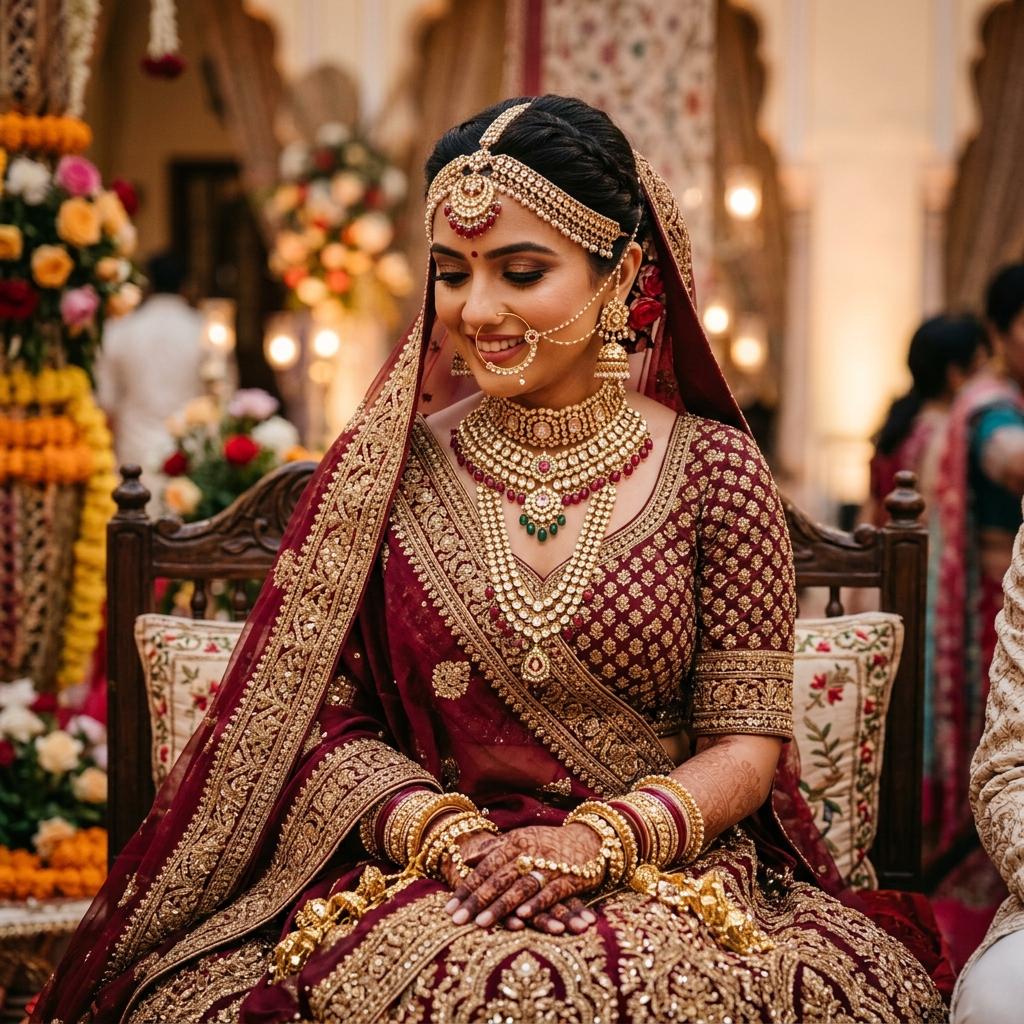
The nath is one of the oldest and most culturally significant jewelry pieces in Indian ethnic dressing. It frames the face differently from earrings or necklaces because it draws attention to the center of the face — the nose — and changes how the rest of the look reads. A large Maharashtrian nath on a Paithani saree signals bridal tradition. A small gold stud on a silk kurta signals understated elegance. A pearl-drop nath on a pastel lehenga sits somewhere in between: feminine, graceful, and versatile.
Despite being such a visible accessory, the nath is often chosen as an afterthought. Most people pick whichever one came with the bridal jewelry set or whatever the jeweler recommended. This guide gives you a proper framework for choosing a nath based on your face shape, outfit, occasion, and how the rest of your accessories are styled.
1. The Main Types of Nath
Understanding the categories makes it easier to match a nath to the right look.
Maharashtrian Nath
Large, circular, and often heavily decorated with pearls, meenakari, or gold work. It is worn on the left nostril and held in place by a chain attached to the hair. It is the definitive bridal nath for Marathi weddings but is also worn at other formal occasions across western India.
Best with: Paithani sarees, Nauvari sarees, heavy silk sarees, bridal lehengas, rich embroidery.
Rajasthani Nath
Also large in diameter, with strong gemstone inlay — rubies, emeralds, and polki are common. It has a tribal, bold character and is often seen in Rajasthani folk, bandhani, and leheriya outfits. The chain is usually decorative and visible.
Best with: Bandhani sarees, leheriya dupattas, mirror-work blouses, heavily embroidered lehengas.
South Indian Nath (Mukhutti or Mukhuthi)
Smaller and more delicate than North Indian styles. Typically a small gold stud or a tiny ring, sometimes set with rubies or diamonds. Worn on the left nostril. South Indian bridal looks often feature a small gold nath alongside a heavy maang tikka and temple jewelry.
Best with: Kanjivaram sarees, South Indian silk sarees, temple jewelry sets, gold-dominant bridal looks.
Kundan or Polki Nath
Medium-sized, flat, and set with uncut diamonds, polki, or kundan stones. This style is popular in Mughal-influenced bridal jewelry and works well for North Indian weddings, receptions, and engagement ceremonies.
Best with: Heavy lehengas, Banarasi silk, bridal anarkalis, heavy kundan or polki jewelry sets.
Pearl Drop Nath
A small ring or stud with one or more pearl drops hanging from it. Elegant and understated. One of the most wearable styles for non-bridal occasions.
Best with: Pastel lehengas, chiffon sarees, cotton silk outfits, festive kurtas, engagement looks.
Gold Stud Nath
A simple small stud in gold, sometimes set with a single diamond, ruby, or emerald. The most everyday and versatile option.
Best with: Office sarees, casual cotton or linen kurtas, light festive looks, when the rest of the jewelry is already heavy.
Clip-On Nath
A nath designed to attach without piercing. Modern clip-ons can look identical to traditional styles and are available in most sizes.
Best with: Any outfit. A good option for one-time events when you do not want a permanent piercing.
2. Which Side to Wear a Nath
In most Indian traditions, the left nostril is the standard placement. This is rooted in Ayurvedic belief that the left nostril is associated with feminine energy and connects to the reproductive system. Most naths, especially bridal styles with chains, are designed for the left side.
Some regional and personal preferences differ:
| Tradition | Common placement |
|---|---|
| North Indian (most regions) | Left nostril |
| South Indian | Left nostril |
| Maharashtrian | Left nostril |
| Rajasthani | Left nostril (occasionally both for folk styling) |
| Modern/fashion styling | Either side, personal preference |
If you are wearing a nath with a chain that attaches to the hair or ear, make sure the chain length and attachment point match the side of the piercing.
3. Choosing Nath Size by Face Shape
The size of the nath changes how the face appears. A large nath on a narrow face can look overwhelming. A tiny stud on a broad face can look out of proportion.
Oval Face
Oval faces are the most forgiving. Almost any nath size works. Medium to large naths look particularly beautiful because the face can carry them without looking unbalanced.
Recommended sizes: Small to large. If the occasion allows, a medium-large Maharashtrian or kundan nath looks especially graceful.
Round Face
Avoid very small studs — they draw attention to the roundness rather than adding structure. Medium naths with vertical drop elements (pearl drops, chandelier-style) elongate the face.
Recommended sizes: Medium to medium-large. Choose styles with slight downward movement.
Square Face
Soften the jaw by choosing naths with curved, round shapes. Avoid very geometric or angular nath designs. Pearl drops and circular rings work well.
Recommended sizes: Small to medium. Curved, organic shapes.
Heart-Shaped Face (Wider Forehead, Narrower Chin)
Small to medium naths keep the face balanced. Very large naths can make the forehead feel heavier. Pearl studs or slim drop naths are elegant choices.
Recommended sizes: Small to medium. Delicate styles.
Long or Oblong Face
Medium to large naths add width to the center of the face, which balances an elongated shape. Avoid very slim vertical drops that add further length.
Recommended sizes: Medium to large. Flat, spread-out designs rather than long dangles.
Diamond Face (Narrow Forehead and Chin, Wide Cheekbones)
The nath sits on the nose, away from the widest part of the face, so most sizes work. Medium naths with pearls or kundan add softness.
Recommended sizes: Small to medium-large. Most styles suit this shape.
4. Matching Nath Size to Occasion
The event matters as much as the face shape. A large bridal nath at a puja or casual family gathering feels excessive. A tiny stud at a wedding may go unnoticed entirely.
| Occasion | Recommended nath size | Style notes |
|---|---|---|
| Wedding (as bride) | Large | Maharashtrian, kundan, or polki with chain |
| Wedding (as guest) | Small to medium | Pearl drop or gold stud |
| Engagement | Medium | Kundan or pearl styles |
| Sangeet or Mehendi | Small to medium | Floral, pearl, or jhumki-style nath |
| Reception | Medium to large | Modern polki, diamond, or pearl |
| Festive puja or family event | Small to medium | Gold stud or slim pearl nath |
| Office ethnic wear | Small | Gold stud or tiny diamond |
| Casual daily wear | Small | Stud or small ring |
5. Matching the Nath to Your Jewelry Set
The nath should feel like part of the same conversation as your earrings, necklace, and maang tikka — not a separate accessory added at the last moment.
Metal matching
If your earrings and necklace are antique gold, choose an antique gold nath. If your jewelry is white gold or silver, a pearl stud or diamond nath works better than a yellow gold ring.
Stone matching
You do not need to match stones exactly, but the nath should not introduce a color that appears nowhere else in the look. If your earrings have rubies and your necklace has emeralds, a pearl nath is a safe neutral choice.
Weight matching
If your earrings are large jhumkas and your necklace is a heavy haaram, a very large nath can make the face feel overloaded. A medium or small nath balances the look. Conversely, if your earrings are small studs and your necklace is minimal, you have room to make the nath a statement piece.
With maang tikka
When wearing a maang tikka, the nath and tikka together frame the face strongly. In this case, keep earrings and necklace more restrained. Bridal looks can carry all four, but guests and non-bridal occasions should choose two or three pieces as the focus.
6. Nath and Outfit Pairing
Silk Sarees
Gold naths in any size. Temple naths, Maharashtrian naths, or kundan styles all pair well with rich silk. Match the metal of the nath to the saree's zari border — if the zari is gold, the nath should be gold.
Chiffon or Georgette Sarees
Keep the nath light — a pearl drop or small gold stud. Heavy naths on sheer fabrics create an imbalance between the delicacy of the fabric and the weight of the jewelry.
Lehengas
The most forgiving category. Almost any nath size works. For heavy bridal lehengas, a large kundan or Maharashtrian nath is appropriate. For lighter party lehengas, a pearl drop or medium gold nath is enough.
Anarkali Suits
Medium naths pair best. The anarkali has a flowing, feminine silhouette — a medium kundan or pearl nath continues that softness without competing with the outfit's embroidery.
Festive Kurtas and Sharara Sets
Small to medium naths. Gold studs, oxidized silver naths, or small pearl styles keep the look festive without overdressing.
Indo-Western Outfits
If the outfit has a contemporary cut, choose a simple gold stud or a geometric modern nath. Avoid very traditional or regional naths with fusion outfits — they can create a jarring mix of references.
7. Practical Styling Tips
Secure the chain properly
If your nath has a chain that attaches to the hair, secure it firmly before the event. A loose chain that keeps slipping out interrupts the look and requires constant adjustment.
Test before the event
Naths — especially larger ones — can be uncomfortable if the weight pulls on the piercing for several hours. Wear the nath for at least 30 minutes during a trial styling session before the actual event.
Match the chain to the hair
A gold chain against dark hair blends in naturally. If you have light-colored or coloured hair, a pearl-strand chain can look more intentional.
Clip-on naths for sensitive piercings
If your piercing is new, sensitive, or healed at an angle, a well-fitted clip-on nath puts no stress on the piercing. Modern clip-on designs are secure and look identical to pierced versions in photos.
Cleaning
Gold and kundan naths should be cleaned with a soft cloth after each use. Avoid water near pearl naths. Store naths separately to prevent the chain from tangling with other jewelry.
8. Quick Nath Reference by Outfit
| Outfit | Nath size | Nath style |
|---|---|---|
| Bridal lehenga | Large | Maharashtrian, kundan, or polki |
| Paithani saree | Large | Maharashtrian with chain |
| Kanjivaram saree | Small to medium | South Indian gold stud or temple nath |
| Banarasi saree | Medium to large | Kundan or polki |
| Pastel lehenga | Small to medium | Pearl drop or delicate gold ring |
| Chiffon saree | Small | Gold stud or tiny pearl stud |
| Anarkali | Medium | Kundan or pearl nath |
| Festive kurta | Small | Gold stud or oxidized ring |
| Office saree | Small | Tiny gold stud |
| Indo-Western | Small | Modern geometric or simple stud |
9. Common Nath Mistakes to Avoid
Wearing a large nath with very heavy earrings
Both are near the face. When both are large, the face feels crowded. Downsize one of them.
Ignoring the chain attachment
If the chain clips to the ear, make sure the earring has a secure hook or the clip will keep slipping. If it attaches to the hair, a pinned side bun is more secure than open hair.
Choosing a nath too small for a formal occasion
A tiny stud disappears in photos at a wedding or reception. If the event is important, go one size up from what feels comfortable.
Mismatching metal heavily
A silver nath with full gold jewelry looks like an oversight unless the mixed-metal look is intentional and consistent throughout the accessories.
Buying a nath that does not match the piercing side
Many traditional naths are side-specific. Check whether the nath is designed for the left or right nostril before purchasing.
The Styling Formula
Use this simple sequence when choosing a nath:
- Fix the occasion — bridal, festive, casual, or office.
- Check the face shape — this sets the size range.
- Look at the rest of the jewelry — match metal and keep weight balanced.
- Look at the outfit — heavy fabrics support heavier naths, light fabrics need lighter ones.
- Check the hairstyle — if a chain is involved, the hairstyle must support it.
The nath is a small piece of jewelry that does a large amount of visual work. Chosen carefully, it completes an ethnic look in a way that no other accessory quite can.
Want a personalized analysis?
Upload your own outfit photo and let AlankarAI find the perfect matching jewelry for you.
Start Styling NowIndian ethnic-fashion writers and stylists. Every guide is reviewed for accuracy and cultural context before publishing. Read our editorial standards →
Get help choosing the right ethnic accessories.
Subscribe for weekly guides, ask a styling question, or tell us whether this page helped. Your feedback shapes the next AlankarAI guides.
Was this helpful?
A quick tap helps us improve future guides.
Editorial note: AlankarAI guides are written to provide styling education. Some store links on the site may be monetized, but article recommendations are intended to remain useful whether you shop online, locally, or from your own wardrobe.