
By AlankarAI Editorial Team · 6 min read · Reviewed for practical styling guidance
Nauvari Saree Jewelry Styling Guide: How to Balance Maharashtrian Draping, Traditional Gold, Nath, and Comfort
Nauvari sarees carry movement, tradition, and strong visual structure on their own. Use this guide to style gold jewelry, nath, bangles, blouse details, hair, and footwear so the full look feels Maharashtrian, polished, and wearable.
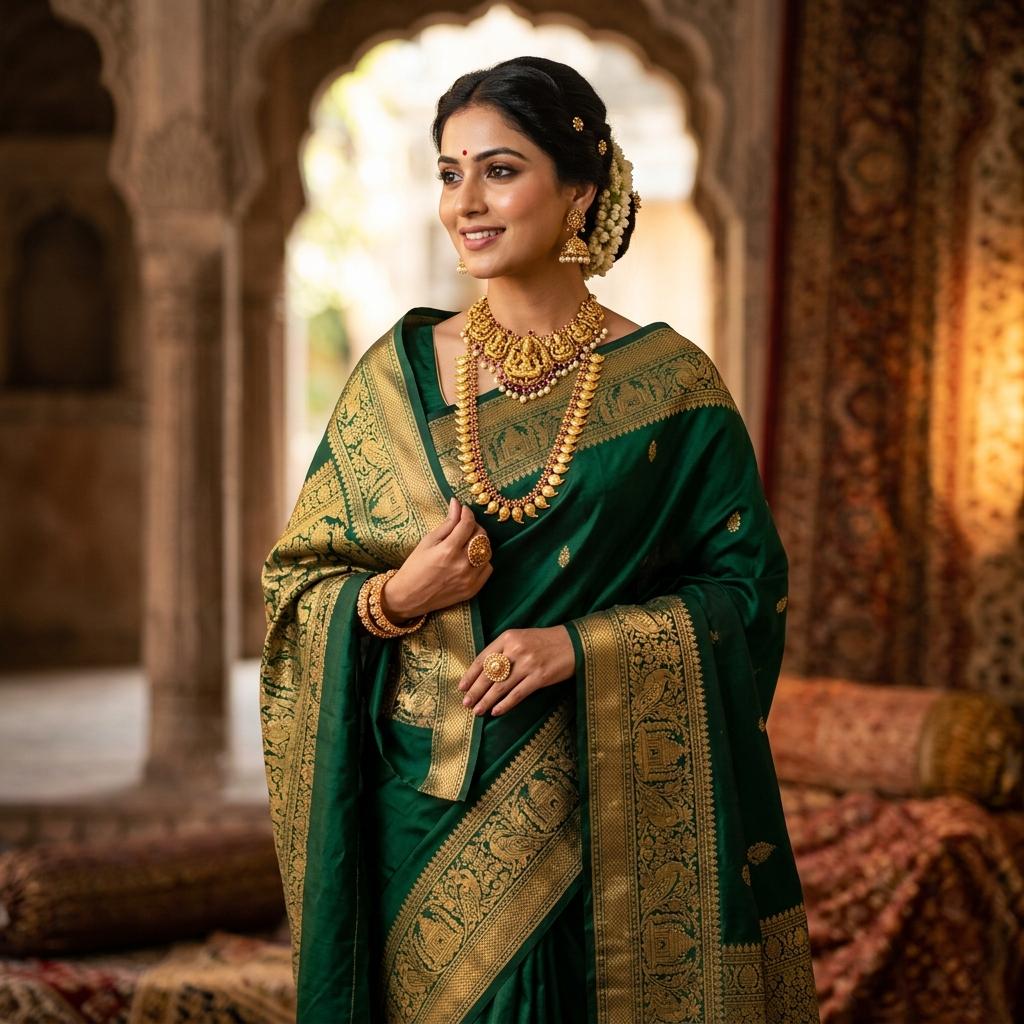
Nauvari sarees already make a statement before the jewelry enters the picture. The drape has structure, movement, and cultural identity, which means styling should support that strength instead of fighting it. When the accessories become too heavy in every direction, the look can start feeling costume-like rather than elegant.
The strongest Nauvari styling usually respects the drape first. It lets the saree silhouette, border, and traditional mood lead, then builds jewelry and finishing details around that foundation.
Start With the Occasion and Mobility
Nauvari sarees are often worn for weddings, festive gatherings, cultural celebrations, temple visits, and traditional performances. Those settings can involve walking, standing for long hours, rituals, and constant movement. That is why comfort is not separate from style here. It is central to style.
Before choosing jewelry, check these things first:
- how heavy the saree border looks
- whether the blouse is plain or ornate
- how much movement the occasion requires
- whether the look is meant to feel bridal, festive, or devotional
| Styling factor | Better direction |
|---|---|
| Active festive event | Edited jewelry, secure drape, stable footwear |
| Wedding guest styling | Traditional gold, moderate bangles, one strong focal point |
| Bridal or close-family look | Stronger jewelry hierarchy, but not every piece at full volume |
| Temple or puja setting | Devotional details, cleaner neckline, practical finish |
The full outfit needs to stay graceful while you move. If the jewelry shifts constantly or the drape feels difficult, the styling is not fully working.
Let the Nauvari Drape Stay in Charge
Unlike softer everyday sarees, a Nauvari silhouette already creates visual definition through pleating and leg movement. That means the styling does not need extra clutter near every visible area.
Traditional gold, antique-gold finishes, pearls, and Maharashtrian classics all work naturally, but they should connect to the saree's scale. If the border is broad or the blouse already has zari, the jewelry should feel more edited. If the saree is comparatively plain, the accessories can carry more presence.
The goal is not to prove the outfit is traditional by adding every possible element. The goal is to make the drape, jewelry, and grooming feel like one language.
Choose One Jewelry Area to Lead
Nauvari styling often includes multiple classic categories: nath, earrings, necklace, bangles, kamarbandh, and hair accessories. That is exactly why hierarchy matters.
Pick one leading zone:
- nath and earrings as the visual focus
- necklace as the hero with quieter earrings
- fuller green-and-gold bangles with a cleaner neckline
- hair flowers and bindi as the finishing emphasis when the blouse and drape are already rich
This keeps the look powerful without making the face, neck, and wrists compete at the same time.
Style the Nath Carefully
A nath can define a Maharashtrian look instantly, but it changes the balance of the face. Once it enters the outfit, the rest of the jewelry should respond to it.
If the nath is prominent:
- keep earrings traditional but not oversized
- avoid an overly dense necklace stack
- use a bindi that supports the face without overcrowding it
- let the hairstyle stay neat and controlled
If you are skipping the nath, you can shift more attention to chandrakor bindis, earrings, or a stronger neck piece. The important thing is to avoid treating every element as mandatory.
Match Gold, Pearls, and Bangles to the Saree Mood
Maharashtrian styling usually looks strongest when the metal story stays coherent. Warm gold, antique gold, pearls, and green bangle accents are reliable choices because they feel rooted in the tradition without looking random.
These combinations usually work well:
- traditional gold necklace with matching jhumkas for wedding guest dressing
- pearls mixed with gold for softer daytime or puja styling
- green glass bangles broken with gold kadas for festive structure
- antique-finish pieces when the saree colors are deeper and more earthy
If the saree border, blouse trim, or waist detail already carries metallic richness, reduce the number of separate jewelry statements. The outfit should feel layered, not loaded.
Let the Blouse Decide the Necklace Weight
Blouse shape controls the neckline more than occasion does. A high or decorated blouse usually needs less jewelry at the neck, even in a festive setting.
| Blouse detail | Better necklace response |
|---|---|
| High neck or ornate neckline | Skip the necklace and let earrings or nath lead |
| Plain round neck | Short traditional necklace or pearls |
| V-neck blouse | Compact necklace with clear shape |
| Heavy sleeve border | Reduce wrist volume slightly |
| Plain elbow-sleeve blouse | Allows stronger earrings or bangles |
This is one of the fastest ways to make Nauvari styling feel polished. Instead of assuming a heavy necklace is always required, let the blouse create the rule.
Keep Hair, Bindi, and Flowers Disciplined
Nauvari looks usually benefit from strong finishing details, but they still need restraint. A center-parted bun, low bun with gajra, or secure braid often works better than very loose hair because the drape itself already brings movement and drama.
A chandrakor or round bindi can finish the face beautifully, especially when it aligns with the scale of the nath and earrings. If the jewelry is already strong, keep the bindi precise rather than oversized.
Hair flowers, especially jasmine, can elevate the look quickly. But once flowers, a nath, statement earrings, and a bold blouse appear together, the necklace often needs to soften.
Choose Footwear for Stability, Not Just Tradition
Nauvari sarees involve a different lower-body rhythm than many other drapes. Footwear should support walking and balance instead of interrupting it.
These options usually work best:
- flat or low-heel sandals
- secure wedges for taller dressing
- traditional-looking juttis or mojaris when the event allows
- footwear that repeats either the saree tone or the jewelry metal lightly
Avoid fragile heels that make the drape harder to manage. The outfit should move with confidence.
Common Nauvari Styling Mistakes
Making every jewelry category heavy
The drape is already visually strong. The jewelry needs hierarchy.
Ignoring movement
If the blouse, bangles, waistband, and footwear all restrict motion, the look will lose grace quickly.
Treating the nath as an isolated accessory
Once a nath is added, the whole face styling has to rebalance around it.
Overcrowding the finishing layer
Bindi, flowers, earrings, necklace, and bangles can all work together, but not all at maximum intensity.
A Simple Nauvari Styling Formula
Use this order if you want a repeatable method:
- Read the saree border, blouse detail, and occasion type.
- Decide whether the focal point is the nath, neckline, or wrists.
- Keep gold, pearls, and green bangles in one coherent story.
- Use hair and bindi to complete the look rather than overload it.
- Finish with stable footwear and a movement-friendly drape.
That keeps the outfit traditional, expressive, and wearable instead of visually crowded.
How AlankarAI Helps
AlankarAI can compare Nauvari saree color, border scale, blouse neckline, occasion, and planned accessories to suggest whether the look needs a stronger nath, edited bangles, softer pearls, or a cleaner finishing layer. With Nauvari styling, those small balance decisions make the difference between a heavy look and a powerful one.
Want a personalized analysis?
Upload your own outfit photo and let AlankarAI find the perfect matching jewelry for you.
Start Styling NowIndian ethnic-fashion writers and stylists. Every guide is reviewed for accuracy and cultural context before publishing. Read our editorial standards →
Get help choosing the right ethnic accessories.
Subscribe for weekly guides, ask a styling question, or tell us whether this page helped. Your feedback shapes the next AlankarAI guides.
Was this helpful?
A quick tap helps us improve future guides.
Editorial note: AlankarAI guides are written to provide styling education. Some store links on the site may be monetized, but article recommendations are intended to remain useful whether you shop online, locally, or from your own wardrobe.