
By AlankarAI Editorial Team · 7 min read · Reviewed for practical styling guidance
Navratri Color Styling Guide: How to Match Bangles, Earrings, Dupattas, and Footwear Across the Nine Nights
Navratri outfits feel sharper when color, jewelry, and movement work together instead of competing for attention. Use this guide to style bangles, earrings, dupattas, footwear, and finishing details across bright garba and dandiya looks without making the outfit feel overloaded.
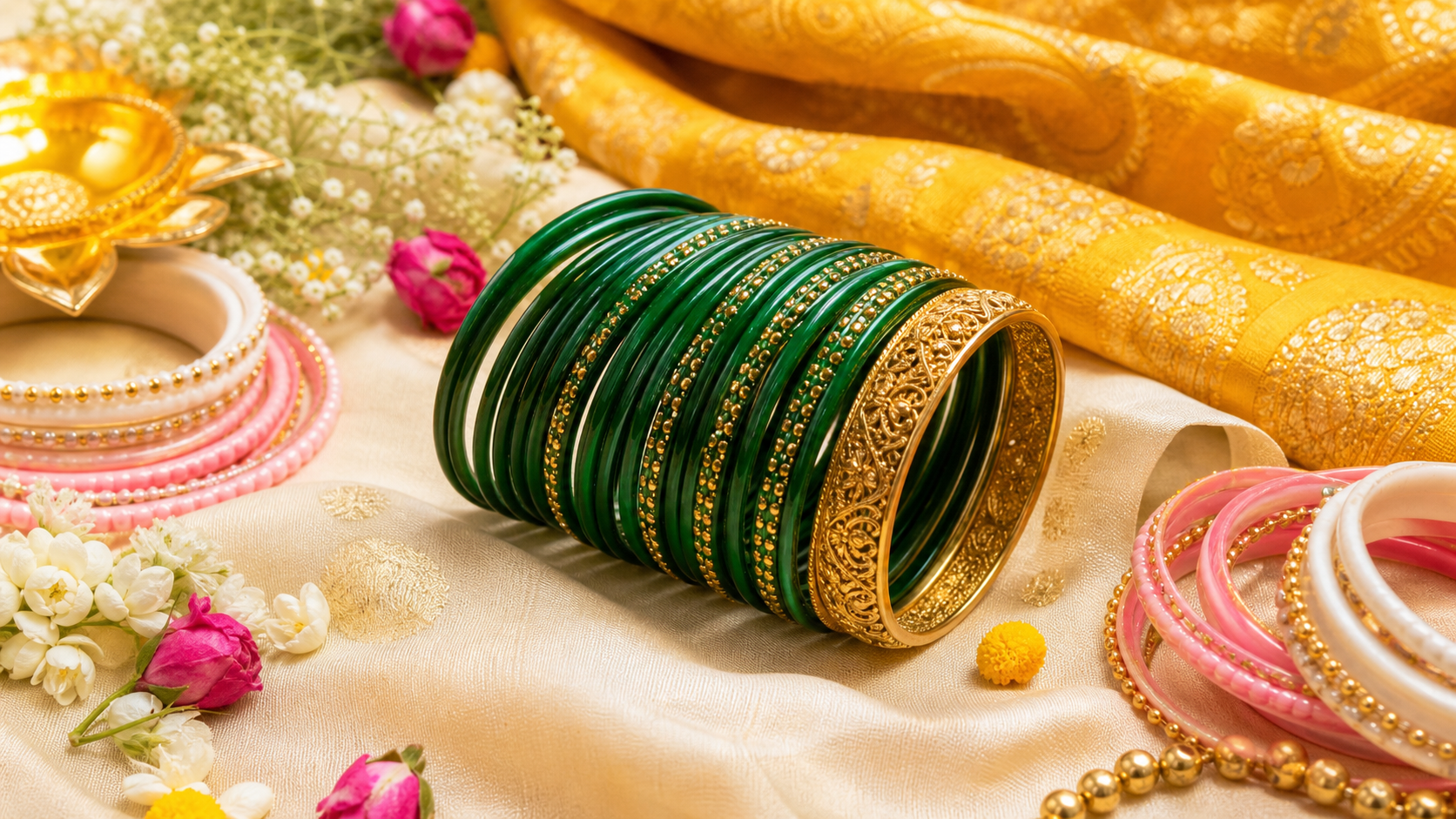
Navratri dressing has a different rhythm from most festive styling. The outfit needs color, but it also needs movement. Bangles have to work while you dance. Earrings need presence without becoming uncomfortable. Footwear must support long evenings. Dupattas should look expressive without getting in the way.
That is why Navratri styling works best when you do not treat every element as equally important. The strongest looks usually begin with one color direction, one lead jewelry category, and one practical decision about movement.
The goal is not to make the outfit simpler.
The goal is to make it feel energetic, festive, and wearable for the full night.
Start With the Night's Color Story
Many people plan Navratri looks around the traditional color sequence, while others choose one bright family for the whole season. Both can work. What matters is having a clear color story before you start adding accessories.
A useful approach is to group your outfit into one of these directions:
| Color direction | Styling effect | Better jewelry response |
|---|---|---|
| Bright warm shades like red, orange, yellow, rani pink | High-energy, festive, visible in motion | Gold, kundan-look, mirror work, colorful bangles |
| Cool vivid shades like royal blue, teal, emerald | Rich, evening-friendly, polished | Silver, oxidized silver, pearls, stone-led earrings |
| White, ivory, or cream with strong accents | Clean, elegant, easy to build on | One contrast jewelry story and brighter bangles |
| Multicolor lehenga or printed dupatta looks | Already visually busy | Reduce jewelry categories and repeat one accent tone |
Once you know whether the outfit is warm, cool, or mixed, the accessory decisions become faster. The mistake is trying to add every festive color at once even when the garment already has enough variation.
Let Either the Bangles or the Earrings Lead
Navratri outfits often include mirror work, gota, tassels, embroidery, printed borders, and contrast dupattas. That means the clothing already creates visual movement.
If bangles are the lead, let them feel celebratory and audible. If earrings are the lead, keep the wrist styling cleaner.
A reliable formula is:
- stacked glass bangles or lac bangles with smaller jhumkas
- one stronger pair of chandbalis with fewer wrist layers
- oxidized earrings with slim metal bangles when the outfit already has mirror work
- colorful bangles with compact studs when the dupatta and neckline are detailed
Trying to make earrings, bangles, necklace, maang tikka, and kamarbandh all equally dominant usually weakens the overall look. Navratri styling improves when one area gets the spotlight and the rest support it.
Match Jewelry Finish to Fabric Surface
Fabric texture matters as much as color.
Cotton, cotton-silk, ajrakh-inspired prints, and softer festive sets often look better with oxidized silver, terracotta, thread jewelry, or lightly embellished bangles. Heavier lehengas, satin-finish skirts, silk blends, and gota-patti sets can support shinier gold-tone jewelry, mirror accents, or kundan-style pieces.
Use this quick check:
- If the fabric looks matte, textured, or handloom-inspired, avoid overly glossy accessories.
- If the outfit already has reflective work, keep the jewelry more edited.
- If the garment is plain but bright, the bangles or earrings can carry more visual weight.
- If both fabric and jewelry are highly reflective, reduce one of them before the look becomes crowded.
This balance matters because Navratri clothing is often seen in motion and under bright lighting. A mismatch between fabric finish and jewelry shine becomes more obvious once you start dancing.
Use the Dupatta as a Color Bridge, Not Extra Decoration
The dupatta often decides whether a festive outfit looks thoughtful or improvised.
If the lehenga or kurta set is already strong in one color, use the dupatta to echo that family through border work, tassels, or one contrast accent. If the dupatta is multicolored, it should guide the bangle palette rather than compete with it.
For example:
- a yellow outfit with a bandhani dupatta can pull bangles from the dupatta border instead of repeating only yellow
- a white chaniya choli with a bright pink dupatta can use pink-and-gold wrist styling and neutral footwear
- a teal kurta set with a mirror dupatta looks better with silver-led earrings and fewer additional shiny elements
- a multicolor skirt works better when the blouse and accessories repeat only one or two colors from the print
The dupatta is most useful when it connects the outfit. It becomes disruptive when it introduces new colors that the rest of the styling never repeats.
Keep Neck Styling Selective
Navratri looks often involve active movement, so heavy neck layering is not always practical. A necklace can work, but only when the neckline and fabric actually want it.
| Neckline or blouse detail | Better neck styling choice |
|---|---|
| High neck, mirror yoke, heavy embroidery | Skip the necklace |
| Deep round, V neck, sweetheart | Short necklace or choker |
| Halter or closed festive kurti neck | Earrings only |
| Simple blouse with plain bodice | One compact necklace can work |
A common mistake is assuming festive dressing must include a full set. During Navratri, the better question is whether the necklace adds structure or only extra weight.
Choose Footwear for Hours, Not for the Mirror
Navratri shoes have one job that matters more than all others: they must survive the evening.
Juttis, kolhapuri-style flats with support, block heels, or secure wedges usually outperform delicate sandals that only look good for the first twenty minutes. If the outfit is already bright and heavily trimmed, quieter footwear often makes the whole look feel more expensive.
Footwear direction can follow this rule:
- mirror-work outfits pair well with metallic or neutral shoes
- multicolor outfits need one stable shoe tone, usually gold, tan, or silver
- bright solid-color looks can handle embroidered juttis or contrast flats
- heavy skirts and long nights usually need flat or low-support options
Comfort is not separate from styling here. Once the footwear fails, the outfit stops looking graceful.
Hair Should Support Movement and Earrings
Hair decisions for Navratri should respond to both heat and jewelry.
Open hair can work for shorter events, but braids, half-up styles, ponytails, or buns tend to look neater through a longer evening. If the earrings are large, keep the hair controlled enough that they remain visible. If the earrings are smaller, a fuller hairstyle can help the overall silhouette feel festive.
Good pairings include:
- braid with parandi or tassel detail and medium jhumkas
- half-up hair with chandbalis and stacked bangles
- sleek ponytail with mirror-work earrings
- low bun with fresh flowers for a cleaner traditional look
The hairstyle should help the outfit stay composed after movement, not just during the first photograph.
Build a Repeatable Nine-Night Accessory System
If you are planning multiple Navratri outfits, do not style all nine nights from scratch. Build a small system instead.
Keep these categories ready:
- one gold-tone bangle stack
- one silver-tone or oxidized earring option
- one colorful glass-bangle set that can mix across outfits
- one neutral jutti or wedge
- one bright dupatta that can revive a simpler base outfit
This creates variation without making each night feel disconnected. Repeating a smart accessory base often looks more polished than trying to invent a brand-new styling language every evening.
A Simple Navratri Formula
If you want a practical method, use this order:
- Pick the outfit and decide whether the color story is warm, cool, or multicolor.
- Choose whether bangles or earrings should lead.
- Match the jewelry finish to the fabric texture.
- Use the dupatta to repeat or bridge color instead of adding chaos.
- Choose footwear and hair for movement before adding any final extras.
That order usually gives you a look that feels festive, balanced, and realistic for dancing, photos, and long family gatherings.
How AlankarAI Helps
AlankarAI can compare color family, embroidery density, dupatta contrast, neckline shape, and occasion type to suggest better bangles, earrings, necklaces, footwear, and finishing details. For Navratri looks, that matters because the outfit has to perform in motion, not only in a static mirror view.
The best styling decisions are the ones that still look right by the end of the night.
Want a personalized analysis?
Upload your own outfit photo and let AlankarAI find the perfect matching jewelry for you.
Start Styling NowIndian ethnic-fashion writers and stylists. Every guide is reviewed for accuracy and cultural context before publishing. Read our editorial standards →
Get help choosing the right ethnic accessories.
Subscribe for weekly guides, ask a styling question, or tell us whether this page helped. Your feedback shapes the next AlankarAI guides.
Was this helpful?
A quick tap helps us improve future guides.
Editorial note: AlankarAI guides are written to provide styling education. Some store links on the site may be monetized, but article recommendations are intended to remain useful whether you shop online, locally, or from your own wardrobe.