
By AlankarAI Editorial Team · 5 min read · Reviewed for practical styling guidance
Paithani Saree Jewelry Styling Guide: Borders, Nath, and Festive Balance
Paithani sarees carry strong color, zari, and pallu drama. Learn how to pair naths, gold sets, bangles, bindis, and blouses so the weave stays regal without feeling overloaded.
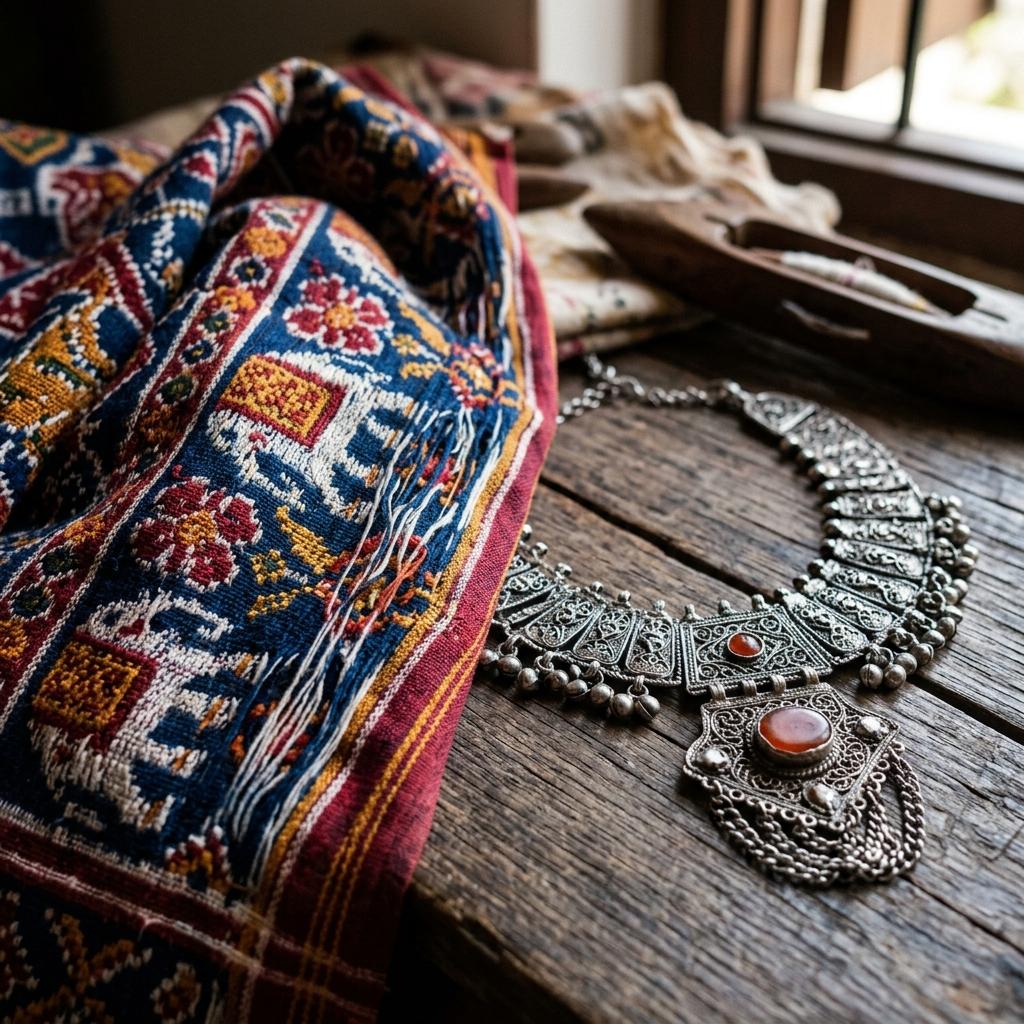
Paithani sarees already bring ceremony to the room. The silk has body, the zari catches light quickly, and the pallu often carries peacock, lotus, or geometric motifs that deserve visual space. Because the saree is so expressive, the best styling usually comes from editing rather than adding more in every category.
Start by reading the saree in three parts: body color, border width, and pallu richness. Those details will tell you whether the jewelry should feel bridal, festive, or quietly heritage-led.
Let the Border Set the Jewelry Weight
A broad zari border creates a strong frame around the body, so jewelry can stay relatively compact. A slimmer border allows slightly more presence at the neck or ears. If the pallu is heavily woven and will remain visible over the shoulder, avoid stacking a long necklace over it unless the occasion is distinctly bridal.
| Paithani detail | Best jewelry response |
|---|---|
| Wide zari border | Short necklace and edited earrings |
| Rich motif pallu | Let the pallu lead; keep the neck controlled |
| Deep jewel-tone body | Traditional gold or pearl-accented gold |
| Lighter festive shade | Softer kundan or smaller antique gold pieces |
| Bridal drape | One statement face-framing piece plus layered wrist |
The saree should never fight for attention with every jewelry category at full volume. Decide early whether the lead piece is the nath, earrings, necklace, or bangles.
Choose the Nath with Intention
Paithani styling is often associated with the Maharashtrian nath, but scale matters. A large crescent-shaped nath with pearls or stones suits bridal looks, traditional family ceremonies, and richly draped silk. For festive events, a smaller nath or nose pin can preserve the regional cue without making the face feel too formal.
When the nath is prominent, simplify the earrings. Medium jhumkas, neat pearl drops, or compact chandbalis keep the balance intact. If the nath is minimal, the earrings can carry more detail.
Match the Necklace to the Blouse and Drape
High-neck or heavily embroidered blouses rarely need a substantial necklace. In those cases, let the earrings, nath, and bangles take over. A classic round or slightly open neckline can support a short gold necklace, a pearl-accented collar, or a traditional set that sits above the saree pleats.
Long layered necklaces can work for bridal or formal styling, but only if the pallu placement leaves enough open space. If the zari is dense near the shoulder and chest, a long necklace will often disappear into the textile rather than elevate it.
Good combinations include:
- round-neck blouse with a short traditional gold necklace
- high-neck blouse with statement earrings and no necklace
- deeper festive neckline with one collar-length set and controlled wrists
- bridal drape with a short necklace plus one longer layer if the pallu is comparatively quieter
Balance Kolhapuri Saaj, Pearls, and Gold
Not every Paithani look needs the same traditional set. Kolhapuri saaj can feel deeply rooted and ceremonial, especially for weddings and family rituals. Pearls soften bright silk and help the look feel refined rather than heavy. Plain gold works well when the saree color and border are already visually busy.
If the saree body is magenta, purple, rani pink, parrot green, or deep blue, keep the jewelry finish warm and stable. Introducing silver-toned pieces usually breaks the harmony unless the outfit is intentionally fusion-led.
Build the Wrist Carefully
The wrist is where Paithani styling can quickly tip into excess. If the saree already has a broad border and strong blouse sleeve detail, use slimmer bangles with one or two kadas. For brides or very formal occasions, green glass bangles, gold separators, and one stronger kada can create the right celebratory rhythm.
Try to repeat colors rather than add new ones. Green bangles, for example, make sense when the saree, border, or blouse already supports them. Random contrast at the wrist can make an otherwise coherent traditional look feel assembled.
Use Hair and Bindi as Finishing Structure
A low bun, center part, or neatly defined side part usually suits Paithani silk better than highly casual hair. Fresh gajra can work beautifully for weddings and puja settings, especially when the jewelry is traditional. For lighter festive dressing, a polished bun or half-tied hairstyle may be enough.
The bindi should echo the styling mood. Small round bindis suit edited festive looks; a slightly stronger bindi can anchor bridal or ceremonial dressing. If the blouse, necklace, and nath are already prominent, the bindi should support rather than dominate.
Adjust for Occasion Instead of Copying Bridal Styling
One common mistake is treating every Paithani as bridal. The same saree can be styled very differently for a wedding guest look, a festive dinner, a puja, or a family celebration. A guest look might use earrings, a neat necklace, and restrained bangles. A bridal look can support the nath, stronger bangles, layered gold, and flowers because the context justifies the extra ornament.
Ask what the occasion requires before choosing the jewelry weight. Traditional styling looks most elegant when it feels appropriate, not theatrical.
How AlankarAI Helps
AlankarAI can compare Paithani border width, pallu density, blouse neckline, face framing, and occasion to recommend the right balance of nath, necklace, earrings, and bangles. The strongest result preserves what makes the saree special: luminous silk, heritage motifs, and jewelry that supports the weave instead of competing with it.
Want a personalized analysis?
Upload your own outfit photo and let AlankarAI find the perfect matching jewelry for you.
Start Styling NowIndian ethnic-fashion writers and stylists. Every guide is reviewed for accuracy and cultural context before publishing. Read our editorial standards →
Get help choosing the right ethnic accessories.
Subscribe for weekly guides, ask a styling question, or tell us whether this page helped. Your feedback shapes the next AlankarAI guides.
Was this helpful?
A quick tap helps us improve future guides.
Editorial note: AlankarAI guides are written to provide styling education. Some store links on the site may be monetized, but article recommendations are intended to remain useful whether you shop online, locally, or from your own wardrobe.