
By AlankarAI Editorial Team · 3 min read · Reviewed for practical styling guidance
Passa and Jhoomar Styling Guide: Hairstyles, Earrings, and Outfit Balance
A passa or jhoomar creates a regal side-swept focal point. Learn how to choose its size, position it securely, and balance it with hairstyles, earrings, and ethnic outfits.
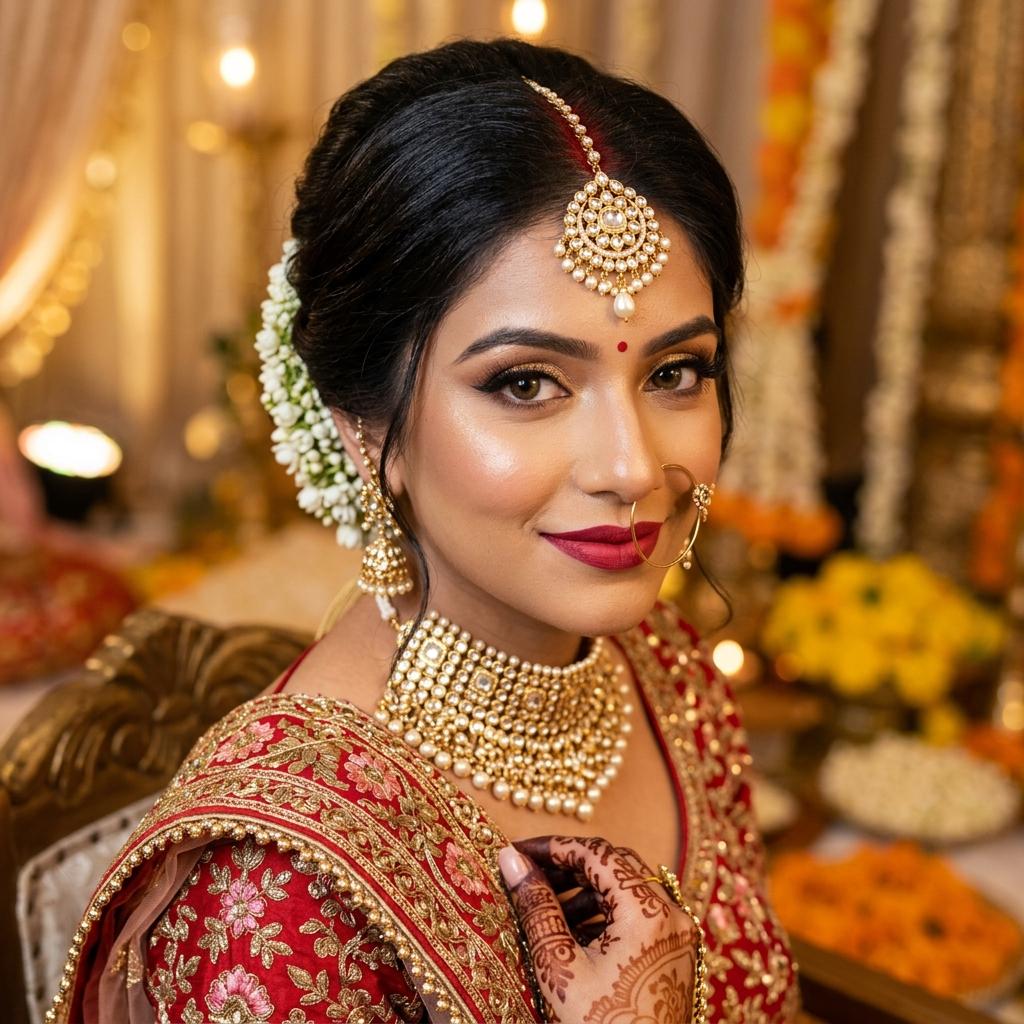
A passa, also called a jhoomar, brings movement and old-world elegance to one side of the face. It can transform a sharara, lehenga, Anarkali, or formal saree, but its asymmetry requires careful balance. When the earrings, necklace, hairstyle, and passa are all equally heavy, the face can look crowded rather than regal.
Treat the passa as the main piece near the hairline. Everything beside it should support its shape and weight.
Match the Size to Your Face and Hairstyle
Small passas work well for petite faces, intimate celebrations, and outfits with detailed necklines. Medium pieces are versatile for sangeet, nikah, engagement, and wedding-guest styling. Large tiered jhoomars need a formal outfit and a hairstyle strong enough to hold them.
The lower edge should frame the temple rather than cover the eyebrow or press against the ear. Before the event, test the piece while turning your head and walking; a passa that looks perfect in a still photograph may shift once you move.
Choose a Supportive Hairstyle
Side-parted hairstyles naturally complement a passa. A sleek low bun gives it a clean background, while soft waves create a romantic look. Braids and textured buns can also work if the attachment point remains secure.
Good combinations include:
- sleek side part with a low bun for a formal, polished effect
- soft waves swept away from the passa side
- textured bun with a medium jhoomar for a sangeet
- braid with a smaller piece for a youthful festive look
Avoid dense volume directly beneath the jewelry. The piece should sit against a stable section of hair instead of floating over curls.
Balance the Earrings
The passa and earrings occupy nearby visual space, so scale matters. With a large jhoomar, choose medium jhumkas, neat drops, or studs. A smaller passa can support chandbalis or longer earrings if the neckline stays relatively quiet.
The earrings do not need to be identical to the passa. Matching the metal, pearl tone, or one stone color is enough. Slight variation often looks more collected and personal than a perfectly uniform set.
Coordinate with the Neckline
| Neckline | Best balance |
|---|---|
| High or embroidered | Passa and earrings; skip the necklace |
| Deep V or sweetheart | Short necklace with controlled earrings |
| Boat neck | Small passa and compact earrings |
| Open round neck | Choker or collar if the passa is medium-sized |
If the dupatta is draped over the head, check where its border meets the passa. A heavy border and large hair ornament can overlap awkwardly. Pin the dupatta slightly behind the jewelry or choose a smaller piece.
Select the Finish by Outfit Mood
Kundan and pearl passas suit pastel lehengas, shararas, and romantic wedding looks. Antique gold pairs naturally with deeper silk colors and heritage outfits. Silver-toned or crystal designs can suit contemporary evening wear, while colored stones create a useful bridge to a contrast dupatta.
Repeat the primary metal at the wrist or in the clutch hardware, but do not introduce several new finishes.
Secure It Comfortably
Use crossed hairpins and a hidden support loop instead of relying on a single pin. For heavier pieces, ask the hairstylist to anchor a small braid beneath the top layer of hair. The chain should lie smoothly without pulling at the scalp.
Wear the piece for at least fifteen minutes during the trial. If it causes tension, choose a lighter design; discomfort will show in posture and expressions.
How AlankarAI Helps
AlankarAI can compare face framing, hairstyle volume, neckline detail, dupatta placement, and jewelry weight to recommend a small, medium, or statement passa. The most elegant result preserves asymmetry while keeping the face open: one regal side accent, secure placement, and supporting jewelry that knows when to step back.
Want a personalized analysis?
Upload your own outfit photo and let AlankarAI find the perfect matching jewelry for you.
Start Styling NowIndian ethnic-fashion writers and stylists. Every guide is reviewed for accuracy and cultural context before publishing. Read our editorial standards →
Get help choosing the right ethnic accessories.
Subscribe for weekly guides, ask a styling question, or tell us whether this page helped. Your feedback shapes the next AlankarAI guides.
Was this helpful?
A quick tap helps us improve future guides.
Editorial note: AlankarAI guides are written to provide styling education. Some store links on the site may be monetized, but article recommendations are intended to remain useful whether you shop online, locally, or from your own wardrobe.