
By AlankarAI Editorial Team · 4 min read · Reviewed for practical styling guidance
Pattu Pavadai Jewelry Styling Guide: How to Balance Silk, Jhumkas, Bangles, and Braid Details for Festive Family Functions
Pattu pavadai outfits look strongest when silk shine, traditional jewelry, braid details, and bangles feel festive but age-appropriate. Use this guide to style comfortable, polished looks for pujas, weddings, and family celebrations.
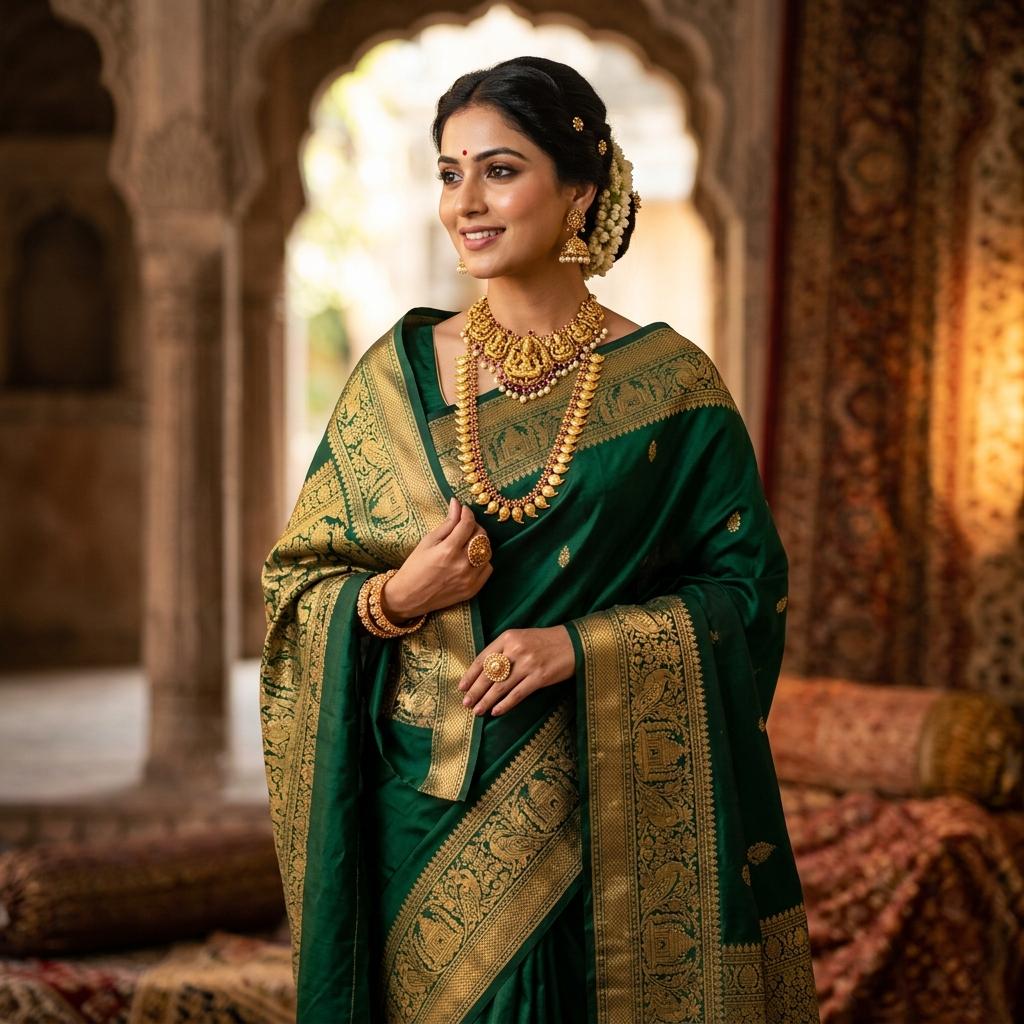
Pattu pavadai styling has a very different balance from saree or lehenga styling. The silhouette already carries sweetness, tradition, and festive color. That means the accessories do not need to fight for attention. They need to support the silk, frame the face, and keep the overall look comfortable enough for a child or teenager to move through a long family function.
The best pattu pavadai looks usually feel bright, traditional, and neatly finished. They use jewelry, hair, and bangles to complete the outfit without making it heavy or overworked.
Start With the Weight of the Silk
Some pattu pavadai sets are light and playful, while others carry richer zari borders, contrast dupattas, or more ceremonial blouse work. The heavier the silk looks, the more edited the accessories should become.
Use this rule:
- simple silk with a slim border = room for fuller earrings or a necklace
- richer zari or contrast border = one primary jewelry focus
- blouse with embroidery or sleeve detail = lighter neck styling
This keeps the outfit graceful instead of turning it into miniature bridal styling.
Let Earrings Lead More Often Than Necklaces
In most pattu pavadai looks, earrings do more work than a necklace. They brighten the face, show clearly in photographs, and feel easier to wear for longer hours.
Strong options include:
- medium jhumkas in gold or antique gold
- pearl-and-gold drops for softer daytime events
- tiny temple-inspired studs for younger children
- kundan-look earrings when the blouse is plain and festive
If the neckline already has piping, embroidery, or a decorative border, skipping the necklace often makes the whole outfit look cleaner.
Keep the Necklace Close and Light
When a necklace is useful, it should usually stay compact. Collarbone-length pieces, small pendants, and short temple-style sets work better than long layers.
| Outfit detail | Better necklace response |
|---|---|
| Plain round neck blouse | Short necklace or pendant |
| High or embellished neckline | Earrings only |
| Rich silk border with strong earrings | No necklace |
| Simpler silk for a wedding function | Compact traditional set |
The goal is to keep the neckline finished without reducing comfort.
Use Bangles for Festive Rhythm, Not Bulk
Bangles are one of the easiest ways to make a pattu pavadai feel celebration-ready. Gold, green, maroon, and pink stacks often work beautifully, especially when they repeat the border or blouse color.
Try these directions:
- slim gold bangles with one small kada
- green glass bangles for auspicious festive dressing
- maroon-and-gold stacks for richer silk tones
- pearl-accented bracelets for softer daytime functions
Very dense stacks can feel noisy on a smaller frame. A crisp wrist usually looks better than a bridal-volume pile.
Match Hair Accessories to the Jewelry Mood
Hair often finishes a pattu pavadai look more effectively than extra jewelry. Braids, half-up styles, jasmine, and ribbon details can make the outfit feel traditional without adding more metal near the neckline.
The cleanest pairings are usually:
- gold jhumkas with jasmine braid details
- pearl earrings with softer floral accents
- antique-finish earrings with temple-style hair accessories
- brighter silk colors with a simple center parting and flowers
If the braid decoration is already elaborate, reduce the earrings slightly so the styling does not become crowded from every angle.
Use Color Repetition to Make the Look Feel Intentional
Pattu pavadai outfits often look best when one or two colors repeat quietly through the full styling story. That repetition can come from the blouse, border, bangles, hair flowers, bindi, or stone color in the earrings.
Good combinations include:
- bottle green blouse with green bangles and antique gold earrings
- maroon border with gold jewelry and a deeper bindi
- ivory-and-gold silk with pearls and jasmine
- pink silk with ruby-toned stones and lighter wrist styling
This is usually more elegant than introducing many unrelated colors at once.
Keep Footwear and Comfort in the Styling Plan
Festive family functions often mean walking, sitting, greeting relatives, and staying dressed for hours. That makes comfort part of the styling decision, not an afterthought.
Stable sandals, clean juttis, or soft traditional flats usually work better than slippery or stiff footwear. Jewelry clasps should feel secure, earrings should not pull, and bangles should allow easy hand movement.
If the look needs constant fixing, it will stop feeling polished very quickly.
A Simple Pattu Pavadai Formula
If you want one reliable approach, use this order:
- Start with the silk weight, border width, and blouse detail.
- Let earrings lead unless the neckline is very plain.
- Add a compact necklace only when the blouse shape supports it.
- Use bangles to repeat one outfit color instead of adding random contrast.
- Finish with braid details, flowers, and comfortable footwear.
That formula keeps the outfit festive, traditional, and wearable.
How AlankarAI Helps
AlankarAI can compare silk color, zari weight, blouse neckline, sleeve detail, and event type to suggest the right balance of earrings, bangles, necklaces, braid accessories, and footwear. For pattu pavadai styling, that matters because the strongest result is rarely the heaviest one.
It is the one that feels joyful, age-appropriate, and polished from the first family photo to the last ritual.
Want a personalized analysis?
Upload your own outfit photo and let AlankarAI find the perfect matching jewelry for you.
Start Styling NowIndian ethnic-fashion writers and stylists. Every guide is reviewed for accuracy and cultural context before publishing. Read our editorial standards →
Get help choosing the right ethnic accessories.
Subscribe for weekly guides, ask a styling question, or tell us whether this page helped. Your feedback shapes the next AlankarAI guides.
Was this helpful?
A quick tap helps us improve future guides.
Editorial note: AlankarAI guides are written to provide styling education. Some store links on the site may be monetized, but article recommendations are intended to remain useful whether you shop online, locally, or from your own wardrobe.