
By AlankarAI Editorial Team · 5 min read · Reviewed for practical styling guidance
Sharara Suit Jewelry Styling Guide: Earrings, Bangles, and Bags for Festive and Wedding Looks
Sharara suits already bring movement and festive detail, so the right styling is about balance. Learn how to pair earrings, bangles, dupattas, bags, and footwear with shararas for mehendi, Eid, family weddings, and celebratory dinners.
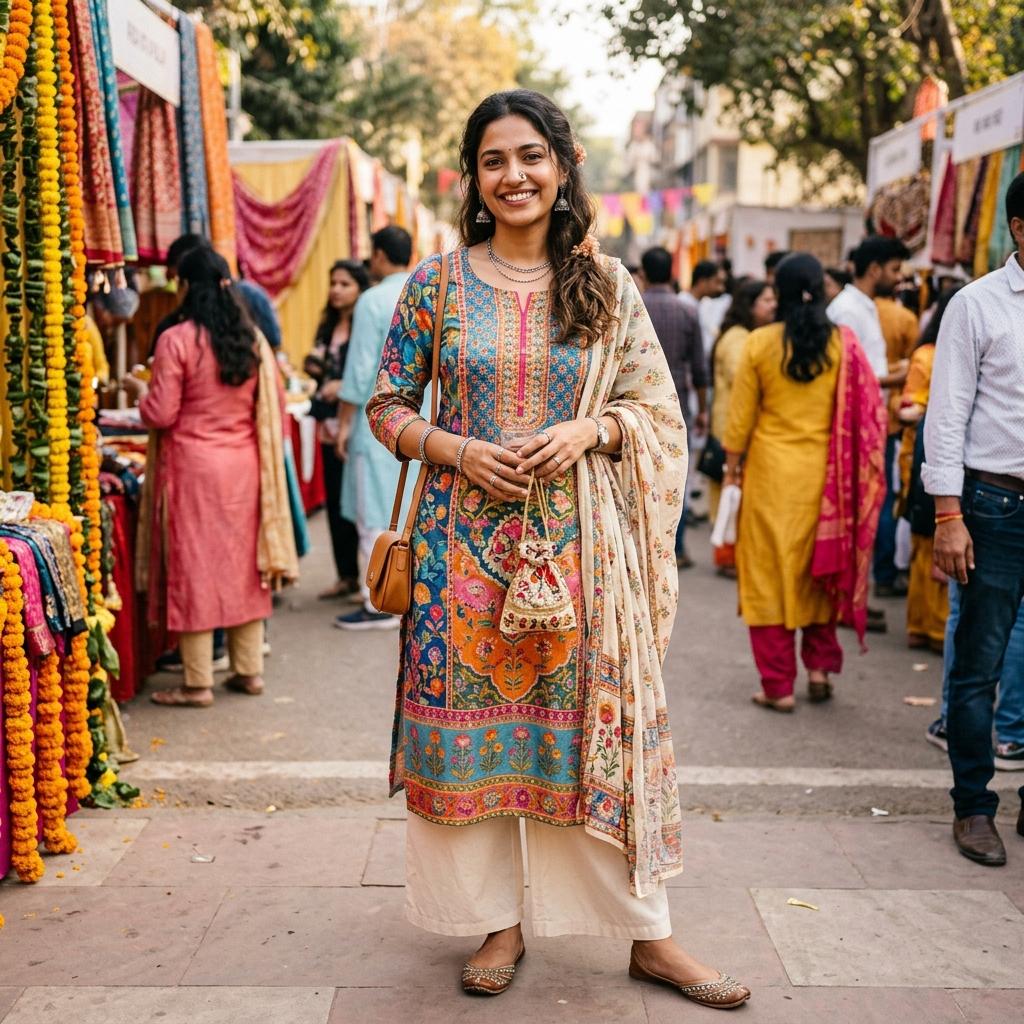
Sharara suits have a built-in sense of occasion. The flared silhouette, shorter kurta, and often decorative gota, mirror, zari, or thread work give the outfit movement before you add a single accessory. That is why styling a sharara well is less about adding more and more pieces, and more about knowing where to stop.
The best sharara styling creates balance between volume, embellishment, and comfort. When the kurta, flare, and dupatta already carry detail, the jewelry should support the look instead of competing with it.
Start With the Surface Detail
Before choosing jewelry, look closely at what is already happening on the outfit.
If the sharara has mirror work, gota patti, sequins, or embroidered borders across both the kurta and the flare, keep the jewelry focused. If the suit is lighter and more fabric-led, you can add a stronger accessory at the ears, neck, or wrist.
Use this simple rule:
- heavily embellished sharara = earrings plus selective bangles
- medium-detail sharara = earrings and one necklace or cuff
- plain or softly embroidered sharara = more room for layered styling
This prevents the outfit from feeling crowded in photographs and in person.
Earrings Usually Do the Most Work
Most sharara suits look best when the styling emphasis stays near the face. Jhumkas, chandbalis, pearl drops, kundan studs, and mirror-work earrings all work depending on the mood of the outfit.
Here is a practical way to choose:
- mirror-work or gota sharara = mirror earrings, small chandbalis, or bright jhumkas
- pastel sharara = pearls, kundan studs, or delicate drop earrings
- jewel-toned festive sharara = antique gold jhumkas or polki-inspired earrings
- printed sharara = simpler earrings with clean outlines
If the kurta neckline is high, closed, or already embellished, earrings-only styling is usually the cleanest choice.
Be Careful With Necklaces
Not every sharara needs a necklace. In fact, many look better without one.
Short kurtas with round, keyhole, or high necklines often become visually busy once a necklace is added. In those cases, statement earrings, a maang tikka, or bangles create enough polish.
A necklace makes sense when:
- the neckline is open, wide, or V-shaped
- the kurta front is relatively plain
- the dupatta is being worn on one side rather than covering the chest
- the event is more formal, such as an engagement dinner or wedding function
For shararas, the safest necklace choices are short kundan collars, pearl chokers, slim pendants, or one refined layered piece. Avoid very long necklaces unless the kurta is minimal, because they can cut across the silhouette and make the top half feel heavy.
Bangles Should Match the Outfit Mood
Sharara styling often becomes stronger when the wrist styling echoes the outfit finish.
If the outfit is playful and colorful, glass bangles, thread bangles, or mixed-color stacks can work beautifully. If the suit is elegant and wedding-leaning, antique gold kadas, pearl bangles, or a compact bangle stack usually look more polished.
Good combinations include:
- yellow or floral mehendi sharara = thread bangles or fresh glass bangles
- mirror-work sharara = a few metallic bangles, not a full noisy stack
- pastel Eid or festive sharara = pearl bangles or slim gold-tone kadas
- rich maroon, emerald, or navy sharara = antique gold or kundan-style bangles
If the sleeves are heavily embroidered, reduce the bangle count. A crowded cuff area can make the look feel stiff instead of graceful.
Dupatta Styling Changes the Jewelry Balance
The dupatta placement matters more with shararas than many people realize.
When the dupatta sits across both shoulders or covers the front, heavy necklaces often get lost. That is the moment to rely on earrings, tikka, and bangles instead. When the dupatta is pinned to one side, the neckline has more breathing room, so a choker or pendant can work.
If the dupatta border is heavily worked, avoid repeating the same intensity at every point. Let either the dupatta border or the jewelry take the lead.
Footwear and Bags Should Support the Flare
Because shararas already create movement around the legs and ankles, the footwear should feel stable and easy to walk in. Juttis, embroidered flats, block heels, and low wedges are usually better choices than very delicate heels.
For bags, potlis and structured clutches work best. Match the bag to one finish already present in the outfit:
- pearls in the earrings = pearl-accented clutch
- mirror details in the kurta = subtle mirror potli
- antique gold jewelry = matte gold or embroidered bag
Avoid adding a heavily embellished bag if the sharara, dupatta, and jewelry are already all competing for attention.
Occasion-Based Sharara Styling
| Occasion | Best jewelry direction | What to avoid |
|---|---|---|
| Mehendi or Haldi | Floral accents, thread bangles, light jhumkas | Heavy chokers and rigid cuffs |
| Eid lunch or festive dinner | Pearls, kundan studs, delicate bangles | Over-layered neckpieces |
| Sangeet or wedding evening | Chandbalis, antique gold, one polished wrist detail | Too many shiny statement pieces together |
| Family puja or day event | Small jhumkas, one kada, soft makeup-led styling | Loud party accessories |
How AlankarAI Helps
AlankarAI can compare your sharara color, embellishment level, dupatta style, and event type to recommend accessories that feel balanced instead of excessive. That matters because a pastel sharara for Eid, a mirror-work sharara for mehendi, and a jewel-toned sharara for a wedding dinner all need different styling decisions.
The strongest sharara looks usually follow one principle: keep the silhouette festive, but keep the accessories edited. When the earrings, bangles, bag, and dupatta all support the outfit instead of fighting it, the result feels sharper, lighter, and more expensive.
Want a personalized analysis?
Upload your own outfit photo and let AlankarAI find the perfect matching jewelry for you.
Start Styling NowIndian ethnic-fashion writers and stylists. Every guide is reviewed for accuracy and cultural context before publishing. Read our editorial standards →
Get help choosing the right ethnic accessories.
Subscribe for weekly guides, ask a styling question, or tell us whether this page helped. Your feedback shapes the next AlankarAI guides.
Was this helpful?
A quick tap helps us improve future guides.
Editorial note: AlankarAI guides are written to provide styling education. Some store links on the site may be monetized, but article recommendations are intended to remain useful whether you shop online, locally, or from your own wardrobe.