
By AlankarAI Editorial Team · 4 min read · Reviewed for practical styling guidance
The South Indian Bridal Guide: Essential Jewelry for the Traditional Look
The South Indian bride is a vision of golden heritage. From the intricate Temple jewelry to the iconic Vanki and Jada Billa, learn the essential pieces that complete the Kanjeevaram aesthetic.
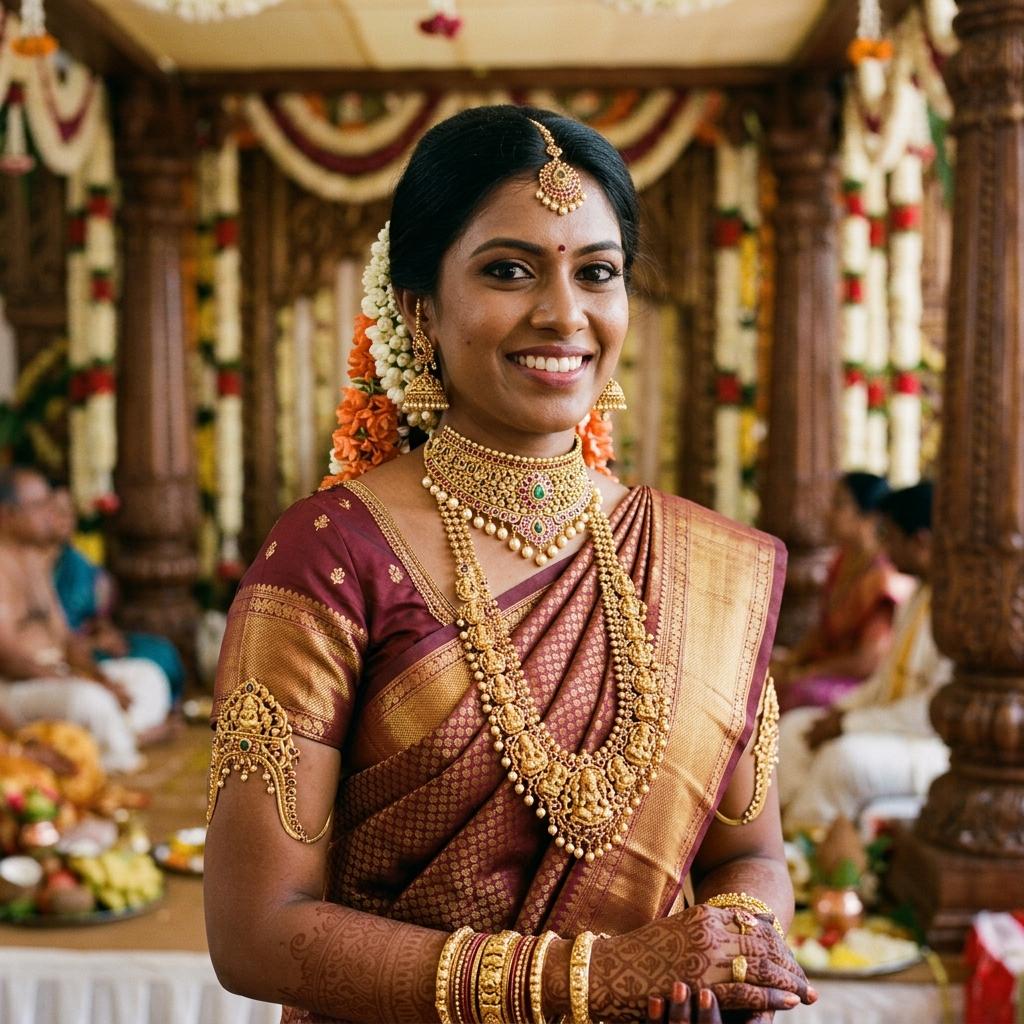
The South Indian bridal look is perhaps the most iconic and unchanging in the world of fashion. Centered around the rich, gold-bordered Kanjeevaram silk saree, the look is defined by Temple Jewelry—intricate pieces that often depict gods and goddesses in pure gold.
If you're planning a traditional South Indian wedding, here are the essential jewelry pieces you need.
1. The Head-to-Toe Gold: Temple Jewelry
Unlike North Indian bridal wear which often features Kundan or Polki, South Indian bridal wear is almost exclusively gold.
- The Choker: A thick gold collar, often featuring Lakshmi (the goddess of wealth).
- The Haram: A very long necklace that falls to the waist. This is a crucial layer that adds vertical scale to the look.
Most brides build the necklace stack in three levels: a close choker, a mid-length kasu mala or manga mala, and one long haram. This spacing matters because the Kanjeevaram blouse and saree border already create strong horizontal lines. If every necklace sits at the same height, the look can feel crowded in photographs. A staggered stack lets each piece breathe while still keeping the classic abundant bridal feel.
When choosing motifs, match the mood of the saree. A traditional red, green, or mustard Kanjeevaram can carry bold Lakshmi, coin, peacock, or mango motifs. A pastel Kanjeevaram usually looks more refined with lighter antique-gold work, pearls, or smaller temple pendants.
2. The Vanki (Armband)
One of the most unique pieces of South Indian jewelry is the Vanki. This V-shaped armband sits on the bicep. It was traditionally designed to hold the saree sleeve in place and add a regal, 'warrior-queen' touch to the bride.
The best Vanki placement is slightly above the widest part of the arm, where it can sit securely without pressing into the sleeve. Brides with heavily embroidered blouse sleeves can choose a slimmer Vanki so the arm does not look visually heavy. If the blouse is plain silk, a broader Vanki becomes a beautiful focal point.
3. The Oddiyanam (Waist Belt)
The Oddiyanam is a heavy gold belt used to cinch the waist.
- The Function: It's not just decorative; it helps keep the heavy silk pleats of the Kanjeevaram in place during the long wedding rituals.
- Stylist Tip: Ensure the belt sits at your natural waistline, not your hips, to maintain a balanced silhouette.
For comfort, test the Oddiyanam while sitting before the ceremony. A belt that looks perfect while standing can dig into the waist during rituals. If your saree has a wide border, position the belt so it does not hide the entire border pattern. The goal is to anchor the pleats while preserving the craftsmanship of the silk.
4. Jada Billa & Jasmine
The South Indian bridal look isn't complete without the hair.
- Jada Billa: These are a series of circular gold ornaments pinned along the length of a long braid.
- The Flowers: Heavy strings of fresh white jasmine (Malli) are wrapped around the base of the braid, creating a stunning white-and-gold contrast.
The braid is one of the strongest visual signatures of this look, so it should be planned with the jewelry rather than treated as a final add-on. A long Jada Billa works beautifully when the bride wears a long haram, because both create vertical rhythm. If the bride prefers a bun, the same idea can be adapted with a gold rakodi, jasmine rings, and a shorter hair chain.
Makeup and Blouse Balance
South Indian bridal jewelry is rich, so the face needs definition without competing with the gold. A classic approach is a clean base, kohl-lined eyes, defined brows, and a strong lip in red, berry, or warm rose. The bindi should be visible but proportionate to the matha patti or tikka.
Blouse design also changes the jewelry decision. A high-neck blouse reduces space for chokers, so a long haram and statement earrings may be enough. A deep round or square neckline can carry a fuller necklace stack. If the blouse has heavy sleeve work, keep bangles and armlets coordinated but not oversized.
Guest Styling Notes
Guests can borrow the South Indian bridal language without looking overdressed. A silk saree with one temple choker, jhumkas, and a neat jasmine bun is elegant for close family. For a lighter reception look, try antique-gold earrings with a simple chain and a stack of glass bangles that matches the saree border.
Conclusion
The South Indian bridal aesthetic is a masterclass in 'maximalist elegance'. It's about layers of gold, rich silk, and fragrant flowers. It's a look that feels timeless because it is rooted in centuries of artistic and religious tradition.
Want a personalized analysis?
Upload your own outfit photo and let AlankarAI find the perfect matching jewelry for you.
Start Styling NowIndian ethnic-fashion writers and stylists. Every guide is reviewed for accuracy and cultural context before publishing. Read our editorial standards →
Get help choosing the right ethnic accessories.
Subscribe for weekly guides, ask a styling question, or tell us whether this page helped. Your feedback shapes the next AlankarAI guides.
Was this helpful?
A quick tap helps us improve future guides.
Editorial note: AlankarAI guides are written to provide styling education. Some store links on the site may be monetized, but article recommendations are intended to remain useful whether you shop online, locally, or from your own wardrobe.