
By AlankarAI Editorial Team · 4 min read · Reviewed for practical styling guidance
Sustainable Styling: 5 Ways to Reimagine Your Mother's Old Sarees
The most sustainable outfit is the one already in your wardrobe. Learn how to take vintage silk sarees and repurpose them into modern jackets, contemporary dresses, or chic separates without losing their heritage.
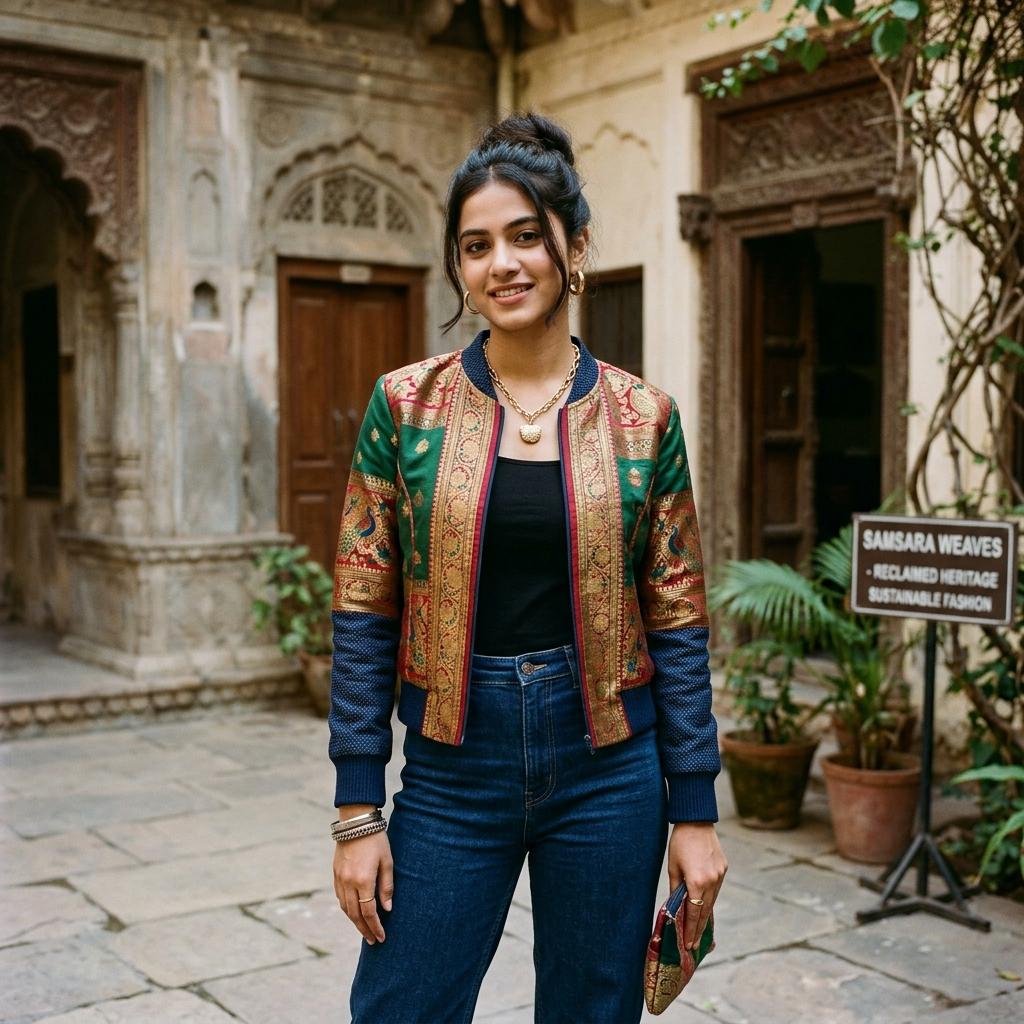
In an era of fast fashion, there is something deeply rewarding about 'Slow Fashion'. Indian households are treasure troves of high-quality, hand-woven silk sarees that have been sitting in trunks for decades. These vintage pieces often have a quality of silk and purity of zari that is impossible to find today.
Instead of letting them gather dust, why not reimagine them for the 2026 wardrobe? Here are 5 ways to breathe new life into vintage sarees.
1. The Power Jacket
One of the trendiest ways to repurpose a heavy silk saree (like a Paithani or Kanjeevaram) is to turn it into a structured jacket or blazer.
- The Look: Pair the silk jacket with a simple white shirt and blue jeans. It's the ultimate 'East-meets-West' power look.
Before cutting the saree, inspect the pallu, borders, and body separately. The pallu usually carries the richest weaving and works beautifully as the jacket back, collar, or front panel. The borders can become cuffs or lapel edges. A tailor who understands brocade or handloom silk should add lining, interfacing, and seam support so the old fabric does not tear under stress.
2. Contemporary Separates
Break the saree down! Use the heavy border to create a crop top and the rest of the fabric for a flared midi-skirt.
- The Benefit: You get two unique pieces that can be styled independently.
Separates are often the most practical conversion because they create multiple outfits from one heirloom. A crop top can be worn with a plain lehenga, palazzo pants, or another saree. A skirt made from the saree body can be styled with a crisp shirt, a plain silk blouse, or a modern corset-style top. Keep the silhouette simple when the weave is ornate; clean shapes let the textile remain the hero.
3. The Floor-Length Anarkali
A 6-yard saree is the perfect amount of fabric for a grand, floor-length Anarkali. The heavy 'Pallu' of the saree can be used to create the back or front bodice, making it the focal point of the outfit.
For an Anarkali, fabric fall matters. Lightweight silks, georgettes, and chiffons create movement, while heavier Kanjeevaram or Banarasi sarees produce a more architectural shape. Ask the tailor to place damaged sections in lower-stress areas or avoid them completely. If the saree has emotional value, keep leftover pieces for tassels, potli bags, or sleeve detailing.
4. Statement Dupattas
If the body of the saree is damaged but the pallu and borders are intact, cut them out and attach them to a new, plain fabric (like georgette or velvet) to create a high-end statement dupatta.
This is the safest option for fragile sarees because the textile is not forced into a fitted garment. A pallu panel can sit at one end of the dupatta, while borders can frame the long edges. Pair the finished dupatta with a plain kurta set in a color pulled from the original saree. The result feels intentional and wearable without erasing the heritage of the piece.
5. Home Decor: The Heritage Cushion
If the fabric is too fragile to wear, don't throw it away. Use the non-damaged sections to create luxury cushion covers or framed wall art. It's a beautiful way to keep a family heirloom visible in your daily life.
Home decor is ideal for sarees with stains, tears, or brittle yarns. Small undamaged panels can become framed textile art, table runners, cushion covers, or keepsake bags. Use a backing fabric so the old silk is not carrying all the tension. This keeps the memory present while protecting the original weave from daily wear.
How to Decide What to Make
Start with three questions: how damaged is the saree, how often do you want to use the new piece, and which part of the saree has the most meaning? If the saree is strong and wearable, a jacket or skirt gives it a new public life. If it is delicate, a dupatta or decor piece is wiser. If the pallu has sentimental embroidery or a family story attached to it, design around that section first.
Jewelry Pairing for Upcycled Looks
Upcycled saree outfits already carry texture and history, so jewelry should support rather than overpower them. Antique gold works well with warm Banarasi and Kanjeevaram silks. Oxidized silver suits cotton, tussar, and handloom textures. Pearls soften old silk and make the final look feel less costume-like. For everyday wear, choose one anchor accessory, such as earrings or bangles, and let the textile do the storytelling.
Conclusion
Sustainability in fashion isn't just about buying 'eco-friendly' brands; it's about valuing the craftsmanship we already own. By repurposing a vintage saree, you're not just being environmentally conscious—you're carrying forward a piece of your family's history.
Want a personalized analysis?
Upload your own outfit photo and let AlankarAI find the perfect matching jewelry for you.
Start Styling NowIndian ethnic-fashion writers and stylists. Every guide is reviewed for accuracy and cultural context before publishing. Read our editorial standards →
Get help choosing the right ethnic accessories.
Subscribe for weekly guides, ask a styling question, or tell us whether this page helped. Your feedback shapes the next AlankarAI guides.
Was this helpful?
A quick tap helps us improve future guides.
Editorial note: AlankarAI guides are written to provide styling education. Some store links on the site may be monetized, but article recommendations are intended to remain useful whether you shop online, locally, or from your own wardrobe.