
By AlankarAI Editorial Team · 6 min read · Reviewed for practical styling guidance
Tissue Saree Jewelry Styling Guide: How to Balance Shine with Pearls, Gold, and Clean Details
Tissue sarees already carry light and shimmer. Learn how to choose jewelry, bangles, blouses, bindis, bags, and hairstyles that keep the look polished instead of overloaded.
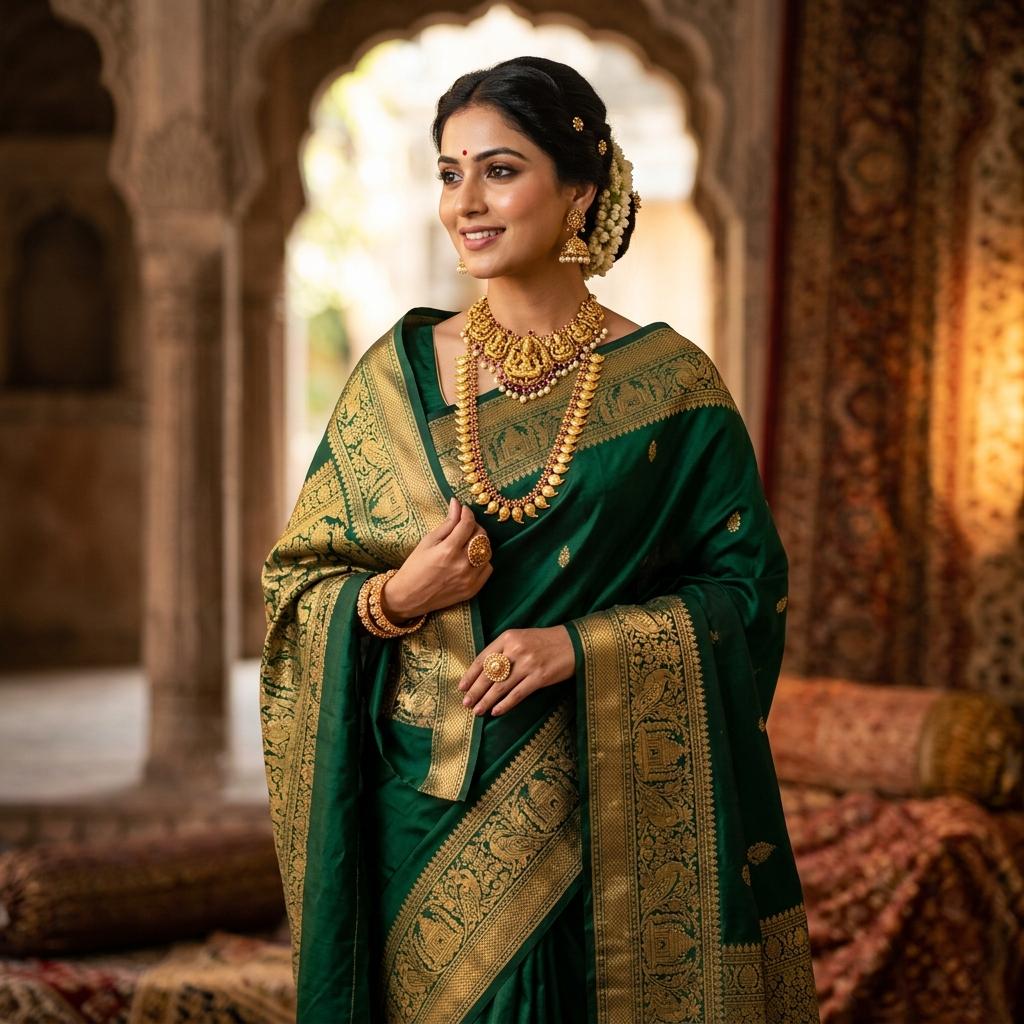
Tissue sarees have their own kind of presence. They catch light quickly, feel festive even without heavy embroidery, and can move between daytime celebrations and evening functions with very small styling changes. That same glow is also what makes them easy to overstyle.
A tissue saree usually does not need every accessory category to work at full volume. When the fabric already reflects light, the smartest styling choice is often control. Jewelry should support the shine, not compete with it.
Understand What Kind of Tissue Saree You Have
Not all tissue sarees behave the same way. A gold tissue saree looks warmer and more ceremonial. Silver, champagne, blush, mint, and pastel tissue sarees feel lighter and more modern. Tissue with zari borders or woven motifs can carry a little more jewelry than plain tissue with a clean finish.
Start by asking one question: where is the visual weight already sitting?
- if the saree body is luminous, keep the necklace lighter
- if the border is strong, let the earrings stay cleaner
- if the blouse is embellished, reduce the bangle stack
- if the saree is plain, use one focused accessory to give the look structure
The goal is balance, not maximum sparkle.
Best Jewelry Metals for Tissue Sarees
Antique gold, soft gold, champagne gold, and pearls are usually the easiest partners for tissue sarees. They echo the festive mood without adding harsh contrast.
Silver can work beautifully with cool-toned tissue sarees, especially dove grey, icy blue, lavender, or silver-beige. Rose-gold accents can flatter blush, peach, and dusty pink tissue sarees, but they look best when the blouse and makeup also support that softness.
Very bright yellow gold or mirror-like polished metal can become too reflective against highly shiny tissue. If the saree already glows strongly, choose jewelry with texture, matte detailing, pearls, or softer stones.
Earrings First, Necklace Second
With tissue sarees, earrings usually matter more than necklaces. A strong pair of jhumkas, chandbalis, or pearl drops can often finish the look without needing much around the neck.
Use this rule of thumb:
| Saree and blouse situation | Best jewelry direction |
|---|---|
| high-neck or detailed blouse | statement earrings, skip necklace |
| plain blouse with open neckline | short necklace or collar, cleaner earrings |
| heavy border near face | compact earrings |
| pastel tissue for day event | pearls or delicate drops |
| wedding guest evening look | antique gold statement earrings |
If you wear both large earrings and a necklace, keep one of them visually quieter. Tissue fabric reflects enough light on its own.
Pearls Are the Safest Shortcut
When you are unsure, choose pearls. They soften metallic shine, work across warm and cool tissue sarees, and photograph well in daylight as well as indoor lighting. Pearl studs, pearl drops, a short pearl strand, or pearl-accented bangles can make tissue sarees feel refined instead of flashy.
Pearls are especially useful when:
- the saree color is champagne, blush, ivory, mint, powder blue, or silver-grey
- the blouse has sheen but not heavy embroidery
- the event is a reception, puja, festive dinner, or family celebration
- you want the look to feel elegant rather than bridal
For a more traditional result, combine pearls with antique gold instead of stark white stones.
Choose Bangles with Restraint
Tissue sarees do not usually need a loud wrist story. A slim bangle stack, one kada, or two to four coordinated bangles often looks sharper than a full bridal-style arm stack.
If the saree is already metallic, repeat the finish lightly at the wrist. If the saree is pastel, add subtle contrast through pearls, soft green stones, or muted enamel. Glass bangles can work, but they should relate to one accent already present in the blouse, border, or earrings.
Avoid piling on glitter bangles, oversized cuffs, and multiple competing textures. With tissue, wrists should feel finished, not busy.
Blouse Styling Matters More Than People Expect
A tissue saree blouse can either calm the outfit down or make it feel overly dressed. Plain raw silk, matte brocade, velvet trims, or lightly textured blouses often balance tissue better than another very glossy surface.
Good combinations include:
- gold tissue saree with matte blouse and antique gold earrings
- blush tissue saree with pearl blouse accents and soft waves
- silver tissue saree with cool-toned blouse and sleek studs
- pastel tissue saree with minimal blouse embroidery and one statement ring
If the blouse already has sequins, stones, tassels, or a dramatic back detail, reduce the jewelry further. The blouse and saree together may already be doing enough.
Bags, Bindi, and Hair Should Stay Coordinated
A tissue saree look becomes stronger when the smaller details repeat one mood instead of introducing new ideas.
For bags, choose a compact clutch or potli that matches one existing finish: pearl, antique gold, champagne, silver, or one accent color from the blouse. Avoid adding a bag that is more embellished than the saree itself.
For bindis, a small round bindi or clean teardrop shape usually works better than an oversized decorative design. Hair should support the jewelry choice:
- sleek bun for chandbalis or statement earrings
- soft waves for pearl drops or lighter necklaces
- low bun with gajra for traditional festive styling
- side-parted hair when the blouse neckline is clean and modern
If you add a gajra, simplify the earrings or necklace slightly so the upper body does not become crowded.
Day Event vs Evening Event Styling
The same tissue saree can shift dramatically depending on timing.
For daytime functions
Keep the palette softer. Pearls, slim bangles, fresh makeup, and a light blouse finish usually work best. Let the saree's sheen look airy rather than dramatic.
For evening functions
Bring in slightly deeper contrast through antique gold, a richer lip color, a sharper bun, or one stronger statement earring. The key is depth, not extra quantity.
Common Tissue Saree Styling Mistakes
The most common mistake is treating a tissue saree like a heavily embroidered bridal outfit. Tissue already gives you shine. You do not need heavy choker, heavy earrings, heavy maang tikka, heavy bangles, glossy blouse, and glitter clutch all at once.
Other mistakes include:
- choosing jewelry that is too sharp and mirror-bright
- adding another shiny fabric in the blouse without contrast
- using large bangle stacks that distract from the drape
- carrying a bag that looks bulkier or louder than the saree
- forgetting to check how the outfit looks in direct light and photographs
Try the full look in daylight or near a warm indoor light before the event. Tissue can look more reflective in person than it appears on a hanger.
How AlankarAI Helps
AlankarAI can compare the saree's metallic tone, blouse finish, border weight, occasion, and your planned accessories to suggest whether the look needs pearls, antique gold, cleaner earrings, a softer bangle stack, or a quieter bag. With tissue sarees, those small edits make the biggest difference.
The strongest tissue saree styling feels luminous, not overloaded. When shine is already built into the fabric, elegance comes from editing well.
Want a personalized analysis?
Upload your own outfit photo and let AlankarAI find the perfect matching jewelry for you.
Start Styling NowIndian ethnic-fashion writers and stylists. Every guide is reviewed for accuracy and cultural context before publishing. Read our editorial standards →
Get help choosing the right ethnic accessories.
Subscribe for weekly guides, ask a styling question, or tell us whether this page helped. Your feedback shapes the next AlankarAI guides.
Was this helpful?
A quick tap helps us improve future guides.
Editorial note: AlankarAI guides are written to provide styling education. Some store links on the site may be monetized, but article recommendations are intended to remain useful whether you shop online, locally, or from your own wardrobe.