
By AlankarAI Editorial Team · 5 min read · Reviewed for practical styling guidance
Tussar Saree Jewelry Styling Guide: Earthy Gold, Tribal Silver, and Handloom Finishing Details
Tussar sarees look best when their textured drape, muted sheen, and earthy tones are styled with restraint. Learn how to pair earrings, necklaces, bangles, blouses, and accessories for festive lunches, pujas, and wedding guest looks.
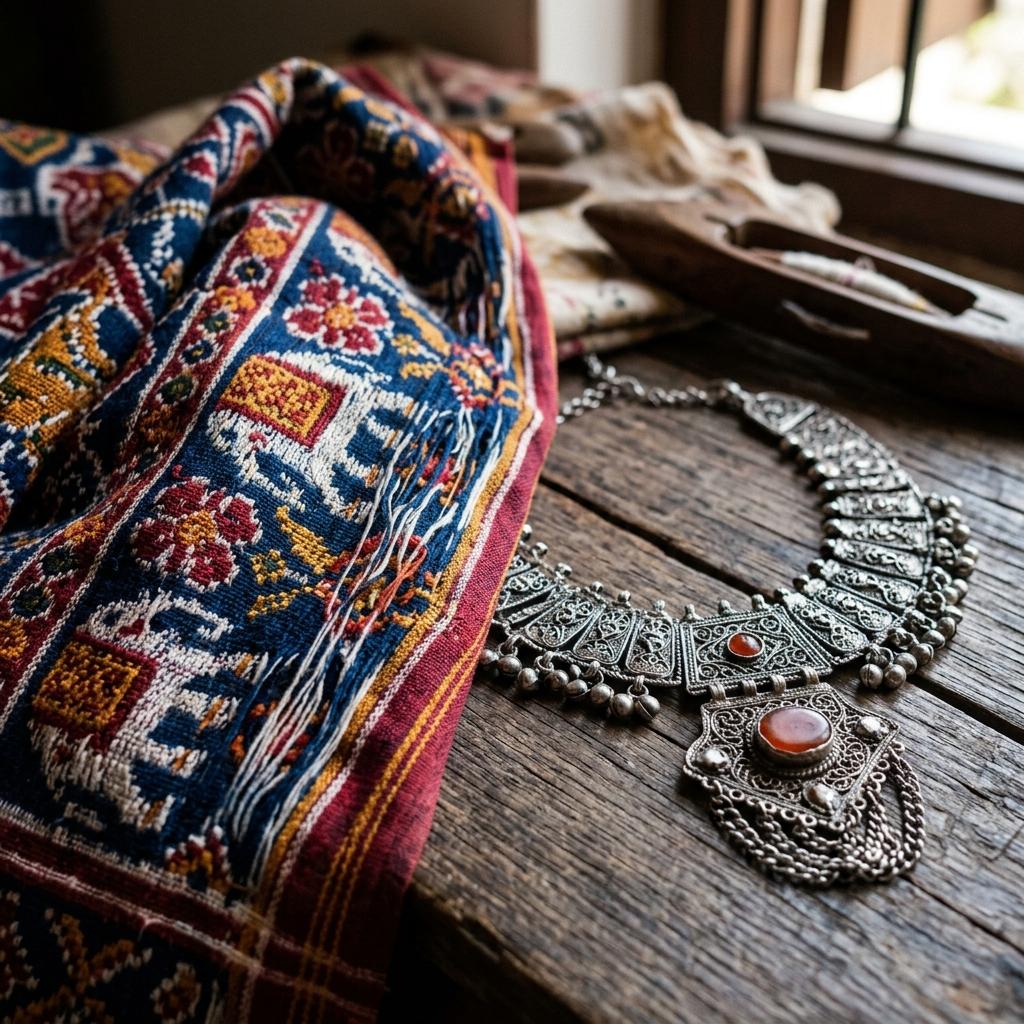
Tussar sarees have a distinct kind of elegance. They do not rely on high shine or heavy surface embellishment. Instead, they stand out through texture, depth, and that slightly raw finish that makes handloom fabrics feel alive. This is exactly why Tussar styling should feel considered rather than crowded.
The best jewelry pairings do not try to overpower the weave. They support it. A Tussar saree already brings visual richness through its natural slub, soft structure, and earthy color story. The role of accessories is to sharpen the outfit where it needs definition and leave the rest alone.
Start With the Saree's Texture and Border
Not every Tussar saree needs the same jewelry direction. A plain beige or honey-toned drape with a woven border behaves differently from a printed Tussar, a zari-edged festive Tussar, or a version with contrast blouse detailing.
| Saree detail | Styling direction |
|---|---|
| Natural beige, sand, or taupe Tussar | Antique gold, matte gold, or tribal silver works well |
| Contrast border or pallu | Repeat one accent tone in bangles or earrings |
| Woven motifs and handloom texture | Keep necklaces edited and let the textile show |
| Rich festive border | Add stronger earrings before increasing necklace weight |
| Printed or painted Tussar | Choose one quiet metal story and avoid too many colors |
The key is balance. Tussar carries depth on its own, so jewelry should feel integrated instead of decorative for its own sake.
Choose Metals That Respect the Fabric
Tussar is one of the few saree fabrics that can move comfortably between antique gold, brushed gold, and oxidized silver depending on the color palette. Warm neutrals, rust, maroon, olive, and deep mustard often look beautiful with traditional gold or antique finishes. Cooler greys, indigo, black, and off-white combinations can support silver-toned or oxidized pieces.
Pearls can work too, but they usually look best as a supporting element rather than the main statement. A small pearl drop with matte gold, or pearl accents inside antique earrings, feels more coherent than a highly polished bridal-style pearl set.
If the saree already has zari in the border, let that guide the metal. If there is little or no shine in the drape, a soft-metal finish generally looks better than very glossy jewelry.
Let Earrings Lead More Often Than Necklaces
Because Tussar has visual texture across the full drape, a heavy necklace can quickly compete with the saree. Earrings usually do a better job of giving the face definition without making the outfit feel overloaded.
Medium jhumkas, antique studs, dokra-inspired drops, temple-style earrings, or clean chandbalis can all work depending on the blouse and occasion. For a daytime puja or lunch, smaller earrings and one kada may be enough. For a wedding guest look, you can move to stronger earrings, but keep the rest of the jewelry edited.
| Blouse neckline | Better jewelry choice |
|---|---|
| High neck or collared blouse | Earrings only |
| Plain round neck | Short pendant or compact necklace |
| V-neck blouse | Fine pendant or short structured necklace |
| Square or boat neck | Statement earrings with little or no necklace |
| Embroidered blouse | Reduce necklace weight and keep the ears stronger |
If your blouse already has texture through weaving, embroidery, or tassels, it is usually better to keep the necklace optional.
Use Bangles and Rings to Echo the Saree's Mood
Tussar styling often looks especially refined when the wrist story stays light. One antique kada, a few slim bangles, or a mix of metal and hand-finished glass bangles can be enough. This is not the saree for overly glittery stacks unless the event is formal and the border is already festive.
Rings are useful here because they add polish without blocking the drape. A sculptural ring, one cocktail ring in an earthy stone, or a small stack of matte-finish bands can bring the look together quietly.
If the saree includes a rust, maroon, green, or black border, let that accent appear once at the wrist. Repetition works better than exact matching.
Match the Styling to the Occasion
The same Tussar saree can feel intellectual, festive, or wedding-ready depending on the supporting pieces.
Daytime puja or festive lunch
Choose antique studs or small jhumkas, a neat bindi, one kada, and comfortable sandals or juttis. A cotton-silk or handloom blouse usually keeps the look grounded and elegant.
Office festive event or cultural gathering
Keep the silhouette sharp with a structured blouse, smaller earrings, and a simple watch or bracelet. A woven bag, compact sling, or understated potli works better than a highly embellished clutch.
Wedding guest styling
Use stronger earrings, a short necklace only if the neckline needs it, and a few coordinated bangles. A richer lip color and a blouse with more definition can make Tussar feel dressier without forcing it into a bridal lane.
Finish With Texture-Conscious Accessories
Tussar styling improves when the finishing pieces respect the saree's natural character. Raw-silk blouses, woven potlis, embroidered juttis, matte-metal clutches, and handloom-inspired details all sit more naturally with this fabric than mirror-heavy or crystal-heavy accessories.
This also means editing shine. If the saree's beauty comes from texture, let texture stay visible. Do not bury it under a glossy necklace, oversized maang tikka, stacked bangles, embellished blouse, and metallic bag all at once.
The best Tussar look feels composed, earthy, and quietly festive. Let the saree carry the atmosphere, then use jewelry to give it precision.
Want a personalized analysis?
Upload your own outfit photo and let AlankarAI find the perfect matching jewelry for you.
Start Styling NowIndian ethnic-fashion writers and stylists. Every guide is reviewed for accuracy and cultural context before publishing. Read our editorial standards →
Get help choosing the right ethnic accessories.
Subscribe for weekly guides, ask a styling question, or tell us whether this page helped. Your feedback shapes the next AlankarAI guides.
Was this helpful?
A quick tap helps us improve future guides.
Editorial note: AlankarAI guides are written to provide styling education. Some store links on the site may be monetized, but article recommendations are intended to remain useful whether you shop online, locally, or from your own wardrobe.